
Somewhere inside the Committee for a Responsible Federal Budget this week, an analyst hit “publish” on a paper that should have led the evening news. The finding: no single change to how Washington taxes Social Security benefits will save the program. Reforming benefit taxation could help, the group said, in its July 30 paper on the subject, but only as one piece of a much larger fix.
It has finally become clear that Congress has run out of easy options—and it never had many to begin with.
Here’s the timeline. The 2026 Social Security Trustees Report puts the retirement trust fund on track for insolvency in 2032, six years from now. Fold in the disability fund and the combined reserves run dry in 2034. At that point, the law requires an automatic benefit cut—no vote, no committee hearing, just an across-the-board reduction that starts around 17% and grows toward 35% by the end of the century.
I was 21 years old when I moved to California in 1990, and even then people told me not to count on Social Security being there when I retired. Thirty-six years later, we are finally running out of road to kick the can down.
That said, part of the damage is self-inflicted and recent. Last year’s One Big Beautiful Bill Act extended a bonus senior tax deduction that, combined with other provisions, is cutting roughly $30 billion a year in revenue that used to flow into the Social Security and Medicare trust funds through benefit taxation. The Committee for a Responsible Federal Budget estimates that this single change accounts for about a quarter of this year’s worsened outlook.
The political appeal of telling seniors, “No tax on your Social Security,” is obvious. But money doesn’t appear from nowhere just because a press release says so.
TRENDING ARTICLES



The Committee for a Responsible Federal Budget paper lays out a menu: Streamline the tangled income thresholds that currently govern benefit taxation, expand the share of benefits subject to tax, build in more progressivity at higher incomes, or scrap the current design entirely and tax benefits more like a private pension. Run the most aggressive combination of these ideas alongside other structural reforms, and the group finds that 90% of the 75-year solvency gap could be closed, and insolvency could be pushed out toward 2090. That’s a real result. It also requires actual legislating, not another decade of press conferences.
Which brings me to the fraud question. I’ve spent more than three decades building and defending retirement portfolios for private families, and clients ask me about fraud constantly, usually assuming Washington can arrest its way out of a trillion-dollar shortfall.
In March, President Donald Trump signed Executive Order 14395, creating the Task Force to Eliminate Fraud under Vice President JD Vance, and the Justice Department stood up a National Fraud Enforcement Division to run point on prosecutions. Vance has been loud and specific about results, telling a crowd in Milwaukee that cracking down on fraudulent Medicare skin graft billing saved taxpayers as much as $25 billion. The confirmed number behind that claim, per the Centers for Medicare and Medicaid Services, is 4,200 flagged claims worth $224 million.
Both figures can be true at once. Blocking bad claims before they go out the door is real money, but real money still isn’t the same thing as a structural fix for a program facing a shortfall measured in the trillions.
Congress is now moving to make the enforcement machinery permanent through HR 9576, which would lock the fraud division into statute so a future administration can’t quietly dissolve it by memo. Good. Keep the cops on the beat. Just don’t sell it to grandma as the whole plan.
To be sure, raising the retirement age lands hardest on people who do physical labor for a living, not on people who sit behind desks, and that objection deserves more than a shrug. I’ve spent years around Marines, EMTs, law enforcement, and construction crews, and a body wears out differently depending on what it does for eight hours a day.
The honest answer is exceptions for physically demanding occupations and a phase-in slow enough that nobody near retirement today gets blindsided. What the objection doesn’t justify is doing nothing. A slow, fair phase-in beats the automatic 17% across-the-board cut baked into current law, which falls just as hard on the man who spent 40 years on roofs as on the one who spent 40 years behind a desk.
So, what actually works? Start with honesty about trade-offs instead of pretending there’s a painless option buried in the fine print.
Phase in a higher retirement age gradually, the way Reagan’s Greenspan Commission did in 1983, giving workers decades of notice rather than months.
Let people who want it to opt into a menu of low-cost index funds for a portion of their own contributions, the way federal employees already do through the Thrift Savings Plan, instead of forcing every dollar through a system that pays a below-market return. Reform benefit taxation along the lines CRFB describes, not to punish seniors but to stop pretending the thresholds set in 1993 still make sense in 2026. And keep the fraud enforcement permanent, funded, and boring, because boring compliance work saves real dollars even when it never fills a stadium.
None of this is exciting. None of it fits on a bumper sticker. But I’ve coached enough teenagers through the 300-meter hurdles to know the athletes who win are the ones who plan the whole race, not just the first 100 meters. Congress has been sprinting the first 100 meters of Social Security reform for 40 years and calling it a strategy. The clock on this one doesn’t stop for a photo op.
Six years sounds like a long time until you remember how quickly the last six went.
We publish a variety of perspectives. Nothing written here is to be construed as representing the views of the Daily Signal.
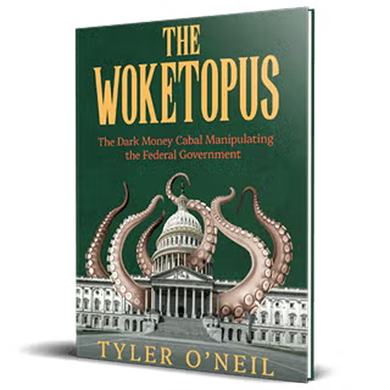
Read the first chapter of The Woketopus right now for FREE
Today, even with President Trump’s victory, leftist elites have their tentacles in every aspect of our government.
The Daily Signal’s own Tyler O’Neil exposes this leftist cabal in his new book, The Woketopus: The Dark Money Cabal Manipulating the Federal Government.
In this book, O’Neil reveals how the Left’s NGO apparatus pursues its woke agenda, maneuvering like an octopus by circumventing Congress and entrenching its interests in the federal government.
You can read the first chapter of this new book for FREE in this eBook, The Woketopus: Chapter One using the secure link below.




The Daily Signal depends on the support of readers like you.
RELATED ARTICLES





Don’t miss the

Don’t miss the signal