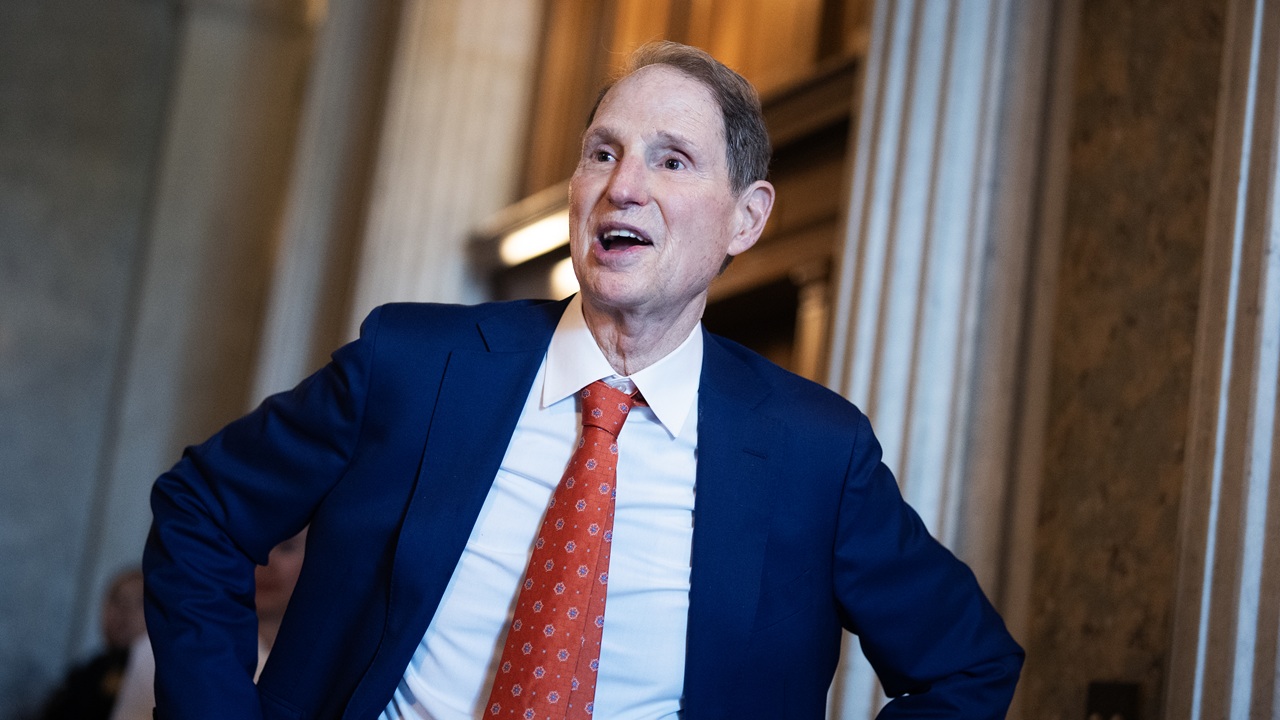
Sen. Ron Wyden, D-Ore., and Rep. Richard Neal, D-Mass., rolled out the Retirement Fairness for Working Americans Act this week, and the name alone tells you how Washington sells a bad idea. There is nothing fair about capping retirement accounts and forcing selloffs on people who did exactly what the tax code told them to do for 30 years. Fairness does not shrink the pot. This bill does.
I have spent three decades building investment strategies for single-family offices, running a hedge fund, and structuring private credit deals, and I serve as a designated expert witness on fiduciary duty in federal and state courts. I know the difference between closing a genuine loophole and moving the goalposts on savers who followed the rules Congress wrote. This bill is the second thing dressed up as the first.
The legislation, in both its House and Senate versions, targets anyone with more than $10 million combined across IRAs and defined contribution plans, barring further contributions and forcing a 50% annual drawdown on the excess, once income tops $400,000 for individuals or $450,000 for couples.
To justify this, Wyden and Neal point to Peter Thiel, whose Roth IRA grew into a multibillion-dollar account after he placed early PayPal founder shares into it decades ago.
Here is what Washington will not say plainly: Thiel has not been shown to have broken any rule. He used a structure that was legally available, priced his shares the way the custodian did not object to at the time, and then did what Thiel does, which is build companies that work. Punishing a man for being smarter and earlier than everyone else is a poor tax policy.
The maneuver is also rarer than the bill’s sponsors let on. Pulling it off requires three things at once: access to founder or seed-stage shares in a company that becomes a generational winner, a specialized custodian willing to hold private stock inside a Roth, and counsel sophisticated enough to navigate prohibited-transaction and self-dealing rules without tripping them. That combination narrows the field to a small slice of founders and early-stage investors, not a meaningful share of American savers.
TRENDING ARTICLES



The numbers back that up. IRS data on IRA balances is aggregated by income and age, not broken out by “founder stock that became a fortune,” so nobody can cite a real percentage, and the people claiming otherwise are guessing. A generous estimate puts the accounts that pulled off Thiel’s specific trick in the hundreds or low thousands, against roughly 150 million American tax filers and tens of millions of IRA holders. That rounds to zero, and it should not be confused with the millions of households doing routine backdoor Roth conversions on ordinary portfolio assets, a different behavior entirely.
The capital markets case matters too. Retirement accounts are the largest pool of patient, long-horizon capital in the economy, sitting in equities, bonds, and private markets for decades and funding the expansion capital that lets companies build plants and hire workers. Force accounts above $10 million to liquidate half of every excess dollar each year, and you pull capital out of the market that funds hiring at companies nobody has accused of tax avoidance.
The Joint Committee on Taxation put the scale in context: just 208 individuals held $85.1 billion in these accounts at the end of 2024, averaging $409 million each, against the trillions in the broader 401(k) and IRA system. I work with private credit strategies that depend on exactly this kind of long-duration capital. Force annual liquidation on the longest-horizon accounts in the system, and you shrink the pool that keeps credit flowing to small businesses that cannot get a bank loan on reasonable terms.
There is a trust problem here too. Every American who maxes out a 401(k) or funds a backdoor Roth is betting that Washington will not move the finish line on them. Change the rules retroactively on people who followed them, and you teach the next generation that the smart move is to spend today and let Social Security sort out tomorrow. This bill has no path through the current Congress; its authors are writing it for 2027, banking on a Democratic majority to hand them the gavels to move it. That is a marker laid down for a future fight, not a fairness agenda.
Wyden told reporters this bill closes “an egregious loophole.” It does not. A loophole implies a widespread hole in the fence that thousands are climbing through. What Thiel found was a door so narrow almost nobody else could locate it, let alone walk through it, and he walked through it legally.
A nationwide law capping 32,000 account holders—business owners, physicians, and long-tenured executives who built seven-figure balances through decades of contributions and compounding—to catch a problem that applies to a rounding error’s worth of people is not fairness. It is a lot of legislative effort spent finding a problem that barely exists.
I coached kids in youth sports, and the first thing I teach them is that discipline compounds. Show up, do the reps, and results follow years later, often long after anyone is watching. That is what four decades of retirement contributions look like too.
Punishing the people who did the reps because one outlier used a legal structure better than anyone else did is bad policy, and the savers who did everything right deserve better than a bill named for the opposite of what it does.
We publish a variety of perspectives. Nothing written here is to be construed as representing the views of the Daily Signal.
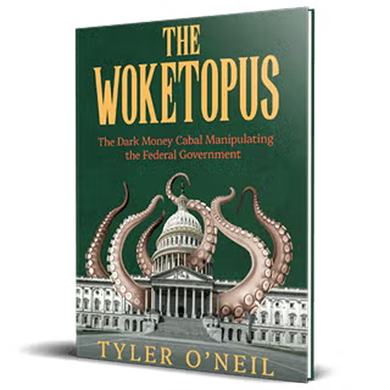
Read the first chapter of The Woketopus right now for FREE
Today, even with President Trump’s victory, leftist elites have their tentacles in every aspect of our government.
The Daily Signal’s own Tyler O’Neil exposes this leftist cabal in his new book, The Woketopus: The Dark Money Cabal Manipulating the Federal Government.
In this book, O’Neil reveals how the Left’s NGO apparatus pursues its woke agenda, maneuvering like an octopus by circumventing Congress and entrenching its interests in the federal government.
You can read the first chapter of this new book for FREE in this eBook, The Woketopus: Chapter One using the secure link below.




The Daily Signal depends on the support of readers like you.
RELATED ARTICLES





Don’t miss the

Don’t miss the signal