
Who would have thought education dollars were best used when actually directed toward the education of students?
Attempting to follow every letter of federal regulation in education is a monumental task. School personnel spend tens of millions of hours (and dollars) each year on federal compliance. What they get in return for this investment is rarely to the students’ direct benefit.
Through the new Returning Education to the States Waiver, the Education Department has created a map for reform. As a result, many state superintendents across the country are working with the Education Department to redirect tax money.
Department officials announced the waiver last year. The policy allows state policymakers to consolidate some federal spending categories in federal law to align spending with a state’s education priorities, such as better reading and math outcomes, more tutoring, teacher hiring and training, and more.
In May, Louisiana became the second state in the nation to receive approval for a waiver, following Iowa at the beginning of the year.
Upon granting the waiver, U.S. Secretary of Education Linda McMahon said, “After implementing evidence-based reforms grounded in the Science of Reading, Louisiana has made some of the strongest literacy gains in the country, underscoring the impact that disciplined leadership can make when given the freedom to innovate. With this new flexibility, the Bayou State is well-positioned to accelerate their remarkable progress, cut through red tape, and drive even stronger results for students and families.”
TRENDING ARTICLES



McMahon and Louisiana State Superintendent Cade Brumley agree on an important principle: Education spending should put students first. Parents and local officials should be responsible for deciding how education spending is used.
This waiver will allow Louisiana, as Brumley said, to “break down some of the funding silos” and allow more than $18 million in federal tax spending to flow to classrooms through fiscal year 2029. Previously, federal compliance costs would have captured this spending.
States approved for these waivers must file annual reports explaining how the waiver reduced paperwork and improved student achievement.
Iowa and Louisiana aren’t the only states applying for waivers. Education Department officials said that they are in conversation with policymakers in 10 other states about waivers and how to give state policymakers more decision-making authority over education spending.
The Education Department has applied the same student-first approach to its Ed-Flex waiver program. In May, Department officials approved Florida’s and Illinois’ applications for Ed-Flex waivers. This allowed state-level staff in these states to waive regulatory and statutory requirements for schools without first asking for federal approval.
The Education Department has approved Ed-Flex waivers in 18 states. The waivers allow state-level agencies to make decisions on student support and academic enrichment at local levels without federal bureaucracy.
Every state, every district, and every student has different needs. The Department of Education has finally realized that it should not micromanage local school operations. Federal bureaucracy is not personalized, nor flexible, nor always focused on student success but rather legal compliance. Education must be each of these things. The waiver programs are a hopeful sign for the future of education in the U.S.
As the Education Department continues to return education to the states, the agency moves closer to President Donald Trump’s stated goal of closing the Department of Education. It’s been almost 50 years since lawmakers elevated the Office of Education within the U.S. Department of Health and Human Services to Cabinet-level status. Many thought this move was “the product of politics” rather than “reasoned policy or pressing national need.” The result has been “a significant bureaucratic compliance burden for states and local school leaders, with few academic gains.”
Next, Congress should complete what President Ronald Reagan started two years after the Department was established: downsize the Education Department and move the few remaining programs to other agencies. Freeing state lawmakers and local educators from federal burdens, while enforcing civil rights protections, will put state policymakers, teachers, and families back in the driver’s seat of their children’s education futures.

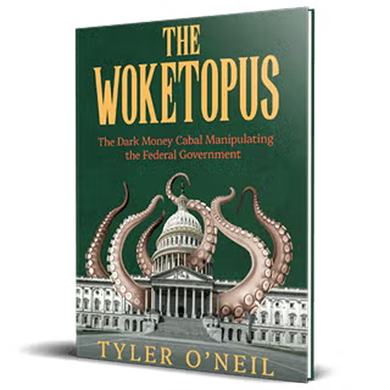
Read the first chapter of The Woketopus right now for FREE
Today, even with President Trump’s victory, leftist elites have their tentacles in every aspect of our government.
The Daily Signal’s own Tyler O’Neil exposes this leftist cabal in his new book, The Woketopus: The Dark Money Cabal Manipulating the Federal Government.
In this book, O’Neil reveals how the Left’s NGO apparatus pursues its woke agenda, maneuvering like an octopus by circumventing Congress and entrenching its interests in the federal government.
You can read the first chapter of this new book for FREE in this eBook, The Woketopus: Chapter One using the secure link below.
TRENDING ARTICLES


The Daily Signal depends on the support of readers like you.
RELATED ARTICLES





Don’t miss the

Don’t miss the signal