
Just hours after Justice Neil Gorsuch’s confirmation as the newest member of the Supreme Court, the White House announced the appointment of George Mason law professor Neomi Rao to be the administrator of the Office of Information and Regulatory Affairs.
The appointment won’t be accompanied by the intense media coverage that Gorsuch received. Nevertheless, it could be one of the most important offices filled by President Donald Trump. If confirmed by the Senate, Rao will lead the new administration’s war on the red tape burdening Americans and the U.S. economy.
Buried within the Office of Management and Budget, which itself is part of the Executive Office of the President, the Office of Information and Regulatory Affairs is easy to miss on an organization chart. Yet, it is one of the most important offices in Washington. Established in 1981 under President Ronald Reagan, it is charged with regulating the nation’s regulators and reviewing the costs and benefits of federal rules to ensure that they are justified and consistent with the president’s agenda.
This is no easy task: The office’s staff of about 50 full-time professionals is responsible for keeping watch over an army of more than 279,000 regulators, a ratio of 5,600-to-1.
The office has historically punched well above its weight in bureaucratic battles, especially when it enjoys White House support. It’s a nearly unique institution in Washington, being one of the very few government agencies for which success is defined in terms of how much it has limited the growth of government, not how much it has expanded government power.
The Office of Information and Regulatory Affairs’ role—and that of its administrator—promises to be particularly important in the months ahead as the Trump administration focuses on rolling back regulation.
TRENDING ARTICLES


The objective is set out by the president’s Jan. 30 executive order on regulation, which sets a cap of zero on the net cost of new regulation. That is a daunting task: The last time in which the burden of federal regulation did not increase was 35 years ago, in 1982. Nevertheless, it is well within the bounds of possibility.
Rao will find a sizeable to-do list on her desk when she arrives. Among the items: the semi-annual regulatory agenda, which will outline what each agency will regulate—and deregulate—in the near future. Rao will also be tasked with making the new “2-for-1” rule (requiring two rules to be rolled back for every new one imposed), and implementing the regulatory cost cap called for by Trump.
There is little question that Rao, who comes to the Office of Information and Regulatory Affairs with broad experience in government, is well qualified to lead the effort to cut red tape. However, even though there is no reason to doubt her commitment to reform, she will need continued support from the president and other leaders in the administration.
While support for a regulatory rollback is plentiful now, such support tends to diminish as other issues and priorities intrude. But if that support is maintained, a historic reduction in regulatory burdens may be within reach.

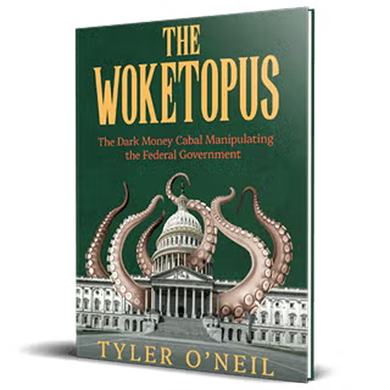
Read the first chapter of The Woketopus right now for FREE
Today, even with President Trump’s victory, leftist elites have their tentacles in every aspect of our government.
The Daily Signal’s own Tyler O’Neil exposes this leftist cabal in his new book, The Woketopus: The Dark Money Cabal Manipulating the Federal Government.
In this book, O’Neil reveals how the Left’s NGO apparatus pursues its woke agenda, maneuvering like an octopus by circumventing Congress and entrenching its interests in the federal government.
You can read the first chapter of this new book for FREE in this eBook, The Woketopus: Chapter One using the secure link below.
TRENDING ARTICLES


The Daily Signal depends on the support of readers like you.
RELATED ARTICLES





Don’t miss the

Don’t miss the signal