
Yesterday evening, the House of Representatives released its stopgap spending measure which blindly continues the bloated spending in the January omnibus bill that included special-interest handouts, wasteful and unnecessary energy spending, and transportation boondoggles.
Instead of debating and voting on the 12 appropriations bills separately as lawmakers are supposed to do, Congress again will rely on a temporary continuing resolution to fund the government at current levels through Dec. 11. This means no hard decisions have to be made, and wasteful spending continues as ineffective and duplicative programs and those outside the proper scope of the federal government are left on the books.
This continuing resolution funds federal government agencies and programs past the Sept. 30 funding expiration, thereby avoiding a government shutdown. “People realize it’s something we have to do, keep the lights on, keep the government going,” said Rep. Hal Rogers, R-Ky., chairman of the House Appropriations Committee.
In the words of George P. Shultz, former Secretary of State, Treasury and Labor, and former director of the Office of Management and Budget: “Continuing resolutions are a total cop-out.”
Passing an all-inclusive fallback measure that maintains the status quo is not what lawmakers “have to do.” What they have to do is pass the 12 mandated appropriations bills. This process was designed to foster debate and force lawmakers to make tough decisions on spending. Instead, CRs let lawmakers tell their constituents that they avoided a (self-imposed) government shutdown.
The measure would authorize spending through Dec. 11 at the current fiscal year level of $1.012 trillion plus $98 billion in emergency and disaster-related spending— loopholes which are exempt from the Budget Control Act cap. This timeframe invites trouble for the upcoming lame duck session, a time when special-interest spending is at the top of many outgoing lawmakers’ minds.
TRENDING ARTICLES



There are also a number of troubling provisions in this CR, including:
1. Extends the charter of the Export-Import Bank until June 2015.Expiration of the charter would have ended this Depression-era relic that primarily benefits multinational corporations by subsidizing the purchases of their foreign customers. This charter extension should not have been attached to the CR, nor should it be extended at all.
2. Overseas Contingency Operations funding would be $26 billion too much. The CR would extend last year’s OCO budget of $85 billion into FY2015. But with military operations in Afghanistan drawing down, the administration had requested a smaller amount of $59 billion for FY 2015. Barring a revised request from the administration based on changes in military strategy and operations, this additional funding level is inappropriate. Given that OCO funding is exempt from the discretionary caps outlined in current legislation, this higher amount ostensibly will increase the deficit for no reason.
3. Increases commitments for general business loans authorized under section 7(a) of the Small Business Act by $1 billion. The SBA’s lending programs benefit a select number of businesses at the expense of taxpayers and the vast majority of businesses that do not receive government support. Congress should stop engaging in corporate welfare in the name of “helping” small businesses.
4. Renews Congress’ long-standing moratorium on state Internet taxation only temporarily. Its expiration would have allowed states and local governments to tax online access and other Web services enjoyed by Americans. Although the short-term extension is better than allowing the moratorium to expire, Congress should make the moratorium a permanent ban instead. By including the moratorium debate in the lame duck session, the House sets itself up for a Senate proposal to expand state sales tax authority over Internet sales. This unnecessarily jeopardizes the broader tax ban.
5. Reserves funding for Early Head Start Expansion and Early Head Start-Child Care Partnerships. It’s bad that the bill continues funding for Head Start, which, as even an administration study showed, has failed to improve academic outcomes for the children it was designed to help. But it also specifically reserves funding for early head start programs which also failed to have statistically measurable effects on measures of child academic outcomes, including reading, vocabulary and math skills. Congress should stop funding failed social programs.
Congress’s main job is to budget. It should do so by following the budget process and debating spending measures on their constitutional merits, not passing expensive stopgap measures that push the problem down the road.

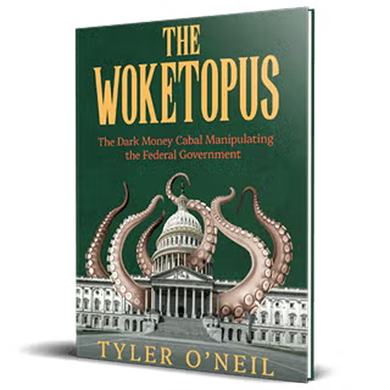
Read the first chapter of The Woketopus right now for FREE
Today, even with President Trump’s victory, leftist elites have their tentacles in every aspect of our government.
The Daily Signal’s own Tyler O’Neil exposes this leftist cabal in his new book, The Woketopus: The Dark Money Cabal Manipulating the Federal Government.
In this book, O’Neil reveals how the Left’s NGO apparatus pursues its woke agenda, maneuvering like an octopus by circumventing Congress and entrenching its interests in the federal government.
You can read the first chapter of this new book for FREE in this eBook, The Woketopus: Chapter One using the secure link below.
TRENDING ARTICLES


The Daily Signal depends on the support of readers like you.
RELATED ARTICLES




Don’t miss the

Don’t miss the signal