
The chairs of the House and Senate Veterans Affairs committees made a deal on Monday to authorize $15 billion in additional spending in response to recent revelations of scandals at the Department of Veterans Affairs (VA).
All spending in the bill would be authorized as “emergency spending,” despite several of the bill’s provisions failing to meet the Budget Control Act’s (BCA) criteria for such spending.
The bill, agreed upon by the 28-member conference committee, would authorize $10 billion to allow veterans experiencing access issues to receive care from eligible non-VA providers. Once three-quarters ($7.5 billion) of the amount was spent, the VA would report to Congress within 30 days, which would likely put pressure on lawmakers to extend the provision and funding for it beyond the time frame and amount set in this bill. A previous Congressional Budget Office (CBO) analysis put a cost estimate on this downside risk, showing that a similar provision could have ballooned into a $500 billion entitlement over the decade.
Eligible veterans have to be enrolled in the VA for care by August 1 or have to have been engaged in a combat zone within five years of seeking the newly authorized care. Better targeting would consider ending enrollment for veterans who do not have service-related medical needs and who are not poor, an option the CBO described as refocusing the VA’s strained resources on the nation’s most vulnerable veterans:
An advantage of this option is that it would refocus VA’s attention and services on its traditional group of patients—those with the greatest needs or fewest financial resources. Higher-income veterans gained access to the VA system only in the mid-1990s, when the federal budget was under less strain and experiencing less demand for services by higher-priority veterans. In 2012, nearly 90 percent of enrollees in priority groups 7 and 8 had other health care coverage, most notably Medicare and private health insurance. As a result, the vast majority of the veterans who would lose VA coverage under this option would continue to have access to other sources of coverage, and veterans without other health insurance options could qualify for coverage through the health insurance exchanges.
The bill would further authorize $5 billion for the VA to hire additional physicians and medical staffs, lease facilities, make infrastructure improvements, and undergo minor construction projects. An expansion of the VA’s long-term capacity to deal with growing demand of the VA system should be properly deliberated as part of the appropriations process, and any spending should fall inside the BCA’s generous spending limit.
TRENDING ARTICLES



The bill would also extend a scholarship program and expand it by doubling the allowable annual education debt reduction amount. This provision, which is unrelated to veterans’ health care altogether, certainly has no room in an emergency supplemental bill.
While the conference agreement claims to offset about $5 billion in spending, this is done not with spending cuts but by extending policies that provide a favorable score but likely no additional savings than would otherwise occur. This allows Congress to claim these extensions as offsets for new spending. For instance, the bill includes extending a provision that caps the cash pension of some veterans and extending a provision for the collection of fees from certain housing loans. If those policies were made legally permanent, such tactics would cease to be possible.
But even with those offsets, the CBO scores the bill as increasing the 10-year deficit by $10 billion.
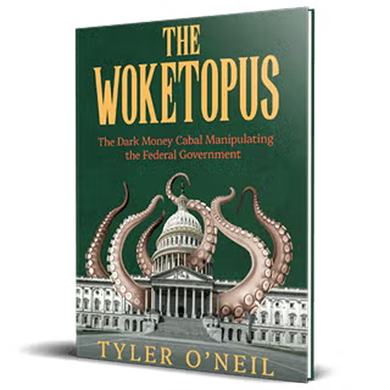
Read the first chapter of The Woketopus right now for FREE
Today, even with President Trump’s victory, leftist elites have their tentacles in every aspect of our government.
The Daily Signal’s own Tyler O’Neil exposes this leftist cabal in his new book, The Woketopus: The Dark Money Cabal Manipulating the Federal Government.
In this book, O’Neil reveals how the Left’s NGO apparatus pursues its woke agenda, maneuvering like an octopus by circumventing Congress and entrenching its interests in the federal government.
You can read the first chapter of this new book for FREE in this eBook, The Woketopus: Chapter One using the secure link below.




The Daily Signal depends on the support of readers like you.
RELATED ARTICLES





Don’t miss the

Don’t miss the signal