
Everyone has encountered apathy about abortion: “I wouldn’t get one, but I can’t tell anyone else what to do” or “It’s not my problem what other people do with their bodies.”
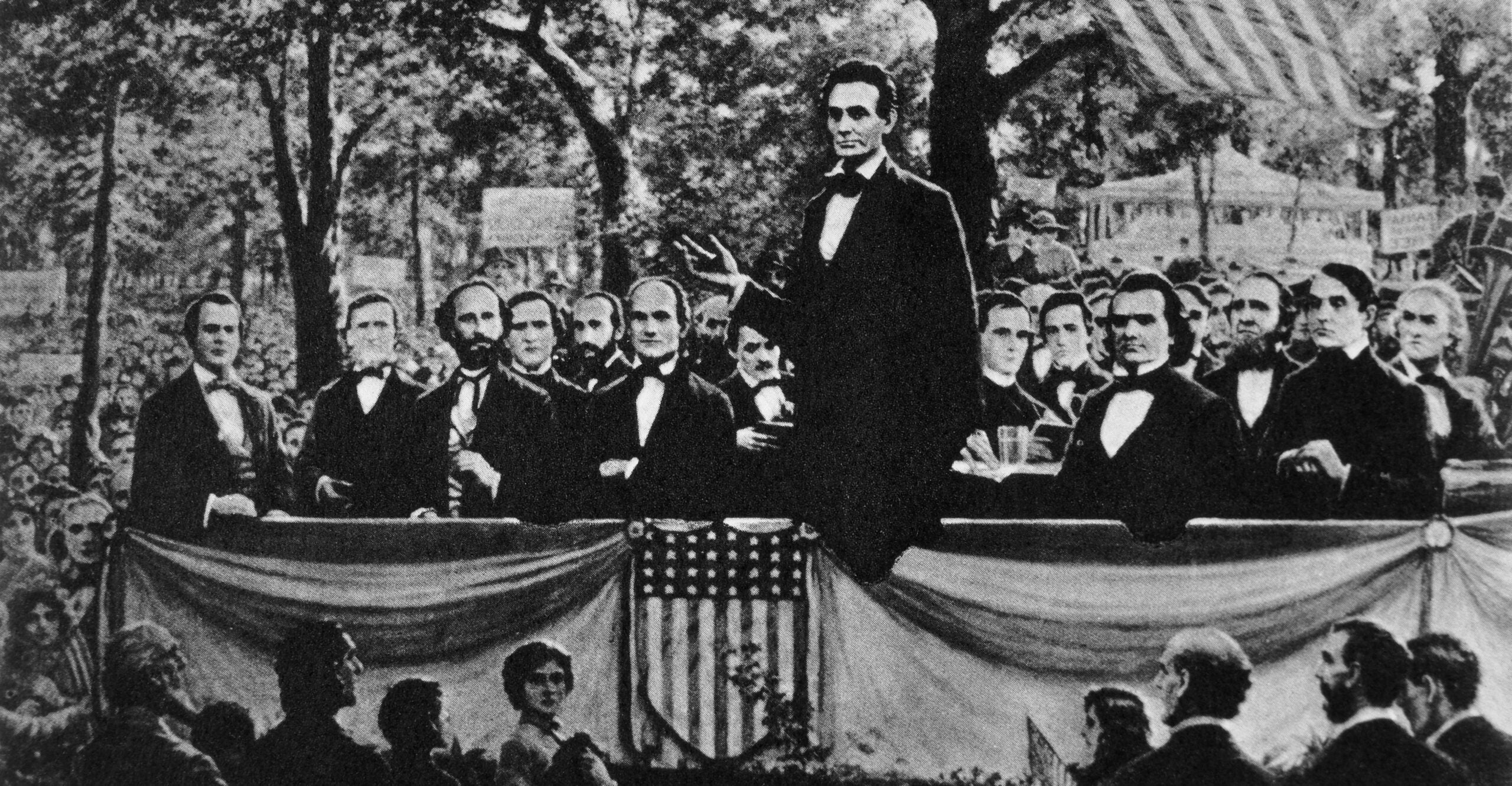
That spirit of apathy toward the greatest moral violation of the day isn’t new. Before the Civil War, Stephen Douglas said he didn’t care whether slavery was “voted down or voted up.”
Douglas, Abraham Lincoln’s opponent for a Senate seat from Illinois in 1858, thought states and territories should be able to choose for themselves whether or not to permit slavery. His doctrine of popular sovereignty was one of profound indifference.
“It is none of my business which way the slavery clause is decided,” Douglas said.
Douglas didn’t see slavery as a question of justice or right and wrong, but as an issue of local property regulation not worthy of destroying the union.
Lincoln recognized that Douglas’ attitude threatened to make the nation apathetic about the enslavement of millions. Lincoln said Douglas’ “avowed mission is impressing the ‘public heart’ to care nothing about it.”
TRENDING ARTICLES



By attempting to take a middle ground between the abolition and pro-slavery positions, Douglas by default sided with those supporting slavery.
Lincoln said the issue with Douglas and the Democratic Party was their refusal to care about slavery enough to treat it as a wrong. He worried that popular sovereignty would further push public opinion toward support for the nationalization of slavery.
Lincoln knew an end to slavery would never come if Douglas conditioned people to be unconcerned by it. Slavery had widespread support in the South, and the majority of Northerners didn’t care enough about it to take a stand.
Today, left-wing media, abortion activists, and movements like “Shout Your Abortion” have similarly desensitized Americans to the troubling realities of abortion.
A June 2022 poll showed 61% of Americans say abortion “should be legal in all or most cases.” While the percentages of Americans who support abortion under all circumstances at all stages of pregnancy are slim, people are becoming more and more used to the idea of a woman ending the life of her unborn baby to maintain her autonomy, pursue her career or finish school.
While radical abortion activists may see abortion as a positive thing, the average American is more likely to see it as a difficult decision, which is sometimes the right one. This latter attitude is more dangerous because, if people become accustomed to abortion as an amoral choice, the pro-life movement will lose its greatest appeal.
The argument against abortion is a fundamentally moral one. An unborn baby is a human being, and it is wrong to kill a human being, and therefore, abortion is wrong. No amount of inconvenience or fear makes it OK to kill another human being.
But this argument will be rendered moot if pro-choice supporters convince people that abortion is not a moral matter and the choice to abort should be met with public indifference. Just as Douglas said it was “none of [his] business” how slavery was decided, people often see abortion as something to be ignored, tolerated, or even praised.
The side effects of this abortion apathy have already taken hold. Last November, 56.7% of Michiganders voted for a ballot proposal enshrining legal abortion on demand in the Michigan Constitution in all stages of pregnancy. Several states have no restrictions on abortion, even when the baby could survive outside of the womb and feel pain, and all but two House Democrats in January voted against a bill to protect babies delivered after botched abortions.
A society that sees abortion as a moral issue would not stand by while things like that take place, just as a society that saw slavery as a moral evil could not tolerate it in any part of the country.
Either abortion is morally right or it is morally wrong. If America adopts Douglas’ apathy toward moral violations, the fight for unborn lives will be lost.
Just as Lincoln saw slavery as the greatest moral issue of his day, we must see abortion for what it is, the most immoral violation of human rights of our lifetimes. People need to be reminded that an abortion doesn’t just remove a clump of cells, but deprives a human being of the right to even be born.
Before we can change legislation, election results, or even hearts and minds, we must first make people care.
The Daily Signal publishes a variety of perspectives. Nothing written here is to be construed as representing the views of The Heritage Foundation.
Have an opinion about this article? To sound off, please email [email protected] and we’ll consider publishing your edited remarks in our regular “We Hear You” feature. Remember to include the url or headline of the article plus your name and town and/or state.

Read the first chapter of The Woketopus right now for FREE
Today, even with President Trump’s victory, leftist elites have their tentacles in every aspect of our government.
The Daily Signal’s own Tyler O’Neil exposes this leftist cabal in his new book, The Woketopus: The Dark Money Cabal Manipulating the Federal Government.
In this book, O’Neil reveals how the Left’s NGO apparatus pursues its woke agenda, maneuvering like an octopus by circumventing Congress and entrenching its interests in the federal government.
You can read the first chapter of this new book for FREE in this eBook, The Woketopus: Chapter One using the secure link below.

The Daily Signal depends on the support of readers like you.
RELATED ARTICLES




Don’t miss the
Don’t miss the signal