‘Fire and Be Damned!’ North Carolina and the Sparks That Lit the American Revolution
By the late 1760s, North Carolina was a smoldering tinderbox of conflict. Elected officials Cornelius Harnett and John Ashe had led the Sons of Liberty in resisting the Stamp Act, making its enforcement impossible and contributing to Parliament’s repeal of the tax, but deeper grievances remained.
Drought brought crop failures, hunger, economic depression, and a dramatic rise in debt, with many ordinary farmers, artisans, and tradesmen consigned to a horrible fate: debtors’ prison. In contrast, “courthouse rings” of wealthy elite dominated local politics, with tax collectors, sheriffs, and other officials appearing to prosper at the expense of their neighbors.
Citizens protested, petitioned, and demanded reform, but Gov. William Tryon, dependent on the support of the political establishment, did little to satisfy the growing complaints.
On April 28, 1768, roughly 100 Regulators, led in part by Irish immigrant Patrick Boggan, confronted Anson County officials at the courthouse over excessive fees, taxation, and abuses of office. They demanded reform, nominated their own candidate for the Assembly, and refused to pay taxes.
Their protests echoed a longstanding precept of English common law, namely, that Englishmen cannot be taxed without consent of themselves or their delegates. These Regulators considered themselves loyal British subjects and demanded that their colonial government respect their rights as Englishmen.
Their calls fell on deaf ears.
TRENDING ARTICLES


The magnificent Tryon Palace, completed in New Bern in 1770, became a powerful symbol of the widening divide between the folk and the royal government. As ordinary North Carolinians struggled with taxes and debt, the grandeur of the royal governor’s residence demonstrated how far removed the King’s government was from their concerns.
The Regulators became increasingly confrontational, disrupting courts and targeting corrupt officials. One of the most hated was Edmund Fanning, holder of multiple offices in Orange County and close friend of Gov. Tryon. Angry citizens stormed his office, seized him by the heels, and dragged him down the stairs, his head banging against each step. They then dissembled his Hillsborough home, literally tearing it down.
Tryon recognized that the movement had become more than a political protest. When judges in Hillsborough informed him in March 1771 that they needed militia protection in order to hold court, Tryon responded by offering militiamen a bounty and marching more than 1,000 men into the backcountry to face the Regulators. They met at Alamance Creek.
On May 16, 1771, Tryon, personally commanding the militia, ordered more than 2,000 poorly armed Regulators to disperse and surrender their weapons. They refused, and James Hunter, a leading Regulator, famously replied, “Fire and be damned!” After two hours of fighting, the Regulators were defeated. An uncertain number died; many were tried for treason, and seven were ultimately executed. Others accepted pardons by swearing allegiance to the Crown. Within weeks, thousands of Piedmont settlers had taken the oath.
My fifth great-grandfather, the “Revolutionary Reverend” Tidence Lane, was among those who refused to submit. After defeat at Alamance, he led more than one thousand Baptists into the western mountains, becoming part of the great migration of dissenters. Rev. Lane and his flock were not finished; many of them would return nine years later as the “Overmountain Men,” who defeated the British at the consequential Battle of Kings Mountain.
The Protestant ministers of North Carolina faced a complicated choice. Many shared the Regulators’ grievances against corrupt officials but opposed the violence and disorder into which the movement eventually descended. The Rev. David Caldwell provides a revealing example.
His Presbyterian congregations were deeply involved in the Regulation, yet he was on the ground at the Battle of Alamance, personally mediating between the Regulators and Gov. Tryon. A few years later, Caldwell became a powerful advocate for the Patriot cause, advancing it from his pulpit.
The apparent contradiction reveals an important distinction: opposing rebellion against colonial government in 1771 did not necessarily mean opposing resistance to British authority in 1775. The question turned on whether legitimate authority had been exceeded, long-standing rights violated, and peaceful remedies exhausted.
The Tea Act of 1773 and the Coercive Acts of 1774 convinced many ministers and colonists alike that Parliament had answered the question.
In 1774, North Carolina’s leaders gathered at New Bern for the First Provincial Congress, creating a political institution outside the royal government. This was a major step: They endorsed the Continental Congress’ opposition to British policies and agreed to boycott British goods.
North Carolina’s women now actively entered the fray, conducting one of the earliest female led political protests in American history. As managers of household purchases, women were essential to the boycott, finding substitutes for imported tea, cloth, and other goods. They followed public affairs through newspapers and heard increasingly frequent calls from ministers and political leaders to resist British policies.
They found means of resistance even though they were excluded from formal political participation.
In October 1774, 51 women from Edenton signed the Edenton Resolves, declaring their support for the boycott of British goods. With Abigail Charlton’s name appearing first on the list, the Resolves spread throughout the colonies. Later remembered as the Edenton Tea Party, North Carolina’s resistance to British authority had now spread beyond male politicians and militia leaders to women willing to publicly identify themselves with the Patriot cause.
The women of Edenton—and thousands of other North Carolinians—were no longer merely demanding reform from their colonial government. They were joining a continental movement against British imperial policies. North Carolinians developed years of experience organizing, resisting authority, and defending what they believed were their rights. Their fierce protection of their rights appeared long before 1776, whether in the Sons of Liberty, the Regulator movement, the pulpits of Dissenter churches, or the houses of women willing to champion the cause.
The Revolution gave that resistance a new target—and eventually a new name: independence.
Next week: The Royal Governor flees, patriots seize control, and North Carolina becomes the first colony to officially call for American independence.
This article is part of a series on the American Revolution in South Carolina, North Carolina, and Georgia.
We publish a variety of perspectives. Nothing written here is to be construed as representing the views of the Daily Signal.
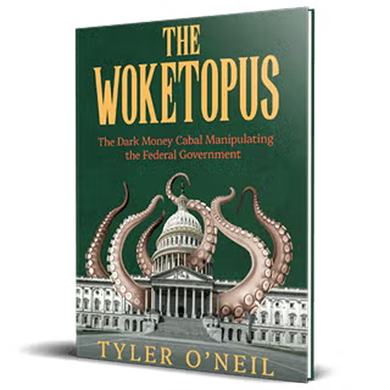
Read the first chapter of The Woketopus right now for FREE
Today, even with President Trump’s victory, leftist elites have their tentacles in every aspect of our government.
The Daily Signal’s own Tyler O’Neil exposes this leftist cabal in his new book, The Woketopus: The Dark Money Cabal Manipulating the Federal Government.
In this book, O’Neil reveals how the Left’s NGO apparatus pursues its woke agenda, maneuvering like an octopus by circumventing Congress and entrenching its interests in the federal government.
You can read the first chapter of this new book for FREE in this eBook, The Woketopus: Chapter One using the secure link below.


The Daily Signal depends on the support of readers like you.
RELATED ARTICLES



Don’t miss the

Don’t miss the signal