
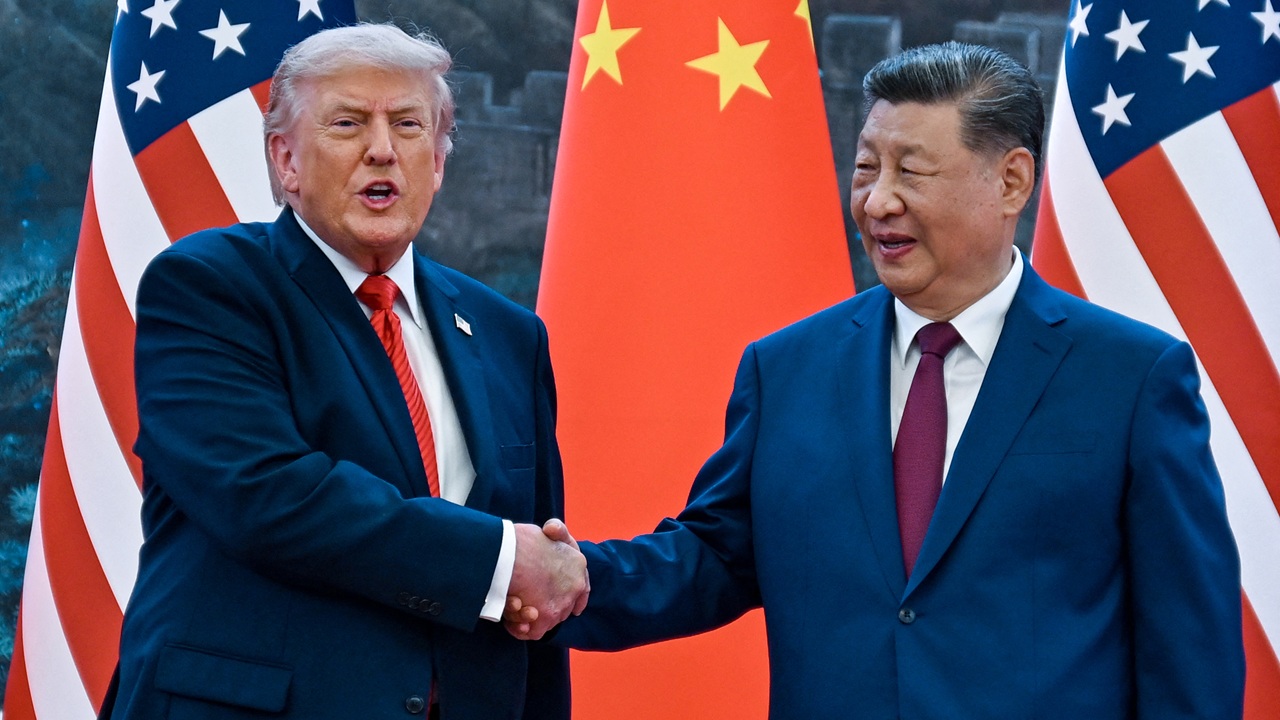
By 2049, Beijing aims to “fully transform” the People’s Liberation Army into a world-class force, and the U.S. military cannot deter China from using this military against the national interests of the U.S. with depleted munitions, delayed ships, and an industrial base that cannot surge in a crisis. President Donald Trump’s reconciliation bill recognizes this reality and provides the defense investment needed to restore American deterrence.
The fiscal year 2027 defense request totals roughly $1.5 trillion, including $1.1 trillion in base discretionary defense funding and $350 billion in additional mandatory resources for urgent defense priorities. These mandatory budget resources are necessary for investment in the hard power required to restore deterrence and prepare the U.S. for the intensifying great power competition with China.
The $350 billion in the reconciliation bill is designed to address shortfalls that cannot be solved through ordinary budget growth alone. This includes depleted munitions stockpiles, insufficient production capacity, fragile critical mineral supply chains, and an industrial base that needs predictable demand before it can expand.
The White House budget states that the mandatory funding would support “critical Administration priorities,” such as increasing access to munitions and supporting the defense industrial base. Furthermore, it provides flexibility for maturing technologies and acquisition approaches that can bring new entrants into defense production.
Reconciliation is not a substitute for the National Defense Authorization Act or the annual appropriations process, but it is the right tool for direct, budgetary investments that can survive Senate rules and move with a simple majority.
As Russ Vought, director of the Office of Management and Budget, has argued, reconciliation prevents urgent defense funding from being held “hostage” during the traditional appropriations process. Reconciliation should complement regular order by giving Congress a way to move quickly on urgent national security needs that also act as a much-needed shot in the arm for the American defense industrial base.
TRENDING ARTICLES



America needs more ships in the water, more aircraft on the flight line, more missiles in reserve, and more production lines capable of surging in a crisis. The administration’s request rightly focuses on procurement and industrial expansion. Congress should assist the administration’s approach by funding executable programs that expand industrial-base capacity and directly strengthen deterrence against China.
Maritime power will determine whether the U.S. can deter Chinese aggression, and the Trump administration’s defense budget rightly places a huge priority on revitalizing American shipbuilding. The U.S. needs warships that have the capacity to sustain operations across vast distances.
The reconciliation funding complements the NDAA’s policy direction and oversight framework on maritime power by accelerating delivery timelines and giving industry the long-term demand signal it needs to hire workers and increase output.
The establishment of a Munitions Acceleration Council is a step in the right direction. The objective is to fix the production system that would determine whether the U.S. could sustain a prolonged crisis.
The U.S. has expended large numbers of precision-guided munitions in the Middle East and Ukraine and needs large multiyear block buys to replenish our stockpiles. Munitions such as the SM-6, THAAD, Tomahawk, JASSM, AMRAAM, and PrSM are needed to deter Chinese aggression in the Western Pacific and are rightly given emphasis in the president’s reconciliation funding.
Developing precision-guided munitions, as well as aircraft, submarines, and missile defense systems, depends on critical minerals. These are too often controlled or processed by our foreign adversaries, especially China. The reconciliation bill recognizes that munitions production and mineral security go hand in hand and makes major invests into onshoring or “friend shoring” America’s critical mineral supply chains.
Our adversaries are watching what America can produce, deploy, and sustain. The question for Congress is whether this funding becomes real military capacity before the next crisis arrives. Trump’s reconciliation bill meets the urgency of the moment by putting resources behind the military capabilities that matter most.

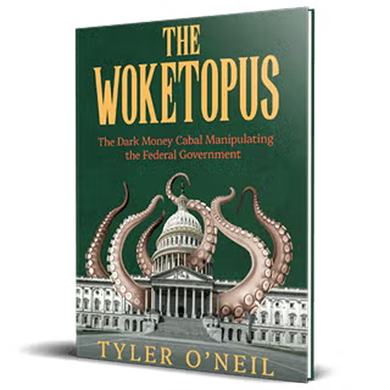
Read the first chapter of The Woketopus right now for FREE
Today, even with President Trump’s victory, leftist elites have their tentacles in every aspect of our government.
The Daily Signal’s own Tyler O’Neil exposes this leftist cabal in his new book, The Woketopus: The Dark Money Cabal Manipulating the Federal Government.
In this book, O’Neil reveals how the Left’s NGO apparatus pursues its woke agenda, maneuvering like an octopus by circumventing Congress and entrenching its interests in the federal government.
You can read the first chapter of this new book for FREE in this eBook, The Woketopus: Chapter One using the secure link below.
TRENDING ARTICLES


The Daily Signal depends on the support of readers like you.
RELATED ARTICLES



Don’t miss the

Don’t miss the signal