
Our Favorite Patriotic Tunes, Part 1: ‘God Bless America’ vs. ‘This Land Is Your Land’
As we celebrate America’s 250th birthday, the skies will be filled with not only fireworks but song. Those great patriotic tunes we all know by heart, even when we can’t hit all the notes. (Yes, “Star-Spangled Banner,” I’m thinking of you.)
Though the songs may be as familiar as the red, white, and blue, the stories behind them often are not.
Let’s look at a few.
Given what Alexander Hamilton called the “harmony of ingredients” that have made up the American populace, perhaps it’s fitting we start with the Russian immigrant whose songs fill chapters of the American songbook and who remained ever grateful to the land that gave him welcome as a little boy.
‘God Bless America’: 20 Years to Write, 4 Minutes to Become a Hit
It’s 1918. World War I is raging. A 30-year-old Russian immigrant named Israel Isidore Beilin—we know him as Irving Berlin—was at Camp Upton, New York, a crucial training and mobilization center during the Great War. He’d come up with a song for the finale of a show called “Yip, Yip, Yaphank,” which concluded with soldiers marching through the theater, out onto the street, then onto a transport to sail off to Europe. A rah-rah, off-to-war song.
The song was called “God Bless America.”
TRENDING ARTICLES



God Bless America, land that I love
Stand beside her and guide her
To the right with a light from above
Make her victorious on land and foam
God Bless America, my home sweet home.
One problem. Berlin felt that putting “God Bless America” together with the song the soldiers were singing on their way out would be too over the top. So, he cut the song from the show. It then sat in Berlin’s drawer for 20 years.
Then in 1938, the songwriter happened to be in London when British Prime Minister Neville Chamberlain had his infamous meeting with German Chancellor Adolf Hitler. When Berlin got home to the United States, he tried writing a song expressing his feelings called “Thanks America,” which Berlin said he “tore up because it was very bad. It seemed a bad editorial set to music.”
He remembered “God Bless America,” and rewrote his war anthem into what he called a “song of peace.” He added an intro and changed the key line in the chorus to:
Stand beside her
And guide her
Through the night with a light from above.
From the mountains, to the valleys, to the oceans white with foam.
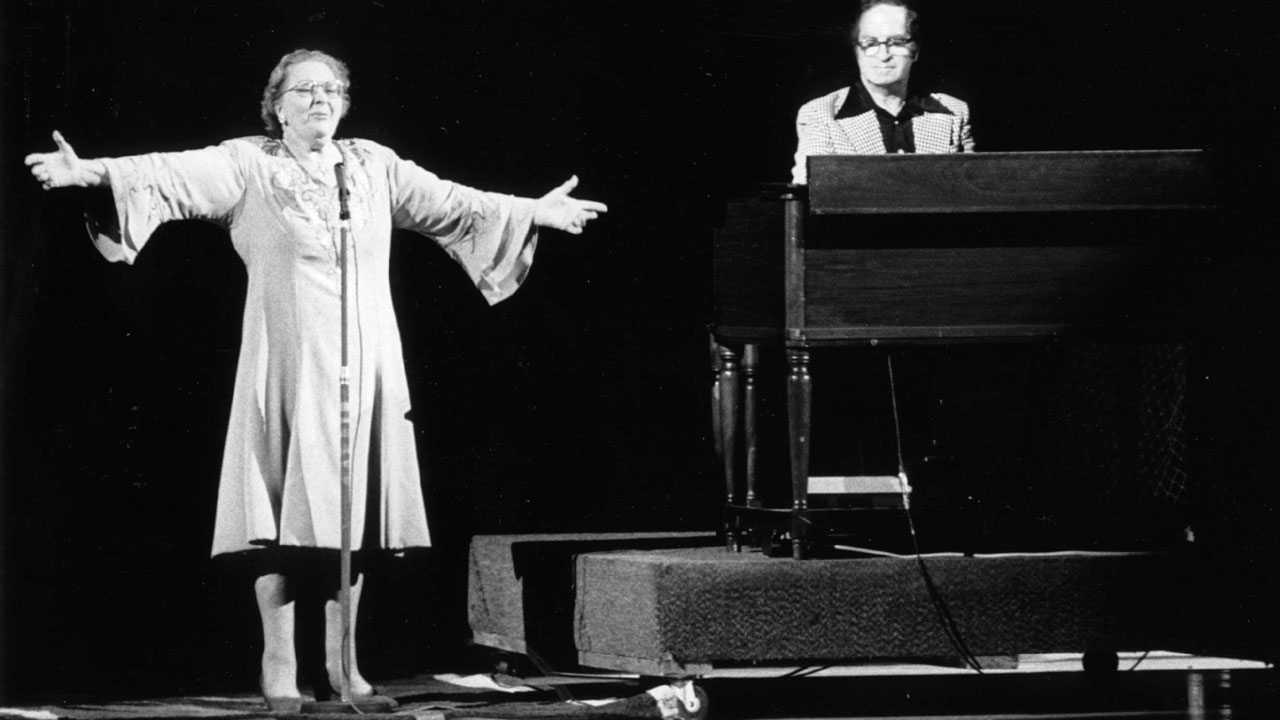
On Armistice Day—now known as Veterans Day—the popular singer Kate Smith premiered the song during a holiday radio broadcast.
This is that moment America first heard “God Bless America.”
“God Bless America” was an instant hit. However, one legendary folk singer was not a fan.
From Protest Song to Passionate Tribute
By February 1940, “God Bless America” was a national music standard. Woody Guthrie, the fabled troubadour of the Dust Bowl era, looked around at those still suffering from the Great Depression, and he wasn’t so sure God was blessing those people.
So, he set out to write a protest song in response to Berlin. He called it “God Blessed America.” Playing off Berlin’s scenic words, Guthrie painted some of the most lyrically beautiful imagery of America ever created.
As I went walking that ribbon of highway,
I saw above me an endless skyway.
I saw below me a golden valley.
This land was made for you and me.
I wound and rambled. I followed my footsteps
through the sparkling sands of her diamond deserts,
and all around me, a voice was sounding,
“This land was made for you and me.”
All told, four exquisite verses.
However, Guthrie wrote two other verses. One took a shot at private property. The other, never recorded verse, took direct aim at “God Bless America”:
One bright sunny morning in the shadow of the steeple,
by the relief office I saw my people.
As they stood hungry,
I stood there wondering if God blessed America for me.
However, by the time Guthrie got around to officially publishing the song in 1951, those last two verses were nowhere to be found, and the song had a new name: “This Land is Your Land.”
Its chorus remains as contagious as COVID-19.
This land is your land, this land is my land.
From California to the New York Island.
From the Redwood forests to the Gulf Stream waters.
This land was made for you and me.
Guthrie’s scathing protest song had morphed into a soaring America anthem of national unity, and one swell hootenanny sing-along.
Here’s the folk trio Peter, Paul and Mary and a crowd of thousands with “This Land Is Your Land.”
Irving Berlin and Woody Guthrie may have started out figuratively face-to-face. But as we ring in our 250th birthday, those two American music titans stand side-by-side.
Next time, a trio of favorites we nicked from the Brits.
We publish a variety of perspectives. Nothing written here is to be construed as representing the views of the Daily Signal.

Read the first chapter of The Woketopus right now for FREE
Today, even with President Trump’s victory, leftist elites have their tentacles in every aspect of our government.
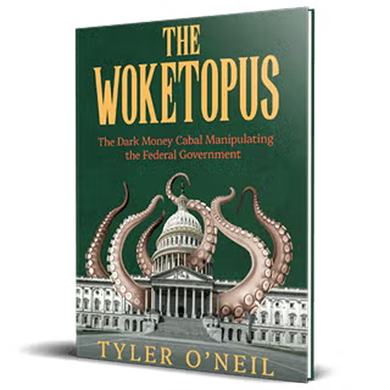
The Daily Signal’s own Tyler O’Neil exposes this leftist cabal in his new book, The Woketopus: The Dark Money Cabal Manipulating the Federal Government.
In this book, O’Neil reveals how the Left’s NGO apparatus pursues its woke agenda, maneuvering like an octopus by circumventing Congress and entrenching its interests in the federal government.
You can read the first chapter of this new book for FREE in this eBook, The Woketopus: Chapter One using the secure link below.
TRENDING ARTICLES


The Daily Signal depends on the support of readers like you.
RELATED ARTICLES





Don’t miss the

Don’t miss the signal