America’s private fortunes are the economic engines that built the most prosperous economy in world history, and they are giving themselves away.
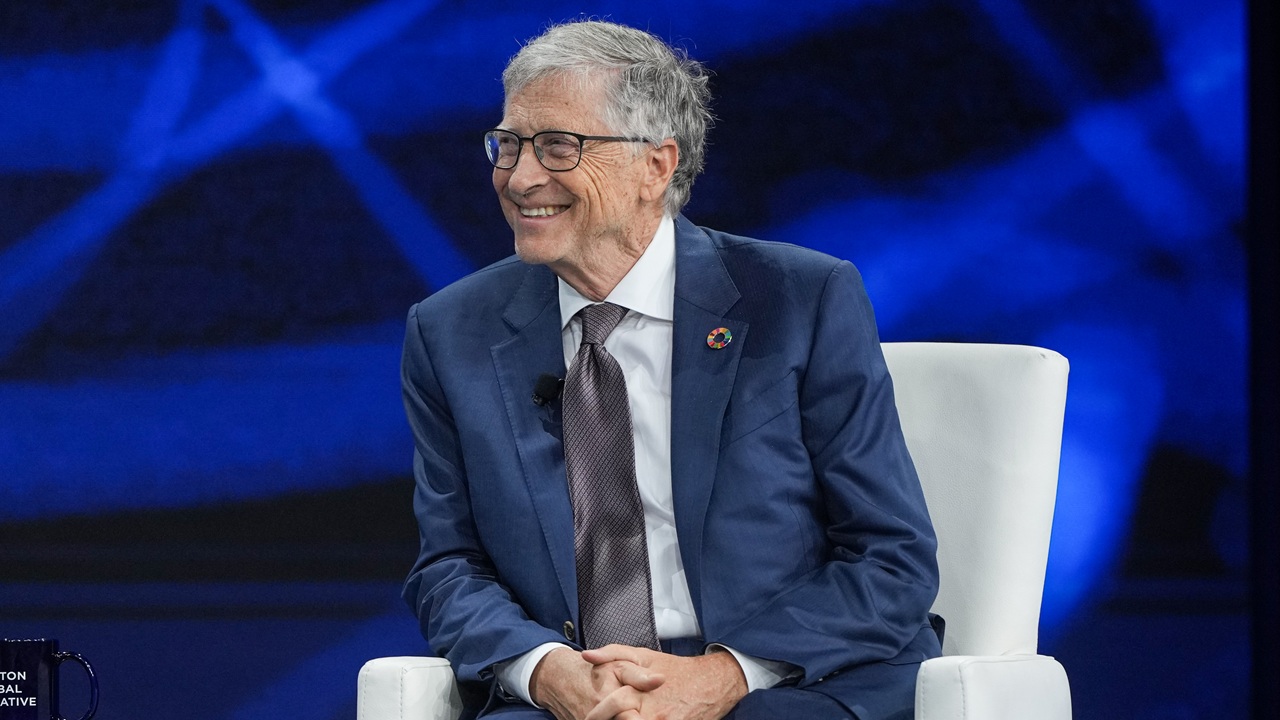
Since her 2019 divorce from Jeff Bezos, MacKenzie Scott has handed out $26 billion—much of it to racial equity, DEI, and “social justice” causes. Warren Buffett has pledged 99% of his roughly $170 billion. Bill Gates has given away more than $100 billion and vows to spend his foundation to zero by 2045. George Soros has poured $32 billion into his Open Society Foundations. Different fortunes, different causes—but the same destination, and the same motivating logic: The tax code has made nongovernmental organizations the most rational place for private fortunes to end up.
This is no accident; it’s inherent to the structure of how the tax code treats capital. The income tax hits the nominal value of a capital gain at rates of up to 23.8%, creating a powerful disincentive against selling. It is easier for founders of companies to borrow against shares rather than sell, incur massive tax bills, and dilute their ownership interest. If the appreciated asset is held until death, it will pass tax-free to the decedent’s heirs.
The market value of assets held at death goes into the computation of the decedent’s estate. If the decedent is married, assets pass tax-free to the surviving spouse. When the surviving spouse dies, the estate tax kicks in. The estate tax is due almost immediately and payable in cash.
Although technically progressive, practically speaking the modern American estate tax is either 0% or 40%—the latter being a punitive rate that incentivizes endowing a charitable foundation. Charitable giving counts as a deduction against the estate tax. For builders of successful companies with vast appreciated wealth, the rational course is never to sell, but hold until death, and donate appreciated assets to a nonprofit foundation or NGO.
The Incentives All Point One Way
Despite the toll that it can take on family fortunes, the estate tax captures few families and contributes little to federal tax revenue. It falls on roughly 0.07% of estates—down from more than 7% in the mid-1970s—and raises less than 1% of federal revenue. Why? Because the wealthiest are forced to route around it. The rates are extractive, and there’s nowhere near sufficient liquidity to pay a tax bill potentially in the billions without selling assets at fire-sale prices.
TRENDING ARTICLES



A study from the University of Pennsylvania’s Wharton School confirms the thesis; tax revenue is falling, and avoidance is part of the reason why. The tax does not gather deferred income tax revenue from America’s largest estates so much as dismantle them out of the taxable and wealth-creating private economy and into tax-exempt—and today often progressive—foundations.
Even the 1900s-era goal of preventing the rise of dynasty wealth and the “idle rich” is arguably unmet by the current structure. It is often families’ direct heirs who become the well-compensated managers of foundations directing the use of vast resources, as with Alexander Soros and the Open Society Foundations.
The NGO sector is vast. America’s tax-exempt economy today composes roughly 15% of gross domestic product—an economy the size of California and up from perhaps 4% of GDP in 1970. It holds more than $8 trillion in assets.
Foundations alone number over 100,000, and their growth has outpaced the broader economy for decades. A newer vehicle, the donor-advised fund, now holds more than $300 billion that can sit untouched indefinitely: The donor takes the deduction and sheds the capital gains tax at once. Every year, these breaks cost the Treasury tens of billions more, meaning that it is effectively subsidizing their growth. And before conservatives rejoice, the beast isn’t being starved; the private economy is.
Much of the private foundation money is used for genuinely charitable purposes like providing essential support for the needy, church and religious giving, or generating innovative knowledge. But much of the sector—health care, hospitals, universities—is increasingly ideological.
The largest foundations lean increasingly one way, and they have become the financial backbone of the professional progressive movement. The Ford Foundation renamed its Manhattan headquarters the “Center for Social Justice.” Soros’ Open Society—which The New York Times called “a sprawling political empire” advancing a liberal agenda—bankrolls progressive prosecutors and activist networks. Scott’s billions pour into DEI and racial equity groups. The Gates Foundation runs a diversity office.
Indeed, the Bill & Melinda Gates Foundation has drifted in the last decade beyond fighting malaria in sub-Saharan Africa to becoming one of the largest financial supporters of funds controlled by far-left-linked Arabella Advisors group. As left-leaning publication The Nation concedes, most explicitly progressive nonprofits survive on institutional philanthropy.
A striking share of the machinery of DEI and “social justice” is billionaire foundation money.
There is an old warning here. In 1977, Henry Ford II resigned from the board of the foundation his family had built, complaining that its staff had come to disdain the capitalist system that produced its wealth. By the quiet operation of the tax code, fortunes built through American free enterprise are steadily converted into endowments that fund America’s sharpest critics.
Unnoticed Consequences
Today many Americans argue over whether to tax the rich more as though we could make them write checks to the Treasury with proceeds from checking accounts. This drastically misrepresents the situation.
A code that taxes phantom gains on sale, ignores the liquidity problems inherent in trying to tax founders whose fortunes are largely in company stock, but then forgives debts entirely at death if disposed of “correctly” does not redistribute great fortunes as progressives want or leave them in the productive economy that built them. It channels them into a permanent, tax-advantaged endowment for the often progressive activist nonprofit sector, accountable to almost no one.
Any honest reform of how we tax wealth must reckon with the escape hatch that turns private fortunes into progressive political power. Wealth taxes ultimately fail in their stated goals–generating meaningful and ongoing government revenue–but succeed in funneling vast sums around the tax.
An overhaul of how we tax investments, savings, and assets is necessary to reduce inefficiencies in the tax code, reduce the public debt, promote innovation, and protect and reward truly charitable giving.
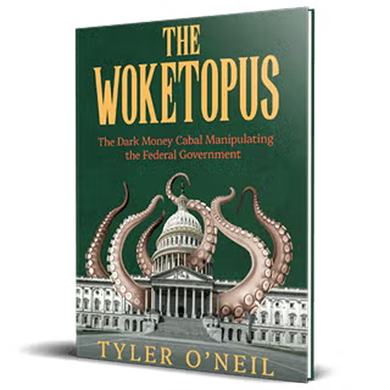
Read the first chapter of The Woketopus right now for FREE
Today, even with President Trump’s victory, leftist elites have their tentacles in every aspect of our government.
The Daily Signal’s own Tyler O’Neil exposes this leftist cabal in his new book, The Woketopus: The Dark Money Cabal Manipulating the Federal Government.
In this book, O’Neil reveals how the Left’s NGO apparatus pursues its woke agenda, maneuvering like an octopus by circumventing Congress and entrenching its interests in the federal government.
You can read the first chapter of this new book for FREE in this eBook, The Woketopus: Chapter One using the secure link below.




The Daily Signal depends on the support of readers like you.
RELATED ARTICLES





Don’t miss the

Don’t miss the signal