
Socialism is on the rise, and capitalism is on its back foot. The implications span all parts of our society but certainly include corporate governance. As is often the case, the corporate governance issue boils down to who makes decisions, and to what end those decisions are—and should be—aimed.
Should corporations strive solely to maximize shareholder value? If one assumes the answer is “yes”—whether for reasons of law, economics, or philosophy—is it even possible to maximize shareholder value based solely on expected value and return-on-investment calculations? Or must other considerations inform the relevant decision-making?
And if one concludes that other factors are necessarily relevant, does that mean only a hypocrite could oppose “stakeholder capitalism,” or the use of “environmental, social, and governance” factors, or the pursuit of “diversity, equity, and inclusion” agendas?
To attempt to thread this needle, such that one might advocate for a combination of free market capitalism, shareholder wealth maximization, and principles like The Heritage Foundation’s “Four Cornerstones” as an effective basis for corporate governance, while at the same time rejecting ESG, DEI, and “stakeholder” capitalism, is sure to generate much debate.
However, for purposes of this op-ed, I am going to posit precisely that under the banner of “free enterprise.” Obviously, space limitations will necessitate merely flagging some relevant issues. But these debates are critical right now, and just marking the outlines of parts of the relevant landscape matters.
Focusing on free market capitalism generally (and shareholder wealth maximization specifically), a complaint one often hears is that it supposedly prioritizes shareholder wealth maximization at the expense of the environment, workers, consumers, and other stakeholders. However, several points should be considered before accepting that characterization.
TRENDING ARTICLES



First, the reason that free market capitalism has been so successful, including bringing us to the cusp of eliminating poverty, is that it incentivizes business owners to provide potential consumers with products and services that improve the purchaser’s life sufficiently to warrant the cost of obtaining that product or service.
In other words, rather than incentivizing exploitative behavior, free market capitalism promotes precisely the opposite, which is to say it promotes improving the lives of consumers, employees, and other stakeholders in order to be the most attractive seller possible.
Second, the minute that one imposes other goals on entrepreneurs besides profit maximization, one runs into the “many masters” problem. If your North Star is constantly found in a new place, you are essentially rudderless. One day you are maximizing shareholder value; the next you are setting that value on fire in pursuit of net-zero goals.
And this assumes the decision-maker is acting in good faith. Allowing the well-being of myriad stakeholders to serve as rotating justifications for corporate decision-making provides great cover for self-dealing insiders who are then able to brush off underperformance by claiming it was all to “save the trees.”
On top of that, the argument that one can’t avoid the “many masters” problem—because shareholders themselves have varying time horizons and interests—is foolish. Shareholders who want something other than profit can deploy their money accordingly via charities or public benefit corporations, and expected value calculations account for time differences.
Third, while adding ESG screens and pursuing DEI sounds admirable, what has been repeatedly demonstrated is that these initiatives seemingly can’t avoid being captured and weaponized by leftists who proceed to promote neo-Marxist and neo-racist ends.
Corporate managers using other people’s money for pet projects has long been a problem, but the problem becomes particularly acute when those projects include things like divisive racial quotas and utopian climate agendas that undermine national security and increase energy prices.
To see the truth about ESG, DEI, and stakeholder capitalism, one must look past the pleasant-sounding words and examine the substance of those regimes. Behind the newspeak lurks neo-racist and neo-Marxist leftism in myriad forms, whether promoted by radical true believers, opportunists, useful idiots, or cowards.
Fourth, while limited government is the best government, we still need some government. Accordingly, in assessing this debate we should keep in mind that external regulation is available to protect society against exploitative externalities created by the pursuit of profit maximization.
If truly needed, this is far better than killing the goose that lays the golden eggs by distorting the signaling function of profit-seeking with myriad commitments to stakeholders. However, we must remain vigilant against the fabrication of externalities to support the market-distorting and value-destroying promotion of ESG via inefficient subsidies and otherwise.
Finally, it is important to note that defending free market capitalism against socialism does not undermine the importance of purpose and virtue. In fact, the “value” in “expected value” is arguably impossible to calculate optimally if one ignores the purpose of the product or service and whether the seller will be trusted as a virtuous actor or not.
I have written about this at more length elsewhere, but when I engage with corporations for the benefit of shareholders as part of The Heritage Foundation’s Free Enterprise Initiative, that engagement is perfectly consistent with Heritage’s “Four Cornerstones” for building a stronger America.
At least two points are critical to differentiating the work we do from leftist ESG, DEI, and stakeholder capitalism.
First, lumping all arguments based on virtue or related concepts together constitutes a false equivalency. Merely because both left and right may point to implications and consequences that are difficult to distill into expected value calculations does not make conservatives guilty of hypocrisy for merely promoting “right-wing ESG.” Part of promoting free market capitalism includes defending the marketplace of ideas as capable of distinguishing truth from falsity and good ideas from bad ideas.
There may be a superficial equivalency between pushing corporations to adopt transgenderism or pushing them to defend biological reality. However, people can properly discern that if you are making corporate decisions based on the belief that a child can be born in the wrong body, then you are making a delusional rather than fully informed decision. This becomes particularly obvious when you are incapable of defining “woman” by anything other than a circular, non-falsifiable “self-identification” definition. A similar analysis applies to making corporate decisions based on the neo-racism of DEI or the utopianism of net-zero commitments.
Second, and arguably more importantly, we leverage the duties of care and candor within the shareholder wealth maximization regime rather than advocating for an overthrow of that regime. As just one example, we have asked whether the decision to adopt commitments to be a net-zero company by 2030 are fully informed on the basis of expected value and ROI calculations as opposed to demanding that net zero be accomplished regardless of the impact on firm value. A similar analysis applies to the use of related arguments rooted in federal and state antitrust and consumer protection laws.
This debate has a long history, but like many such debates the need to go once more into the breach reappears with every new generation—if not every other administration.
And to the extent some conservatives might be tempted to argue that those of us defending free market capitalism against that assault of stakeholder capitalism, ESG, and DEI have won, I submit that we have achieved the equivalent of landing on Normandy Beach. We’ve achieved victories worth celebrating, but if the Allies had packed up and gone home after taking that beach all would have been lost.
What we have ahead is our own long march—not to Berlin but back to neutral for corporations that have been ideologically captured by the enemies of valuable and virtuous free markets.

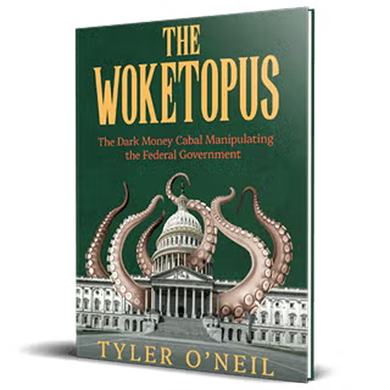
Read the first chapter of The Woketopus right now for FREE
Today, even with President Trump’s victory, leftist elites have their tentacles in every aspect of our government.
The Daily Signal’s own Tyler O’Neil exposes this leftist cabal in his new book, The Woketopus: The Dark Money Cabal Manipulating the Federal Government.
In this book, O’Neil reveals how the Left’s NGO apparatus pursues its woke agenda, maneuvering like an octopus by circumventing Congress and entrenching its interests in the federal government.
You can read the first chapter of this new book for FREE in this eBook, The Woketopus: Chapter One using the secure link below.
TRENDING ARTICLES


The Daily Signal depends on the support of readers like you.
RELATED ARTICLES





Don’t miss the

Don’t miss the signal