
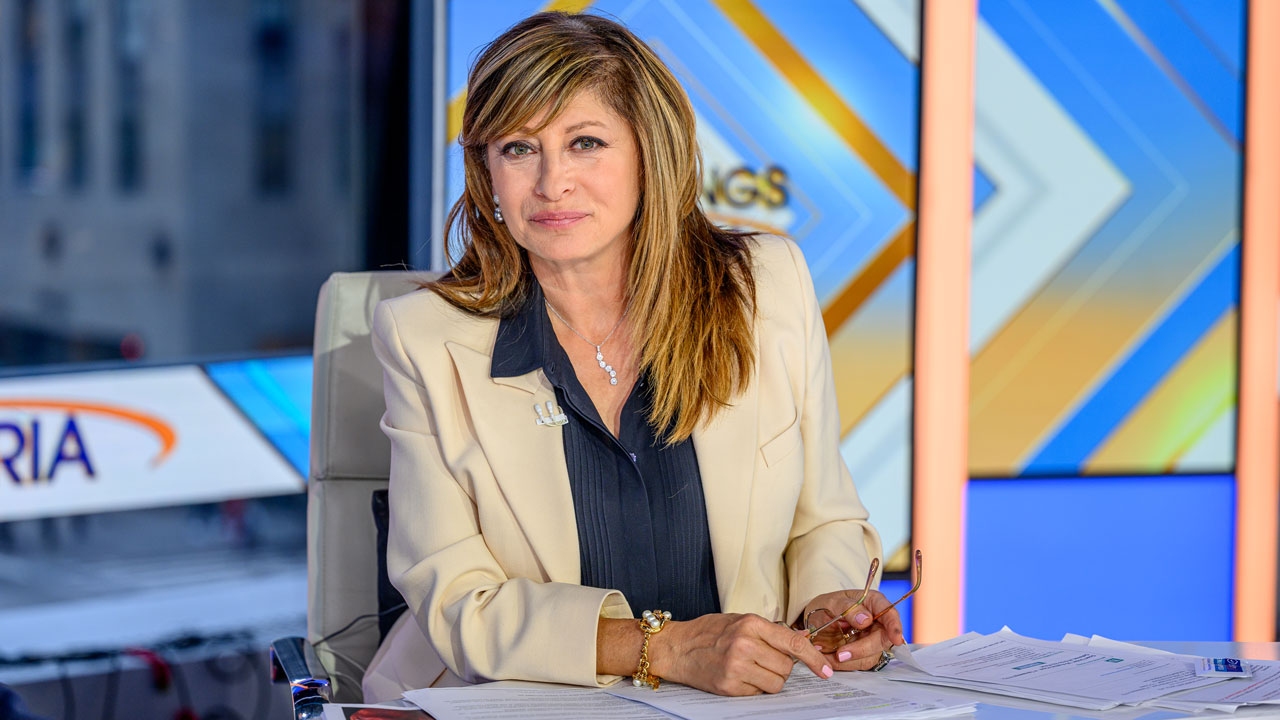
This article is adapted from Maria Bartiromo’s segment on Fox News “Sunday Morning Futures.” Watch the video.
In the history of the world, America has quickly ascended to become the number one global superpower, thanks in large part to capitalism and the rule of law and a Constitution that protects freedom and property.
Together, it has driven innovation and prosperity, creating unprecedented wealth for hundreds of millions of Americans and lifting millions of others out of poverty, creating lifesaving innovations.
The American dream that so many people enjoy on a daily basis and that millions across the world seek to be a part of has come at the ultimate price, with more than a million service members having lost their lives defending America’s values and freedoms during her 250-year history, a stark reminder as Americans celebrate freedom and economic prosperity this Fourth of July and enjoy those very freedoms and liberties every day.
The Foundations of American Prosperity
Wall Street 2026, animal spirits, capitalism and democracy on full display, 250 years after America’s founders signed the Declaration of Independence and Alexander Hamilton shaped a financial system.
Capital markets in America are the deepest most liquid in the world, valued at more than $100 trillion, evidence that free enterprise, private property, and the rule of law can generate enormous prosperity, just as President Trump has long expected.
TRENDING ARTICLES
When I asked President Trump what he specifically wanted America to look like in four years when he was done, he replied:
“Well, I want a dynamic country, where the private enterprise carries the day, not the government. And I want a strong country militarily. We need that nowadays. You can see that probably better than ever before.”
A government working for the people, not for a king, nor for Parliament, nor a ruling class, but the people.
As the first line of the Constitution reads, “We the people” means a nation belongs to its citizens and its institutions are accountable to them.
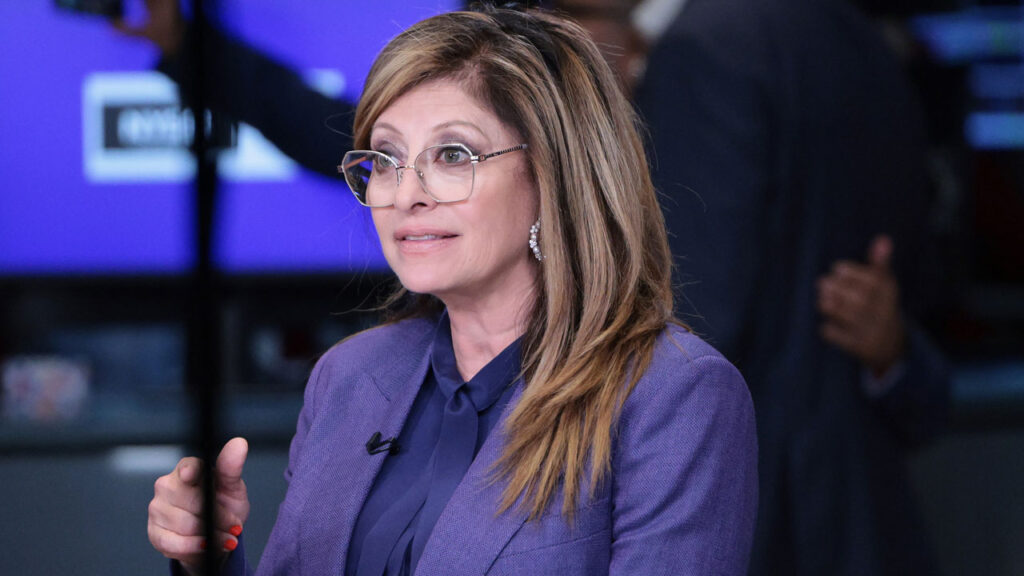
Jeff Sprecher is the CEO of Intercontinental Exchange, owner of the New York Stock Exchange, where hundreds of billions of dollars change hands in U.S. stocks every day. He said:
We’re excited about America 250 because George Washington was sworn in as our first president on Wall Street. I think many people don’t realize that our first capital was actually in New York.
You had the birth of a democracy and a democratic republic, and then the birth of the U.S. capital markets, which today are the biggest and best in the world.
Today, they are financing companies developing AI, lifesaving medicines, and an industrial revolution around intelligence, robotics, and infrastructure, as the build out of AI is expected to cost some $5.5 trillions by 2030.
And while a very different time, the forces driving the AI revolution today are not much different to the forces that drove an Industrial Revolution more than 200 years ago, when investment was surging into railroads, bridges, and roads, with New York then the gateway to commerce and business for a young nation.
While the delegates of America’s 13 colonies were adopting the Declaration of Independence in Philadelphia in 1776, it was here in New York where Alexander Hamilton was building the financial system, which would become later the financial capital of the world.
The Birth of America’s Capital Markets
The birth of America’s economy started right here on Wall Street and the few surrounding blocks around the New York Stock Exchange. It was in 1792 that brokers gathered around a buttonwood tree to create an agreement which became the foundation of the New York Stock Exchange.
And then right across the street at Federal Hall was where George Washington, our nation’s first president, took his first oath of office. Today, New York remains the center of American capital formation.
The ships may have been replaced by data, technology, and global investment flows, but the story remains. Money and investment go where it is treated best. Bank of New York was the first to trade, founded by Hamilton in 1784, even before the Constitution was adopted.
Robin Vince, CEO of Bank of New York Mellon, reflected on that legacy:
We were there as a company right at the beginning, the birth of the nation, as you said, Alexander Hamilton, our founder, but he was also an architect of the financial system in the United States. We were actually the first stock to be listed on the New York Stock Exchange.
So we have seen this evolution of capital markets … making sure that we were helping the American dream to prosper in the United States.
Evan Greenberg, chairman and CEO of Chubb, added:
When we were created, it was really created for the purposes to begin with of insuring marine shipping for the United States in our own trade at that time. And, ironically, here we are on the 250th anniversary providing that important protection for the ships that are transiting now.
Jim Vena, CEO of Union Pacific, noted the role railroads played in building the country.
From a Union Pacific point of view, you think about back to 1862, when President Lincoln signed the Railway Act, the West was still not very well developed in people. So the railroads moving west actually started communities like Cheyenne, went all the way to Sacramento.
So it helped people move. Before, there was no automobiles. People forget what it truly was in America after the Civil War and how people moved around. And the railroads were key. Now we’re still part of the fabric, but we compete against trucks. We compete against other modes of transportation.
My Family’s American Dream
My own family first arrived in America as early as 1897, when my mother’s grandfather and his brothers traveled to America from Agrigento, Sicily, searching for opportunities to work. They bought a house in Brooklyn, which became the home my mother was raised in, in the 1930s.
My father’s father, Carmine Bartiromo, arrived from Naples a few years later in 1906. He had $13 in his pocket, but over time he was able to work hard and build a business, a restaurant, which he named after the famous ship the Rex, which transported Italians to America in the 1930s.
My father took over the Rex Manor when he was old enough and eventually gave me my first job as the coat check girl at the Rex Manor, where I charged 50 cents a coat, truly the American dream for my family.
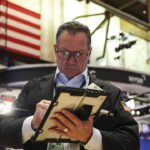
More than 200 years after the founding of this great nation, I began to live my own American dream, working hard to achieve success as a journalist and then becoming the first reporter, the first person to broadcast live from the floor of the New York Stock Exchange in 1995.
I was so honored to help democratize information for investors by reporting here every morning from the floor of the exchange. Alexander Hamilton’s vision of strong markets and strong credit was the foundation of the New York Stock Exchange and America’s economy. And it is at the center of the debate about America’s economy even today, 250 years later.
The Information Revolution
The pioneering move to broadcast from the New York Stock Exchange helped me further a career with a front-row seat to the ever-changing global economy, from the individual investor revolution, the birth of dot-com, followed by the dot-com boom and the dot-com bust, a housing boom and a housing bust, and a global financial crisis, followed by the birth of AI.
Along the way, I interviewed presidents, international heads of state, leading CEOs, and political honchos, while moderating presidential primary debates.
Sprecher told me:
Well, first of all, it means a lot to be here with you.
It used to be a business where it was men in suits and it was completely unapproachable and people didn’t understand it. And, as a result of you going down there and breaking open the walls, now everybody understands capital formation, and you can literally open an account in your living room or your kitchen overnight and start trading.
And so thank you for that.
My job landed me on magazine covers and major movie cameos and prime-time talk shows and became part of pop culture in America. I even got noticed by a major punk rocker, Joey Ramone and The Ramones, who wrote a song about me called “Maria Bartiromo” during the Go-go ’90s dot-com era.
Service, Sacrifice, and Sept. 11
Before my family set out to work, they served this great nation in the military.
I come from a long list of generations of men who served in the military, from my grandfather Carmine serving in World War I to his four sons, who all served in the U.S. Army with distinction from World War II to the Korean conflict.
Freedom is not free. For 2.5 centuries, America’s security, economic power, and global influence have all depended on generations of servicepeople, the men and women who have stood on the front lines to protect and defend America’s freedom and liberty.
Calverton National Cemetery is the largest national cemetery and the busiest when it comes to those veterans who have been awarded the Medal of Honor. Hundreds of thousands of veterans’ remains are here resting in eternity after serving this great nation.
My grandfather Carmine directed all four sons to fight for the freedom the founders envisioned. His oldest son, my Uncle Pasquale Bartiromo, lost his life in battle as a member of Merrill’s Marauders during World War II.
Pasquale signed up for one of the most dangerous missions of the war. He went behind enemy lines in Burma. He was blown up and we never saw his remains. He received the Bronze Star and the Purple Heart.
I personally experienced my own faceoff with war when I witnessed firsthand from the corner of Wall Street and Broadway the second plane crash into the second tower of the Twin Towers in New York on Sept. 11, 2001, when 19 terrorists hijacked planes to attack America in the worst terrorist attack on U.S. soil, killing 3,000 people, as I was broadcasting from the New York Stock Exchange.
But perhaps my proudest moment was a week later, when the markets reopened after the carnage on Sept. 17, 2001, as I watched from the trading floor the steadfast officials ringing the opening bell to restart trading after a tragedy, standing with NYSE Chairman Dick Grasso was the Fire Department of New York, the NYPD, New York senators and congressmen, and all first responders, who, like all of us, were shell-shocked at what had just happened.
Grasso announced, “Ladies and gentlemen, our heroes will now open the marketplace, the green button.”
We lost our friends and family in the attack. We were mourning, we were down, but we knew we were not out and we would rise again. And we did.
The Challenges of the Next 250 Years
But 250 years later, the battles keep on coming, with this young nation now facing off against adversaries who have been at it a lot longer, China still trying to overtake America as the number one superpower, Russia and Iran sowing chaos across the world.
The biggest battle of all may still be coming from within, as the country now finds herself defending the very capitalist system that brought the country such enormous success, with new ideas emerging about socialism from new socialist leaders who are becoming the new face of the Democrat Party.
After 250 years of freedom and liberty, the future of America’s stage is being set for a fight between America’s values of freedom, capitalism, and the power of we the people versus government becoming the ultimate allocator of resources, with everyone getting an equal share handout.
This new socialism dynamic may dictate the free world’s next 250 years and beyond, as we the people will decide what comes next.

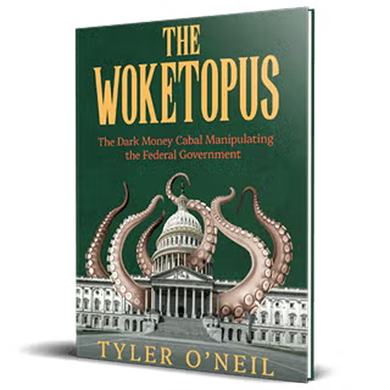
Read the first chapter of The Woketopus right now for FREE
Today, even with President Trump’s victory, leftist elites have their tentacles in every aspect of our government.
The Daily Signal’s own Tyler O’Neil exposes this leftist cabal in his new book, The Woketopus: The Dark Money Cabal Manipulating the Federal Government.
In this book, O’Neil reveals how the Left’s NGO apparatus pursues its woke agenda, maneuvering like an octopus by circumventing Congress and entrenching its interests in the federal government.
You can read the first chapter of this new book for FREE in this eBook, The Woketopus: Chapter One using the secure link below.

The Daily Signal depends on the support of readers like you.
RELATED ARTICLES



Don’t miss the

Don’t miss the signal