

For a while there, Airbnb seemed bent on taking a vacation from its principles. Happily, a federal lawsuit has driven home to the company the importance of honoring its stockholders.
The lawsuit has prompted Airbnb to rethink and reverse its actions from a year ago, when the company refused to include two legitimate shareholder resolutions—both filed before the company’s deadline—leaving both off the proxy ballot for Airbnb’s 2025 annual meeting.
The two resolutions were each delivered by FedEx and signed for, on separate days, by an Airbnb mailroom employee, six months before the meeting and four months before the ballots were sent out. Company officials, though, shrugged off the omission, suggesting the signatures were forged, presumably by some enterprising delivery person.
Curious that the malevolent delivery worker should choose—at random—to compromise only the resolutions filed by The Heritage Foundation (owners of $46,000 worth of Airbnb stock) and the American Conservative Values ETF ($447,000 in Airbnb stock)—especially given that a separate resolution, mailed in by a considerably more left-leaning stockholder, made the proxy ballot without any trouble at all.
No one at Airbnb has ever explained this odd double-standard, or why, contacted nearly a month before the shareholder meeting with Heritage and ACVF’s concerns, the company declined to make any effort whatsoever to investigate or address the situation.
Nor, until being sued, did anyone at the company show any great concern that improperly excluding shareholder proposals is a violation of both company protocol and U.S. Securities and Exchange Commission rules.
Shareholders have a right for compliant proposals to go on the company’s proxy materials—to have their voices heard.
The Heritage resolution highlighted Airbnb’s long history of political divestment, calling on the company’s board to issue an annual report to shareholders analyzing the legal and reputational risks of bowing to the “profoundly anti-business activism” represented by the “Boycott, Divestment, & Sanctions” movement.
In 2018, for example, under pressure from some of those activists, Airbnb delisted Israeli-owned rental properties in the West Bank. True, the company relisted those properties the following year, but similar pressures continue to be exerted.
Meanwhile, ACVF’s resolution called on Airbnb to issue a report on the potential of its terms-of-use policies to undermine fundamental freedoms. Like many digital service providers, Airbnb has embraced a policy of banning people from their services who are “leaders of hate groups” or engage in speech that the company deems “hateful.” Those words paint in broad strokes—and, oddly, it seems only conservatives are suspected of coloring outside the lines.
Airbnb drew media attention in recent years for blocking conservative commentators Michelle Malkin and Lauren Southern from reserving properties—and in Southern’s case, extending that ban to include her parents, for no other reason than their relation to their daughter.
Airbnb trumpets tolerance and celebrates diversity, but actions speak louder than words. And Airbnb’s actions—blackballing potential customers whose ideas they don’t agree with and excluding shareholder resolutions that could shed light on its politicized business practices—have been deafening.
Displaying that kind of contempt for the views of millions of Americans is unjustifiable—and ultimately, bad for business.
In response, the firm I work for, Alliance Defending Freedom, joined with attorneys from top legal firm Boyden Gray in filing a federal lawsuit against Airbnb in federal district court. After the court denied in part Airbnb’s motion to dismiss the case—specifically allowing the claim challenging the exclusion of the resolutions to go forward—the company agreed to include the two shareholder proposals from Heritage and ACVF on the agenda for its 2026 annual meeting of stockholders.
It shouldn’t take a lawsuit to steer Airbnb’s leadership in this right direction, but both Heritage and ACVF have expressed their hope that this decision brings about lasting and meaningful change for the company, “creating long-term value for investors and focusing on its core business,” in the words of Andy Olivastro, Heritage’s chief advancement officer.
In other words, here’s hoping Airbnb will find this new moral high ground a good place to stay.
We publish a variety of perspectives. Nothing written here is to be construed as representing the views of the Daily Signal.



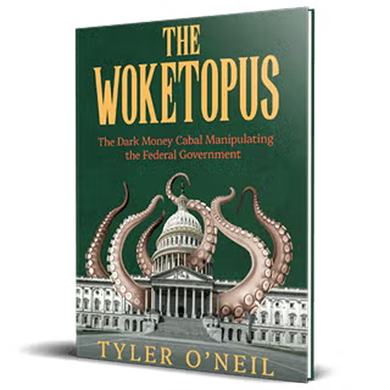
Read the first chapter of The Woketopus right now for FREE
Today, even with President Trump’s victory, leftist elites have their tentacles in every aspect of our government.
The Daily Signal’s own Tyler O’Neil exposes this leftist cabal in his new book, The Woketopus: The Dark Money Cabal Manipulating the Federal Government.
In this book, O’Neil reveals how the Left’s NGO apparatus pursues its woke agenda, maneuvering like an octopus by circumventing Congress and entrenching its interests in the federal government.
You can read the first chapter of this new book for FREE in this eBook, The Woketopus: Chapter One using the secure link below.




The Daily Signal depends on the support of readers like you.
RELATED ARTICLES





Don’t miss the

Don’t miss the signal