Red Flag Case Studies Highlight Corporations Putting Shareholder Value at Risk
When corporate governance experts speak about “red flags,” they are typically referring to information signaling a problem at a corporation that warrants additional oversight. As a related law firm memo on Delaware law notes: “The duty of oversight requires directors to … take action to address red flags that indicate potential corporate wrongdoing.”
As a principal at the Free Enterprise Initiative, which is part of The Heritage Foundation, I routinely come across corporations with numerous red flags. While we generally try to engage constructively with such corporations directly—and have had numerous successes on that front (see, e.g., here and here)—every so often we encounter a corporation that appears utterly disinterested in fully informing itself about the issues we bring to the table.
When that is the case, we may pivot from private off-season engagement and preliminary shareholder proposal discussions to more direct actions to protect shareholder value, including publicizing our concerns and in certain cases even pursuing legal action.
This column introduces a planned series of “Red Flag Case Studies,” which will highlight specific corporations that appear to be turning a willfully blind eye to certain risks to shareholder value and the well-being of other relevant stakeholders.
What are some of the red flags we focus on? Certainly, stock price performance matters a great deal because, among other things, it can alert shareholders and others to a corporation that is in the process of embodying “go woke, go broke.”
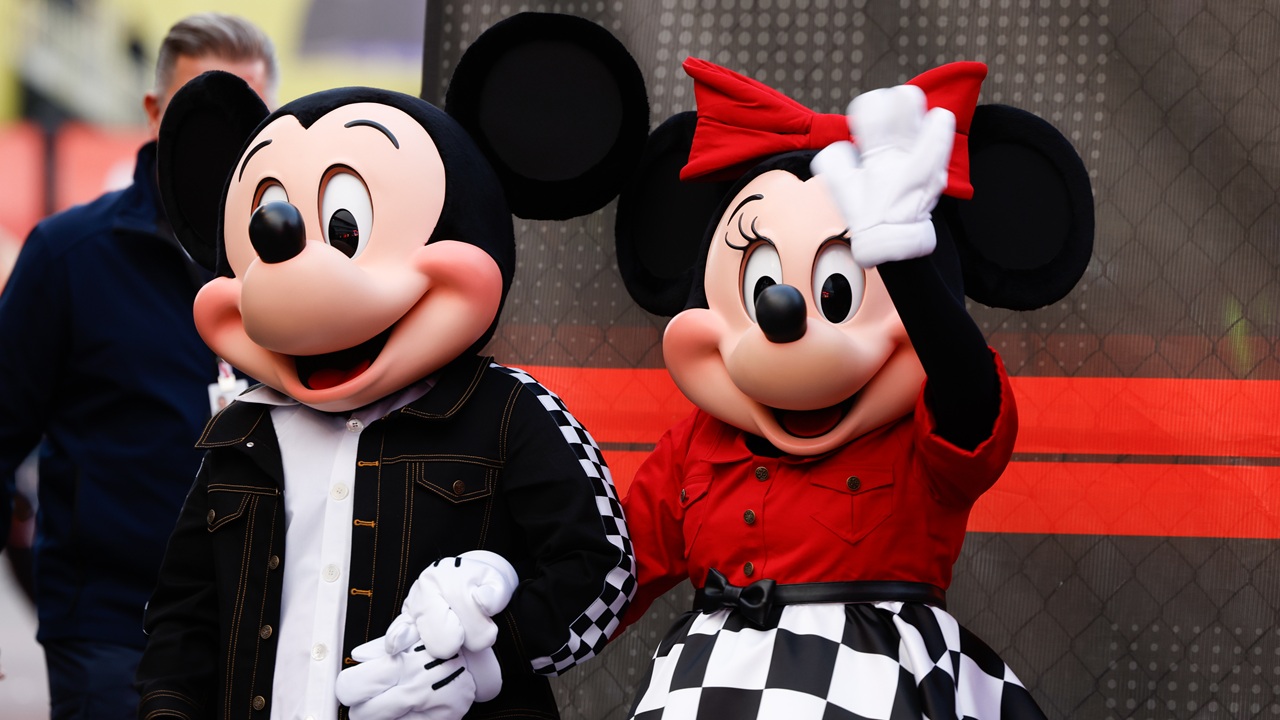
For example, as of July 9, 2026, Disney has apparently underperformed the S&P 500 the past five years, three years, year, and year-to-date, to the tune of roughly 115 percentage points combined. (On the other hand, it is important to note that outperforming an index like the S&P 500 doesn’t necessarily guarantee all is well because a corporation could still be leaving profit on the table pursuing non-pecuniary and politicized agendas.)
TRENDING ARTICLES


Another source of “red flag” information we rely on is the 1792 Exchange’s Corporate Bias Ratings and Board Bias Report. In the case of Disney, we get a “high risk” rating, including for concerns related to the promotion of radical gender ideology as well as wasteful and destructive climate commitments.
We also find that Disney’s leadership has apparently given three times more to the causes of Democrats than the causes of Republicans, adding to the specter of echo-chamber governance and a lack of viewpoint diversity.
Another source we consider is Alliance Defending Freedom’s Viewpoint Diversity Score Business Index. While Disney is not rated on that index, we can contrast the absence of any ADF score with Disney’s fulsome embrace of the Human Rights Campaign and its Corporate Equality Index. That alone can constitute a red flag (see here), but if that’s paired with a failure to respond to ADF’s survey, we start having concerns about anti-Christian and other forms of bias.
Finally, there will often be company-specific items constituting independent red flags, such as Disney having received a letter last year from Federal Communications Commission Chairman Brendan Carr raising concerns about Disney allegedly having “embedded explicit race- and gender-based criteria across its operations” in recent years.
The foregoing is only a partial list of potential sources of red flags implicating corporate governance failures at specific corporations, but it hopefully gives the reader a general sense of some of the issues we pay attention to at the Free Enterprise Initiative.
Ultimately, our goal is to help corporations maximize the prosperity-generating power of free market capitalism for their shareholders and other stakeholders. Ideally, we do that via fruitful win-win engagement whereby we provide useful perspectives to corporate decision-makers while at the same time getting a better understanding of what is driving their decision-making.
Some may argue that we should just mind our own business, but there is a reason why almost every corporation touts its shareholder engagement.
Shareholders are the ultimate owners of the corporation and can provide unique insights—particularly when that shareholder is The Heritage Foundation and the corporation might have a blind spot when it comes to the views of the half of its potential customer base that Heritage can provide insight into.

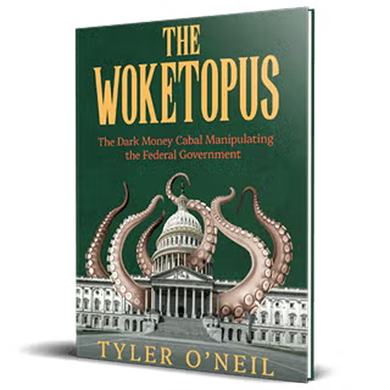
Read the first chapter of The Woketopus right now for FREE
Today, even with President Trump’s victory, leftist elites have their tentacles in every aspect of our government.
The Daily Signal’s own Tyler O’Neil exposes this leftist cabal in his new book, The Woketopus: The Dark Money Cabal Manipulating the Federal Government.
In this book, O’Neil reveals how the Left’s NGO apparatus pursues its woke agenda, maneuvering like an octopus by circumventing Congress and entrenching its interests in the federal government.
You can read the first chapter of this new book for FREE in this eBook, The Woketopus: Chapter One using the secure link below.

The Daily Signal depends on the support of readers like you.
RELATED ARTICLES





Don’t miss the
Don’t miss the signal