One of Aesop’s best-known and most-beloved fables is the story of “The Dog and the Shadow,” which goes like this:
“It happened that a Dog had got a piece of meat and was carrying it home in his mouth to eat it in peace. Now on his way home he had to cross a plank lying across a running brook. As he crossed, he looked down and saw his own shadow reflected in the water beneath. Thinking it was another dog with another piece of meat, he made up his mind to have that also. So he made a snap at the shadow in the water, but as he opened his mouth the piece of meat fell out, dropped into the water and was never seen more.
“Beware lest you lose the substance by grasping at the shadow.”
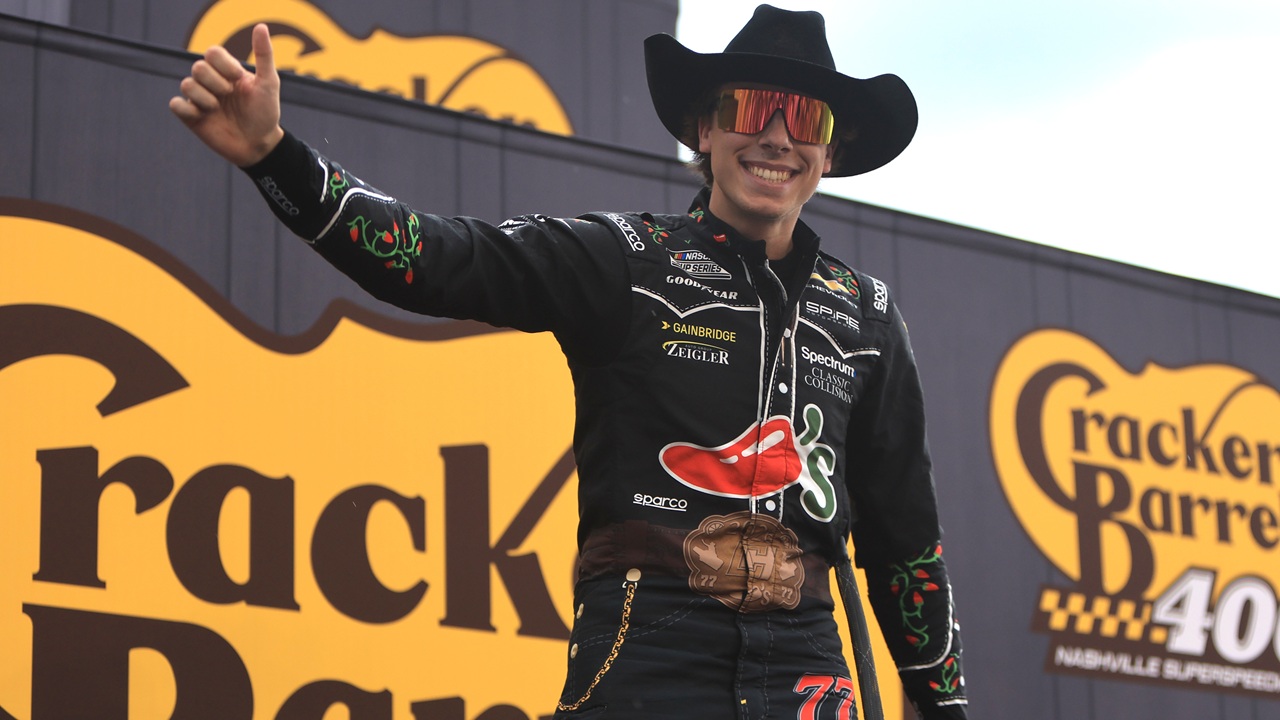
I’ve been thinking a great deal about the fable this week, after reading that Julie Masino, the CEO of Cracker Barrel, has decided to step down from her position. According to an announcement made by the company, Masino will leave her executive role on Aug. 10 and will stay on with the company as an adviser until Oct. 9.
Masino, you may recall, was the CEO who, last year, introduced the new, stripped-down Cracker Barrel logo as part of a much larger, $700 million “transformation plan.” I’m not entirely sure why it cost almost three-quarters of a billion dollars to remove the beloved “Old Timer” from the logo, but then, they didn’t ask me.
Maybe they should have.
TRENDING ARTICLES

If they’d asked me, I might have told them that they were making a huge mistake. I might have warned them that their customer base would revolt. I might have told them that the backlash on social media and their consumers’ response would be overwhelming.
I might have suggested that they ensure the rest of their house was in order and be certain that they were doing everything they could to make the company successful, both for its customers and its shareholders, before they started messing around with their decades-old, most identifiable, beloved public image. I might have told them to slow down, that they were—wittingly or unwittingly—walking into a political minefield.
But again, they didn’t ask me. And as it turns out, they didn’t ask those customers and shareholders either.
To be fair, the logo, in and of itself, wasn’t that big a deal. But, as I noted here last year just after the logo story exploded: “There’s a reason I put those four words—’in and of itself’—in italics. In and of itself, the logo does not matter. In a vacuum, it’s irrelevant. But we don’t exist in a vacuum, and major corporate rebranding efforts signified by logo redesign rarely, if ever, occur ‘in and of themselves.’ In most cases, such rebranding efforts are indicative of a change in thinking among corporate executives.”
This was true at Bud Light, of course. And Target. And Harley-Davidson. And countless other companies whose executives thought they could get involved in political or cultural issues, largely in opposition to the desires and beliefs of their customers, only to find that those customers reacted poorly to their changes—and that their shareholders reacted poorly to their customers’ unhappiness.
It was true at Cracker Barrel as well. As Robby Starbuck—my colleague at The Heritage Foundation’s Free Enterprise Initiative—demonstrated, Cracker Barrel’s executives and directors had long been pushing the company into political spaces and into associations with left-wing political organizations, including the aggressively pro-trans pressure group, the Human Rights Campaign.
Against this background, the logo change and the transformation plan in general were perceived as an attempt to make the company appear less redneck-y, less associated with “backward” rural America. Unsurprisingly, Cracker Barrel’s customers reacted poorly, and then, in turn, so did the shareholders.
Activist investor Sardar Biglari (Biglari Capital, ~3% stake) launched a proxy fight in September 2025, calling management “worse than mediocre” and accusing it of betraying “the Company’s heritage” and undermining “investor confidence.”
Surprisingly, both major proxy advisory firms—Institutional Shareholder Services and Glass Lewis—broke with management and took Biglari’s side, recommending that shareholders vote to remove board member Gilbert Dávila (the chairman of the compensation committee and a marketing/diversity specialist who’d been on the board since 2020), explicitly citing his role in shaping the disastrous rebrand strategy.
Interestingly, ISS said that Masino’s responsibility was “no less than Dávila’s” but recommended keeping her, for fear that her removal would be destabilizing.
The shareholder vote on Nov. 20, 2025, produced something of a mixed bag of results. Dávila did, indeed, lose his board seat, but Masino survived. More troublingly, in a move seemingly intended to enhance director and executive entrenchment rather than advance accountability, the board simultaneously adopted new bylaws designed to limit Biglari’s ability to launch future proxy fights.
Biglari and the rest of the company’s shareholders were understandably upset. Cracker Barrel’s market value fell from $2.0 billion (Aug. 7, 2023, when Masino was appointed CEO-elect) to $667.8 million (Nov. 12, 2025), a decline of roughly 67%. Biglari’s proxy filing called this “massive shareholder value destruction,” perhaps understating the case.
Cracker Barrel shares were down nearly 50% year-to-date as of March 2026, putting the company on pace for its worst annual performance since 1999. Its fiscal Q4 2025 results were brutal: Revenue was down 3%, and net income was down 63%.
In the grand scheme of things, it’s unlikely that the logo change—in and of itself—was the cause of this shareholder destruction. But it was a big part of it. The company’s executive team and directors weren’t happy with what they had. They saw something murky and mysterious that caught their collective eye and fooled them into wanting more.
Not content to be mere fiduciary agents for their shareholders’ interests, they wanted to be advocates or allies or enlightened thinkers or … whatever. They dropped what they had in pursuit of something better, something ill-defined and ethereal but still enticing. Shareholders paid the price for their foolishness.
Finally, Julie Masino is paying it as well.
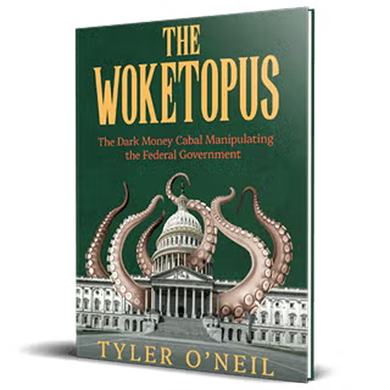
Read the first chapter of The Woketopus right now for FREE
Today, even with President Trump’s victory, leftist elites have their tentacles in every aspect of our government.
The Daily Signal’s own Tyler O’Neil exposes this leftist cabal in his new book, The Woketopus: The Dark Money Cabal Manipulating the Federal Government.
In this book, O’Neil reveals how the Left’s NGO apparatus pursues its woke agenda, maneuvering like an octopus by circumventing Congress and entrenching its interests in the federal government.
You can read the first chapter of this new book for FREE in this eBook, The Woketopus: Chapter One using the secure link below.
TRENDING ARTICLES

The Daily Signal depends on the support of readers like you.
RELATED ARTICLES




Don’t miss the

Don’t miss the signal