The skies as we celebrate America’s 250th birthday will be filled not only with fireworks, but song. Those great patriotic tunes we all know by heart, even when we can’t hit all the notes. Though the songs may be as familiar as the red, white, and blue, the stories behind them often are not.
In Part One, we saw how the song that became “This Land Is Your Land” was originally written in protest of “God Bless America.”
Today, three patriotic favorites we Americans … um … borrowed from the Brits.
Spoils of War or Just Borrowing From Our Relatives?
One classic patriotic song is so special it’s known by two names, played a part in two historic events at the Lincoln Memorial, and its key opening line found its way into a modern American anthem. (Can you name which one?)
The lyrics for “My Country, ‘Tis of Thee”—otherwise known as simply “America”—were penned in 1831 by Samuel Francis Smith. You know the opening.
My country, ’tis of thee,
sweet land of liberty,
of thee I sing:
land where my fathers died,
land of the pilgrims’ pride,
from every mountainside
let freedom ring!

The melody? A direct and deliberate rip-off of Britain’s “God Save the King/Queen,” the intent being to turn a song saluting the monarchy into a tribute to democracy.
Jump forward to the 20th century. In 1939, after being banned from performing at DAR Constitution Hall in Washington because of the color of her skin, opera singer Marian Anderson performed “America” on the steps of the Lincoln Memorial. Props to first lady Eleanor Roosevelt for twisting arms to make that happen.
Twenty-four years later, the Rev. Martin Luther King Jr. stood on those same steps, and in his immortal “I Have a Dream” speech quoted “My Country, ’Tis of Thee,” while adapting its “Let freedom ring” for his rousing conclusion.
In 1980, Neil Diamond would also dramatically utilize the opening line from “America” at the end of his own song “America.”
‘Yankee Doodle’: A Dig Turned Into a Dance
The origins of “Yankee Doodle” are murky. Did it come from a 16th-century Dutch harvest song? A 17th-century British jingle deriding Oliver Cromwell? Encyclopedia Britannica tells us that “doodle” at the time meant a “sorry, trifling fellow.”
The story is a British surgeon named Richard Shuckburgh wrote the earliest version of “Yankee Doodle” to mock the ragged American colonial soldiers he encountered during the French and Indian War.
The joke was on Doc Shuckburgh because only a few decades later, during the American Revolution, those pesky colonials flipped the song into a favorite patriotic tune, kind of like how Hillary Clinton’s “Deplorables” insult was embraced by Trump supporters in 2016.
While “Yankee Doodle’s” heritage may be murky, its progeny is clear.
The great songsmith George M. Cohan reworked the song for the classic 1942 musical “Yankee Doodle Dandy” about his life. As you can see in this clip, star James Cagney does a song-and-dance bit playing off “Yankee Doodle” before kicking into the original.
And yes, that is James Cagney. How appropriate for an actor better known for playing gangsters to sing a song “stolen” from the Brits.
‘The Star-Spangled Banner’: A Tale of 2 Wars … and a Drinking Song
September 1814, the War of 1812 rages on. Fresh off torching Washington, D.C., like a s’more, the British military moved on to Baltimore. Its navy relentlessly bombarded Fort McHenry in Baltimore Harbor, but the folks of “Balmer” were made of tougher stuff than the forces who were supposed to have protected the nation’s capital. They refused to submit despite the barrage. Round after round after round came down on the fort.
A lawyer by the name of Francis Scott Key happened to be on a ship in the harbor watching the onslaught into the night, the “rocket’s red glare.” The bombs bursting in air.
Would the U.S. troops be holding the fort come sunrise? To his surprise, through the smoke and morning fog he could see “the flag was still there.”
He immediately set out to write a poem about seeing that “star-spangled banner.” Verses came pouring out of him.
But what he had was a poem, “Defence of Fort M’Henry,” not a song. When someone decided to put Key’s poem to music, they chose—of all the songs to choose from—a British drinking song known as “To Anacreon in Heaven.”
Let’s have a taste. Of the song, not alcohol.
“The myrtle of Venus, with bacchus’s vine”?
Sometimes it feels like you need to have some wine in you to hit the higher notes—or to not care.
Or you could have a great voice.
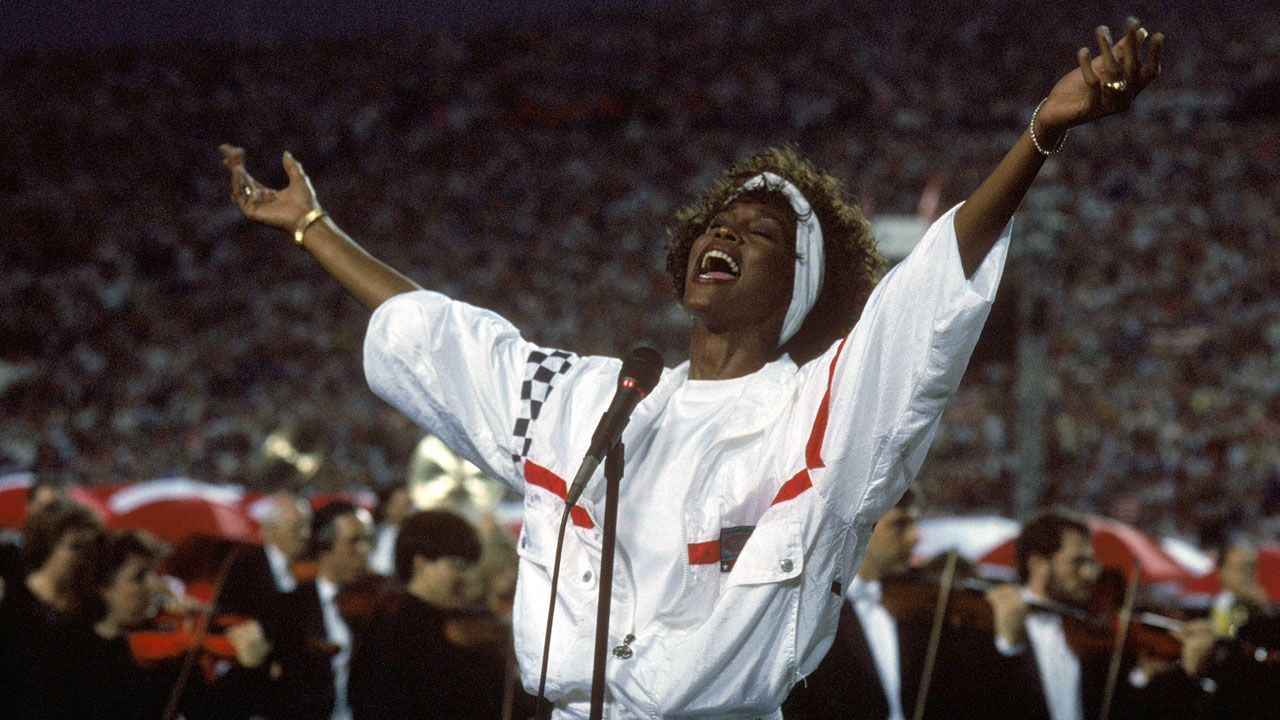
Which brings us to another U.S. war. This time with Britain as our dearest ally. The date is Jan. 27, 1991. Super Bowl XXV. Just 10 days before, the U.S. had launched the Gulf War against Iraq. Up to the microphone stepped superstar Whitney Houston to sing “The Star-Spangled Banner,” America’s official national anthem since 1931.
What happened next will not be forgotten by any of the hundreds of millions who witnessed it live.
If Francis Scott Key had been watching, he may well have found himself writing another poem.

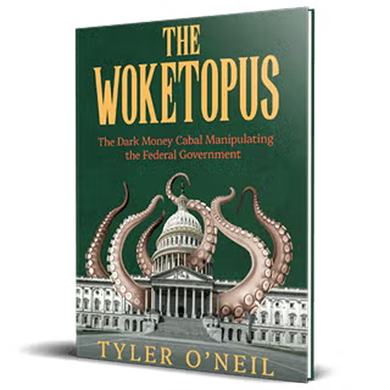
Read the first chapter of The Woketopus right now for FREE
Today, even with President Trump’s victory, leftist elites have their tentacles in every aspect of our government.
The Daily Signal’s own Tyler O’Neil exposes this leftist cabal in his new book, The Woketopus: The Dark Money Cabal Manipulating the Federal Government.
In this book, O’Neil reveals how the Left’s NGO apparatus pursues its woke agenda, maneuvering like an octopus by circumventing Congress and entrenching its interests in the federal government.
You can read the first chapter of this new book for FREE in this eBook, The Woketopus: Chapter One using the secure link below.



The Daily Signal depends on the support of readers like you.
RELATED ARTICLES




Don’t miss the
Don’t miss the signal