
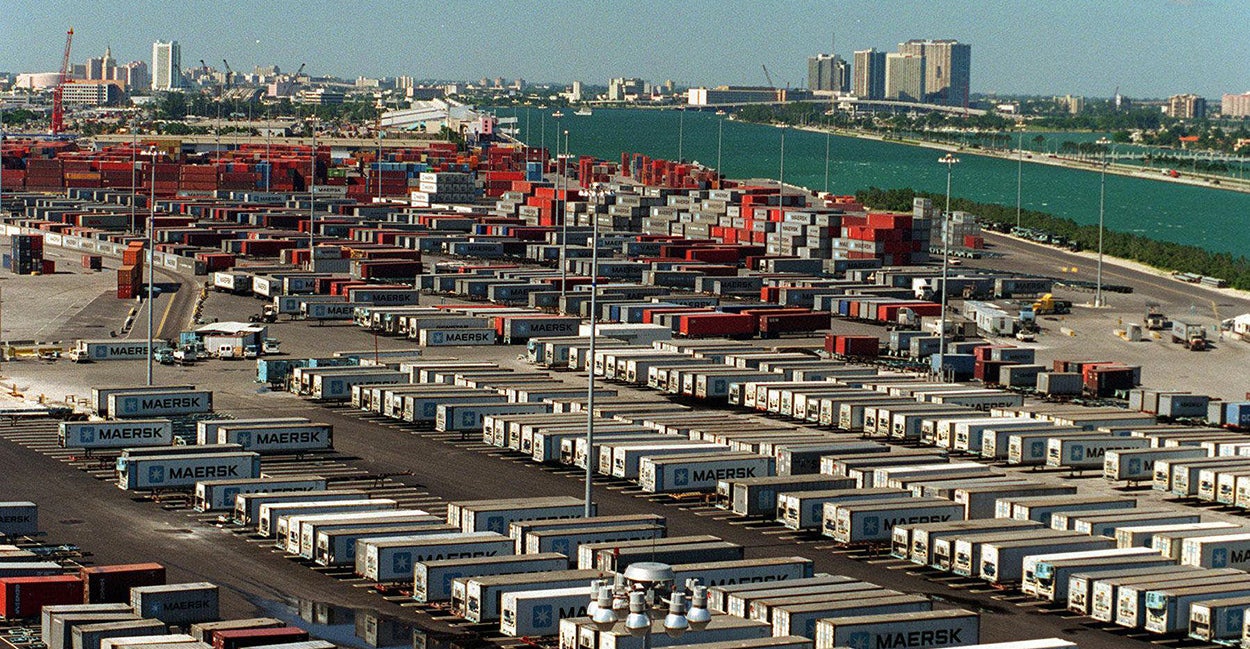
One of the most persistent and misguided myths in economics is that trade deficits weaken the U.S. economy. For example, after the government released data showing the trade deficit increased in April, Reuters reported: “Trade subtracted almost a percentage point from first-quarter gross domestic product.”
That is backwards. Trade adds to the size of the U.S. economy. Since 2000, every year the trade deficit increased, real U.S. GDP also increased, on average by 2.8 percent. But when the trade deficit decreased, GDP did not boom—in fact, it increased on average by only 1 percent.
Imports make Americans richer by allowing U.S. businesses to specialize in areas where they have a comparative advantage over firms in other countries. Most imports are products such as fuel and machinery that U.S. companies use to produce goods and services. Imports also allow people in other countries to earn dollars they can use to buy U.S. goods and services or to invest in the American economy.
To be fair, many reporters rely on economic “experts” who claim trade deficits are bad for the economy. Many of these analysts simply look at the definition of GDP, which says exports add to GDP and imports subtract. Based on this logic, Americans would be richer if the Navy torpedoed ships loaded with products before they could reach U.S. ports.
Fortunately, many reports have started to accurately reflect the positive relationship between trade deficits and economic growth. For example, according to a Reuters report last year: “In another sign of improving domestic economic conditions, the U.S. trade deficit widened sharply in May, as stronger U.S. demand pulled in more imports, a report from the Commerce Department showed.” And according to the Associated Press: “[E]conomists noted that the wider deficit does show growth in the United States remains stronger than most other nations. That growth has helped fuel more spending by consumers on domestic and imported goods.”
A growing trade deficit is often good news, because a strong U.S. economy increases Americans’ demand for imports. The most important thing the government can do is work to reduce barriers to economic freedom, including trade barriers that drive up the cost of inputs needed by U.S. firms to compete in the global economy.



Read the first chapter of The Woketopus right now for FREE
Today, even with President Trump’s victory, leftist elites have their tentacles in every aspect of our government.
The Daily Signal’s own Tyler O’Neil exposes this leftist cabal in his new book, The Woketopus: The Dark Money Cabal Manipulating the Federal Government.
In this book, O’Neil reveals how the Left’s NGO apparatus pursues its woke agenda, maneuvering like an octopus by circumventing Congress and entrenching its interests in the federal government.
You can read the first chapter of this new book for FREE in this eBook, The Woketopus: Chapter One using the secure link below.
TRENDING ARTICLES


The Daily Signal depends on the support of readers like you.
RELATED ARTICLES




Don’t miss the

Don’t miss the signal