
Recently, there has been a renewed interest in the question whether the Constitution protects individual economic activity without undue—some might say any—government regulation or interference. Various scholars have bemoaned the Supreme Court’s disdainful treatment of economic freedoms and its single-minded focus on one or another variation of the concept of ‘privacy’ as a predicate of especial judicial protection.
* * * * *
Advocates for the protection of economic rights would argue that it is a mistake to distinguish between so-called ‘personal rights’ and ‘economic rights.’ They would find themselves in good company in that regard. The Supreme Court has found it difficult to draw that distinction. In fact, the average person likely would trade off personal freedoms for economic opportunity. Accordingly, a strong argument can be made that only elitist snobbery would elevate the right to speak freely to the apex of constitutional protection, while denying the right to work any such protection at all.
* * * * *
The refusal to examine the practical working of the political process therefore leads to the ironic result that the law shows the least protection for those individuals most harmed by anticompetitive conduct and least able to protect themselves against the operation of politics. That seems backwards. As Robert McCloskey once put it, ‘scattered individuals who are denied access to an occupation by State-enforced barriers are about as impotent a minority as can be imagined.’ Those people are not Fortune 100 CEOs, and they do not work for a company like Omni Megacorp. They are individuals seeking to pursue a career in a legitimate, small-scale, principally local line of work, one that the Framers would have found quite ordinary, but who find themselves shut out by a type of law that the Framers would have deemed quite extraordinary. Typically, in fact, it is only the emergence of a scandal of some sort involving government officials and their cronies that creates the public outrage necessary to establish the critical mass required to repeal such special interest legislation. That occurrence, however, is not one that a group of widely scattered individuals can create—either through the political process or outside of it. Relegating that category of people to the political process, therefore, is just a cruel joke.




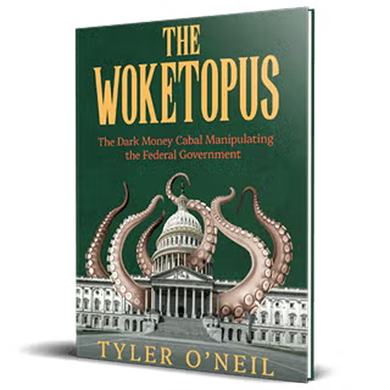
Read the first chapter of The Woketopus right now for FREE
Today, even with President Trump’s victory, leftist elites have their tentacles in every aspect of our government.
The Daily Signal’s own Tyler O’Neil exposes this leftist cabal in his new book, The Woketopus: The Dark Money Cabal Manipulating the Federal Government.
In this book, O’Neil reveals how the Left’s NGO apparatus pursues its woke agenda, maneuvering like an octopus by circumventing Congress and entrenching its interests in the federal government.
You can read the first chapter of this new book for FREE in this eBook, The Woketopus: Chapter One using the secure link below.
TRENDING ARTICLES


The Daily Signal depends on the support of readers like you.
RELATED ARTICLES




Don’t miss the

Don’t miss the signal