It was freshman year at my small liberal arts college. I walked into my social psychology class and was immediately asked to share my “preferred pronouns.” I was appalled by the question. “Do I not look like a girl?” I thought to myself.
I hoped that would be the most uncomfortable part of my first semester; I was blissfully unaware that I would soon spend three weeks trying to “unlearn my whiteness.”
Growing up in a small, rural town in Pennsylvania, I had never encountered an experience like the one in my social psychology class. To me pronouns weren’t a choice, and the color of my skin wasn’t something I had to “unlearn.”
I learned very quickly that, despite being in the same nation as my hometown, my college existed in an entirely different moral environment than the one I had been raised in.
As I look toward my senior year of college, I find myself reflecting on my experience as an outspoken conservative on a predominantly liberal campus. Despite the many obvious problems the college (and so many like it) faces, I am one of very few who has found the courage to actually speak out.
The purpose of a genuine liberal arts education is to broaden students’ horizons and encourage both intellectual and moral growth through courses in myriad subjects: literature, history, philosophy, the physical sciences, and more. What happens when the courses designed to cultivate these virtues and promote educational growth turn into avenues for political indoctrination or bias?
TRENDING ARTICLES



Like many other colleges, my school expects students to take courses in several different disciplines. This includes a requirement for a social science elective course, which I decided to fulfill through social psychology. My decision to take this course was simply out of curiosity—that’s the point of an elective, right?
In my social psychology class, instead of studying how society operates or how people interact with others, the class was forced to “learn” about the right way to teach children about race, what “whiteness” in communities of color means, and levels of microaggressions that are supposedly embedded within my own subconscious.
We were given ridiculous assignments as well. One assignment—a reaction paper to my professor’s student-led website—was particularly egregious. After speaking with the dean and expressing my concern, this assignment was removed from our course material.
Despite the hard-fought victory that eliminated the reaction paper from the course, I was disheartened.
Too many times, I have been in situations where friends of mine were uncomfortable with something happening on campus but refused to speak out. Instead, they conformed to “the norm” to avoid potential repercussions.
In 2024, only about 36% of Americans had “a great deal” or “quite a lot” of trust in higher education, according to a Yale University report. Concerns about free speech, political bias, and self-censorship ranked among the top three reasons trust in higher education has declined. This data does not come as a surprise.
Many professors at universities across the country have taken it upon themselves to shift their courses away from traditional subjects toward identity-based topics such as race and gender. Unfortunately, these courses have quickly become embedded within the core credits to fulfill the requirements for a liberal arts degree.
I remain sincerely grateful that my parents raised me with conservative values, but I recognize that not everyone shares this feeling. Many students who attend institutions that diminish conservative values find themselves swayed by professors and peers seeking to erode their conservative roots. Sadly, many such courses are less concerned with fostering substantive conversations about politics than they are with planting seeds of hatred, confusion, and shame for America.
I sometimes think about my friends who are learning at more conservative universities and colleges. I wonder what my life would have looked like if I had thought more seriously about my options during the college selection process.
But then I remember that complacency breeds failure.
Despite the hardship, we are called to speak the truth. We must speak out against the wrongdoings of our institutions. Doing so is a step toward cultural healing. Positive change on college campuses can begin with students who cultivate the virtue of courage.
So, I remain committed to the preservation of conservative values even while surrounded by those who challenge their very existence. If not for me, then for generations to come.
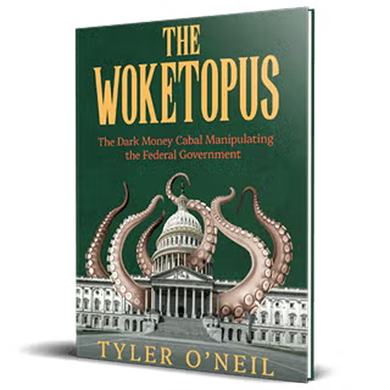
Read the first chapter of The Woketopus right now for FREE
Today, even with President Trump’s victory, leftist elites have their tentacles in every aspect of our government.
The Daily Signal’s own Tyler O’Neil exposes this leftist cabal in his new book, The Woketopus: The Dark Money Cabal Manipulating the Federal Government.
In this book, O’Neil reveals how the Left’s NGO apparatus pursues its woke agenda, maneuvering like an octopus by circumventing Congress and entrenching its interests in the federal government.
You can read the first chapter of this new book for FREE in this eBook, The Woketopus: Chapter One using the secure link below.
TRENDING ARTICLES


The Daily Signal depends on the support of readers like you.
RELATED ARTICLES




Don’t miss the
Don’t miss the signal