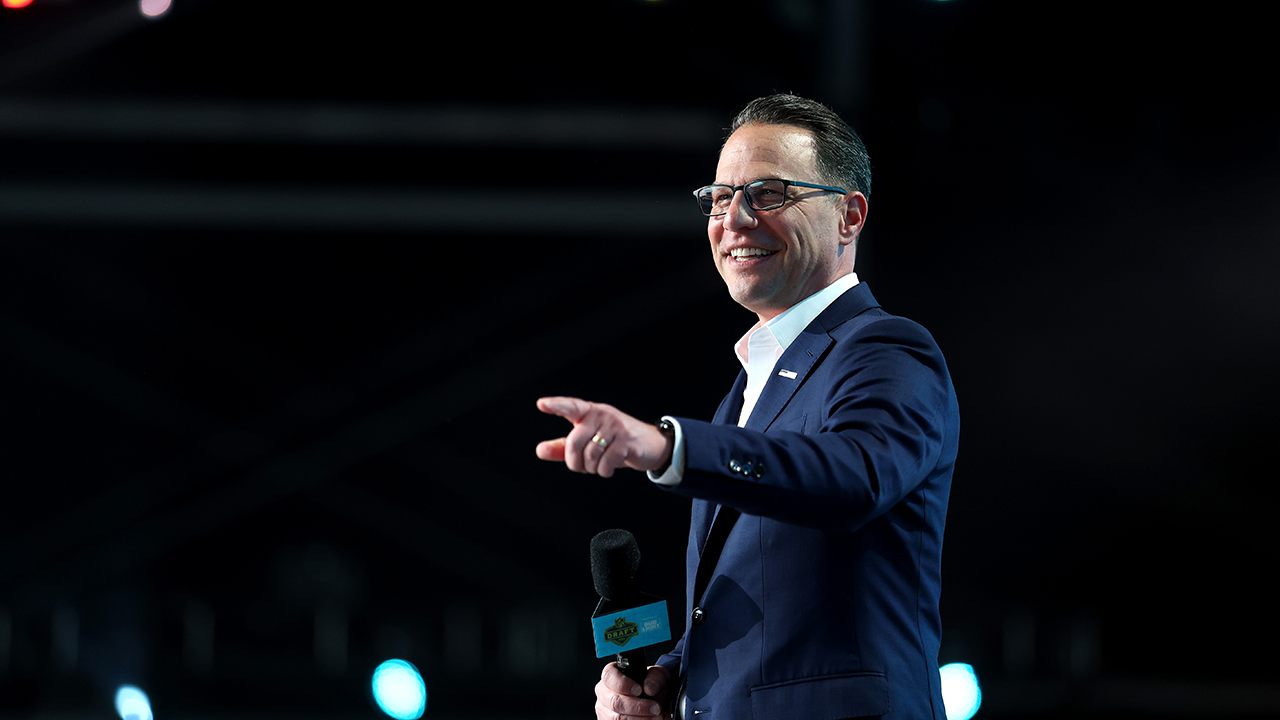
Pennsylvania legislators have prioritized electricity affordability this year. First, they exited the Regional Greenhouse Gas Initiative, the multistate carbon-tax compact. Then, with the newly passed state budget, they defeated Gov. Josh Shapiro’s Lightning Plan, which would have layered an additional in-state carbon tax and expanded Pennsylvania’s clean-energy mandate.
But Pennsylvania’s Alternative Energy Portfolio Standard remains on the books, unexamined for 20 years. AEPS requirements are modest compared to other states, which makes repealing them the real test of whether Harrisburg believes in affordability or just got lucky twice. States, especially the blue ones, endure expensive electricity through policy choices, not geography—and Pennsylvania teeters on the verge of making the wrong choice.
AEPS requires that 18.29% of electricity sold by Pennsylvania utilities come from a list of “alternative” sources: a Tier I of solar, wind, biomass, and, increasingly, coal-mine methane, as well as a Tier II built around waste-coal remediation. In 2025, AEPS cost Pennsylvania $5.14 per megawatt-hour of the electricity it covers.
Fully phased in by 2021, its target hasn’t been revisited since it was written in 2004; lawmakers have touched the law only twice, in 2017 and 2020, both times narrowing eligible sources but never questioning whether Pennsylvania’s consumers should be forced to pay for expensive, unreliable generation in the first place.
The cost has climbed relentlessly, rising from about $122 million in 2020 to $701.9 million in 2025, with a cumulative total of $3.3 billion as of the latest available data. For the electricity covered by AEPS, ratepayers pay 60% to 85% above wholesale. Spread across statewide utility bills, that’s about $49 a year per household, or 3% of an average Pennsylvania bill.
Interestingly, statewide emissions have dropped, but not because of AEPS. The Pennsylvania Department of Environmental Protection credits the state’s real emissions progress—a 38% drop in power-sector CO2 from 1990 to 2021—to the market-driven shift from coal to natural gas.
TRENDING ARTICLES



That’s because AEPS works backward from RGGI. RGGI charged power plants directly for their emissions, and the mere threat of it meant no new merchant gas plant was even proposed in Pennsylvania between 2019 and 2024. AEPS, instead, obligates utilities to pass the cost on to consumers. The utilities buy credits from generators—some required to be in-state but many eligible anywhere in the 13-state PJM grid.
The mandate’s impact is RGGI-sized. RGGI, the compact Pennsylvania spent six years fighting off, cost participating states $3.81 per megawatt-hour that same year. Pennsylvania’s “modest” mandate was already 35% pricier per unit than the carbon tax it never paid, and it scared away about $5.5 billion in energy investment from the commonwealth.
If RGGI can do this without being fully enacted, imagine what AEPS will cost Pennsylvanians if left unaddressed.
Pennsylvania doesn’t have to guess where strengthened renewable mandates lead. New York’s residential rates hit 21.62 cents per kilowatt-hour (kWh) in 2025, eighth-most expensive nationally and 59% above the national average. New York doesn’t have Pennsylvania’s gas reserves. But the Empire State chose to subsidize offshore wind it can’t build on schedule while closing reliable generation faster than it can replace.
New York is far from an outlier. Virginia left RGGI in 2023 and rejoined this year. Dominion, the state’s largest utility, projected the move will add roughly $13 a month to a typical residential bill. Dominion’s own 2025 resource plan update told regulators it “does not currently see a viable path” to retiring its carbon-emitting plants by the state’s 2045 deadline.
Although safely avoiding other states’ pitfalls, Pennsylvanians must remain vigilant. The Pennsylvania Reliable Energy Sustainability Standard, the bill behind the Lightning Plan, wasn’t included in this year’s state budget negotiations. However, PRESS is still alive in the legislature and would drastically increase AEPS to 50% of retail sales by 2035, doubling Pennsylvania energy bills over 10 years. West Virginia repealed its mandate in 2015. Ohio’s expires in 2026. Pennsylvania’s runs in perpetuity unless lawmakers act.
The choice isn’t between cheap power and clean power. Pennsylvania has taxed the first for 20 years to subsidize a program that never delivered the second. For Pennsylvania to achieve affordable, reliable, and clean power, the commonwealth must repeal AEPS, reject the Pennsylvania Reliable Energy Sustainability Standard, and let consumers, not mandates, determine which energy sources work for them.
We publish a variety of perspectives. Nothing written here is to be construed as representing the views of the Daily Signal.
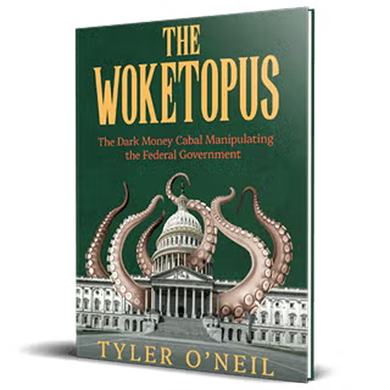
Read the first chapter of The Woketopus right now for FREE
Today, even with President Trump’s victory, leftist elites have their tentacles in every aspect of our government.
The Daily Signal’s own Tyler O’Neil exposes this leftist cabal in his new book, The Woketopus: The Dark Money Cabal Manipulating the Federal Government.
In this book, O’Neil reveals how the Left’s NGO apparatus pursues its woke agenda, maneuvering like an octopus by circumventing Congress and entrenching its interests in the federal government.
You can read the first chapter of this new book for FREE in this eBook, The Woketopus: Chapter One using the secure link below.
TRENDING ARTICLES


The Daily Signal depends on the support of readers like you.
RELATED ARTICLES




Don’t miss the

Don’t miss the signal