
Children of married parents with high education levels are more likely to be healthy and succeed in school and life than their peers. Children from these families are also more likely to live above the poverty line and benefit from extracurricular activities such as music lessons, sports, and summer camp. These activities offer students prized background knowledge.
Students from families with lower education levels must rely more on schools to provide information. Poor reading and math scores nationwide do not give confidence that schools in low-income areas are bridging the gap. Many schools have reduced time spent on history, science, geography, literature, and civics in favor of generic reading strategies, so-called social-emotional learning, and “gender” studies. Schools often cut the very subjects that help students.
Differences in background knowledge have enormous implications for teaching reading. Two students can read the same paragraph and perform differently on the test, not because one is more intelligent, but because he knows the topic better.
For decades, researcher and former professor E.D. Hirsch argued that literacy is connected to content and vocabulary. Hirsch has argued that “broad general knowledge” is essential for reading comprehension because students need prior knowledge to understand what they read.
Likewise, professor of cognitive psychology Daniel T. Willingham, who researches reading comprehension, has also found that background information is important for students to understand text.
The evidence behind this approach is compelling. A 2024 report in Education Next observed long-term reading gains among students attending schools using knowledge-rich curricula. Researchers at the University of Virginia School of Education and Human Development similarly found that elementary students who learned under the Core Knowledge curriculum—which was developed by Hirsch—improved their reading abilities.
TRENDING ARTICLES



While much of the education establishment doubles down on skills and spends less time on content, some educators are bucking the trend by reemphasizing rigor and factual memorization.
Liberty Common School in Fort Collins, Colorado, has used the Core Knowledge curriculum since 1997. The curriculum gives students a foundation in a range of subjects, including history, geography, literature, science, music, and the arts. School officials report their 2025 graduating class had Colorado’s highest composite SAT score.
The Great Hearts network of schools also uses a classical liberal arts curriculum focusing on great books. The Great Hearts network started in Arizona, but parent demand helped expand the academies to Louisiana and Texas. Instead of narrowing instruction, these schools immerse students in primary sources and maintain high academic expectations.
Students cannot analyze history they do not know, evaluate scientific claims they do not understand, or engage in civic debate without any understanding of civilization. Knowledge is a prerequisite for any critical thinking. Yet state lawmakers in California, New Jersey and Vermont have ethnic studies standards or requirements that emphasize activism, identity politics, and “lived experiences” with no civics requirements.
Encouraging schools to adopt knowledge-rich curricula is a proven approach to closing the achievement gap. It is one of the few education reforms that should attract support across ideological lines.
America does not suffer from a shortage of taxpayer spending. It has a knowledge problem. Schools cannot continue stripping content out of classrooms while expecting literacy rates and civic understanding to improve.
If policymakers genuinely want to close the achievement gap, they should start by recognizing what that gap represents: unequal access to knowledge.

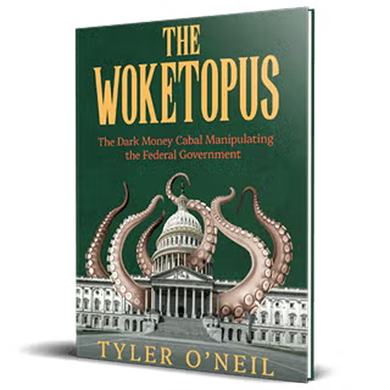
Read the first chapter of The Woketopus right now for FREE
Today, even with President Trump’s victory, leftist elites have their tentacles in every aspect of our government.
The Daily Signal’s own Tyler O’Neil exposes this leftist cabal in his new book, The Woketopus: The Dark Money Cabal Manipulating the Federal Government.
In this book, O’Neil reveals how the Left’s NGO apparatus pursues its woke agenda, maneuvering like an octopus by circumventing Congress and entrenching its interests in the federal government.
You can read the first chapter of this new book for FREE in this eBook, The Woketopus: Chapter One using the secure link below.




The Daily Signal depends on the support of readers like you.
RELATED ARTICLES





Don’t miss the

Don’t miss the signal