
Parents Want Civic Literacy and Colorblindness in Classrooms, Not Critical Race Theory

Parents prioritize civic literacy, colorblindness, and transparency in education rather than focusing on preconceived notions of the oppressive and oppressed, according to a new national survey.
The survey commissioned by the THINC Foundation delivered shots directly across the bow of critical race theory. The vast majority, 85%, of parents believe individual attributes such as effort, character, and perseverance have more influence on life outcomes than immutable traits like skin color and ethnicity.
More than 9 in 10 parents said it is important for children to be taught mutual respect and cooperation, including engaging with differing viewpoints, and 90% said it is important to teach civics. Nearly as many parents, 89%, said school curricula should be publicly available, so they know what their children are being taught.
The survey, released April 14, polled 2,246 parents of K-12 students.
“Parents want schools to focus on the fundamentals that bring Americans together: civic literacy, respect for different viewpoints, and the conviction that every child can succeed,” said THINC Foundation founder and CEO Mitch Siegler in a statement accompanying the release of the findings.
“The overwhelming consensus reflected in this survey should remind policymakers and educators that families expect classrooms to be places of learning, not arenas for divisive partisanship.”
TRENDING ARTICLES



Curricula commonly associated with critical race theory, including programs such as Liberated Ethnic Studies, have drawn criticism from some parent groups and organizations. Many argue that these programs place an increased emphasis on race and identity in divisive ways.
Siegler questioned why schools have prioritized these ethnic studies programs when parents are asking for the opposite. In the survey, 82% of parents believe schools should teach the value of a colorblind society in which individuals are judged by character rather than race or ethnicity.
“If this is how people feel, why are we doing the opposite in so many school districts?” he asked. “Why doesn’t common sense prevail, and districts give parents what they want in a constructive, unifying way?”
THINC Seeks an Alternative to Divisive Ethnic Studies
The THINC Foundation, a nonprofit organization that promotes transparency and civic-minded education in K-12 schools, aims to address these concerns about ideology in the American education system.
“We originally launched the THINC Foundation in 2024 to bring greater awareness to the issue of ideology in American schools and to advocate for a more constructive, unifying approach that brings students of different backgrounds and ethnicities together,” Siegler told The Daily Signal.
In recent years, THINC has developed its own curriculum, which Siegler said focuses on “bringing people together, emphasizing critical thinking and debate, and teaching students about different backgrounds.”
THINC, along with some other organizations, argues that ethnic studies can be appropriate if taught in a different format. Siegler said that teaching about different cultures and backgrounds can be valuable when presented appropriately.
“This material may be more suitable for older students,” he said, adding that concepts such as “oppressor and oppressed” should not be introduced in early elementary grades.
Should Ethnic Studies Be Replaced With Civics and History Courses?
Other groups take a more critical view.
Jonathan Butcher and Mike Gonzalez of The Heritage Foundation’s Center for Education Policy argued that ethnic studies programs should be replaced with civics and history courses.
In their article “Hey Hey, Ho Ho, Ethnic Studies Has Got to Go,” the authors pose that civic education should emphasize shared national principles and individual rights. They contend that ethnic studies curricula focus heavily on group identity.
“The content emphasizes the differences between different identity groups, making their status as Americans subordinate to their immutable characteristics. As a result, students are taught that the characteristics that they cannot control—such as skin color and biological sex—help to determine their destiny more than their choices and decisions,” the authors stated.
The role of ethnic studies in American education remains a subject of debate. Some argue the subject can be adapted for older students, while others believe it should be removed entirely.
Regardless, according to THINC, the new survey reveals a “broad consensus around core educational principles, including mutual understanding, critical thinking, and reasoned debate—a strong rejection of those who see education as an inherently political pipeline to activism.”
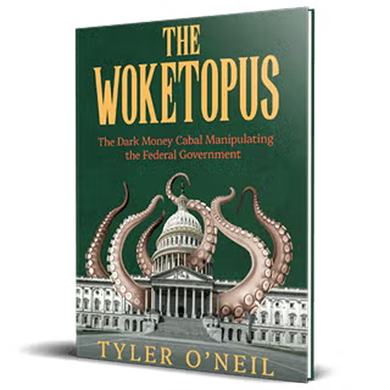
Read the first chapter of The Woketopus right now for FREE
Today, even with President Trump’s victory, leftist elites have their tentacles in every aspect of our government.
The Daily Signal’s own Tyler O’Neil exposes this leftist cabal in his new book, The Woketopus: The Dark Money Cabal Manipulating the Federal Government.
In this book, O’Neil reveals how the Left’s NGO apparatus pursues its woke agenda, maneuvering like an octopus by circumventing Congress and entrenching its interests in the federal government.
You can read the first chapter of this new book for FREE in this eBook, The Woketopus: Chapter One using the secure link below.
TRENDING ARTICLES


The Daily Signal depends on the support of readers like you.
RELATED ARTICLES





Don’t miss the

Don’t miss the signal