
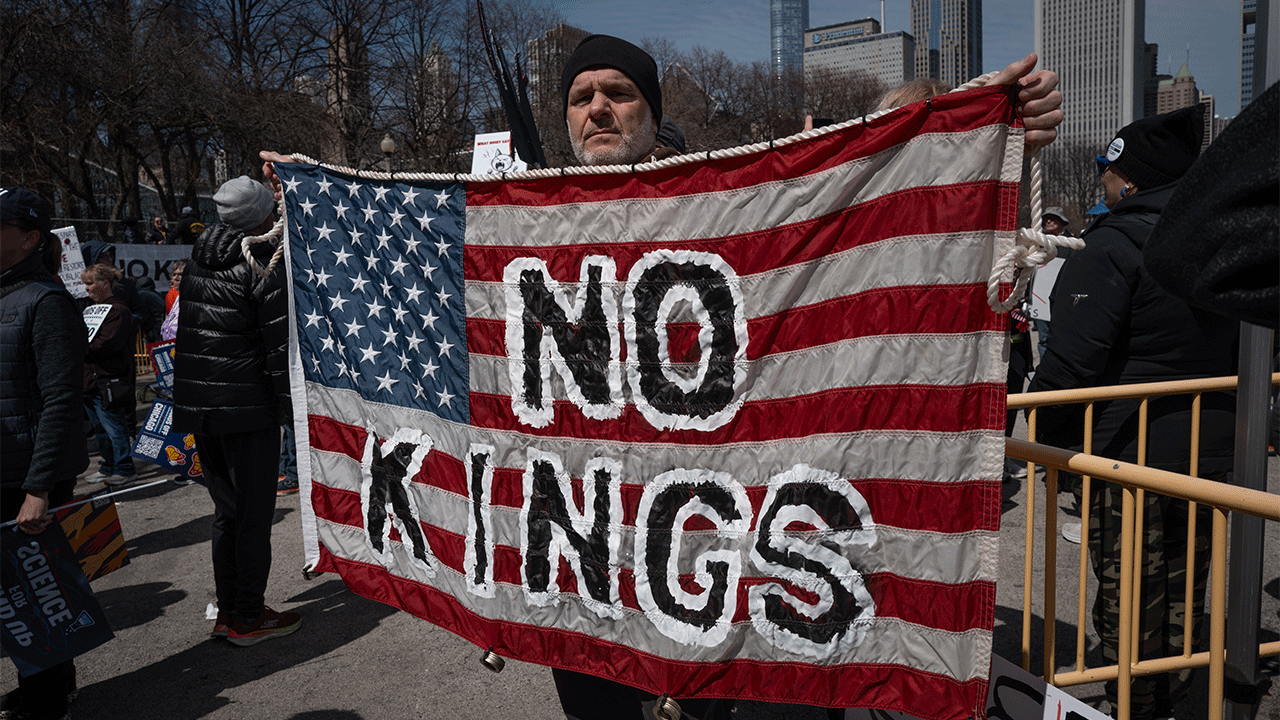
“No kings!” has become one of the prominent rallying cries of our time.
The slogan evokes the longstanding American aversion to monarchy—an aversion its supporters trace to our nation’s founding.
But a closer reading of the historical record tells a different and far more interesting story. In the run-up to the American Revolution, most colonial protests against oppressive taxes were directed not at King George III but at their direct source, British Parliament. When future Founder Benjamin Rush visited the British House of Commons in 1768, he described it (and not the Crown)—as the origin of “the infernal scheme for enslaving America.”
Although Parliament played a critical role representing the people, many British and American observers believed that it inevitably became a collection of corrupt factions that sought advantages at the expense of others’ rights and interests.
The king’s job, in their eyes, was to check these tendencies in the legislature. As Lord Bolingbroke wrote in 1749, the ideal sovereign would “defeat the designs, and break the spirit of faction.”
In doing so, the monarch uniquely served as the defender of all of his subjects’ rights.
TRENDING ARTICLES



He was suited for this role because, they felt, he had a greater incentive than Parliament to protect the interests of the whole kingdom and everyone in it.
As Alexander Hamilton wrote, the king “is under no temptation to purchase the favour of one part of his dominions, at the expence of another; but, it is his interest to treat them all, upon the same footing.”
This view of monarchy led Rush to argue that it was more dangerous to give the “power of the whole state” to “one body of men” rather than to “one man.”
The colonists’ main problem with George III was his seeming passivity in the face of legislative tyranny. In 1774, Thomas Jefferson entreated George III to use “the great office of his majesty … to prevent the passage of laws by any one legislature of the empire, which might bear injuriously on the rights and interests of another.”
Their disappointment in the king, plus Thomas Paine’s earthshaking 1776 pamphlet “Common Sense”—which argued that a throne was an unnatural, defective institution—convinced the patriots to reject monarchy once and for all.
But this pendulum swing soon reached the other extreme. Not only was there no king under the Articles of Confederation: There was no national executive at all. Congress tried to fill the void with committees and boards, but running the war became slow and cumbersome. George Washington and his generals lamented that the structural flaws of the government prolonged the war, costing Americans in blood and treasure.
With the war winding down, some patriots, such as Colonel Lewis Nicola, believed that a return to monarchy could benefit the infant nation. In 1782, he audaciously suggested to Washington that he take the throne. The commander in chief vehemently shut the idea down. His subsequent resignation the following year proved to the world he would not be king.
In 1787—with the lessons from the revolution fresh in their minds—the Framers gathered in Philadelphia to draft the Constitution. As part of the new nation’s mixed regime, they created an executive with considerable power. He could veto legislation, negotiate treaties, and command the military.
The Framers hoped that the president (like a monarch) would defend the interests of the whole nation by checking competing factions. As Pennsylvania delegate Gouverneur Morris asserted, the president was “the great protector of the Mass of the people.”
Many at the time feared that this executive would, as Virginia delegate Edmund Randolph warned, become the “foetus of monarchy.” Observers then and now have noted that the presidency’s powers rivaled George III’s. Maryland statesman James McHenry wrote to newly-inaugurated President Washington, “You are now a king, under a different name.”
Some historians have claimed that Britain, with its neutered crown, is a republic disguised as a monarchy, while America, with its powerful president, is a monarchy disguised as a republic.
This claim overstates the point. In reality, the Founders established a republic they hoped would feature the benefits of monarchy without its drawbacks. They created a president they believed was sufficiently empowered to protect the people’s rights but explicitly constrained by law and denied guaranteed lifetime tenure. Thus, unlike George III, he needed congressional approval for treaties and appointments, couldn’t dissolve the legislature or unilaterally make war, and could lose his office through electoral defeat or impeachment.
The fact remains, however, that the presidency was intended, in a sense, to be the American analogue to monarchy. The office has changed significantly since, but that was the design in 1787.
Washington embraced the original design: as he announced his retirement from the presidency in his Farewell Address, he famously warned against factions—echoing Bolingbroke’s vision of the ideal king.
It’s true that the Founders wanted “No kings” in America, but they didn’t reject all that monarchy had to offer.
We publish a variety of perspectives. Nothing written here is to be construed as representing the views of the Daily Signal.

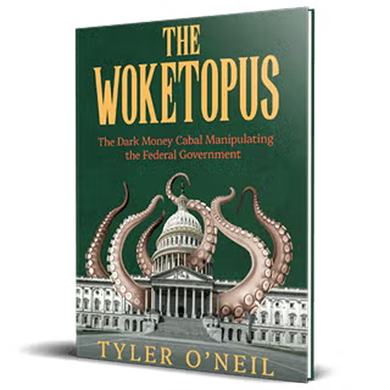
Read the first chapter of The Woketopus right now for FREE
Today, even with President Trump’s victory, leftist elites have their tentacles in every aspect of our government.
The Daily Signal’s own Tyler O’Neil exposes this leftist cabal in his new book, The Woketopus: The Dark Money Cabal Manipulating the Federal Government.
In this book, O’Neil reveals how the Left’s NGO apparatus pursues its woke agenda, maneuvering like an octopus by circumventing Congress and entrenching its interests in the federal government.
You can read the first chapter of this new book for FREE in this eBook, The Woketopus: Chapter One using the secure link below.



The Daily Signal depends on the support of readers like you.
RELATED ARTICLES



Don’t miss the

Don’t miss the signal