
Energy deregulation is not simply about eliminating rules. It is about removing regulations that exceed statutory authority, impose overly burdensome costs, and make it harder for Americans to access affordable and reliable power, often with little or no environmental benefit.
The Environmental Protection Agency’s repeal of the 2024 greenhouse gas standards for power plants does exactly that, according to the EPA.
After the Supreme Court rejected the Clean Power Plan, arguing that agencies do not have the authority to mandate generation switching under the Clean Air Act, the Biden EPA issued this rule as an alternative approach.
Instead of directly requiring utilities to shift generation away from coal and natural gas plants, the rule imposed carbon capture and storage-based standards on many existing and new power plants. According to the EPA’s 2024 rule, coal plants planning long-term operations and new baseload natural gas plants would have been required to achieve roughly 90% carbon dioxide reductions through carbon capture and storage by 2032.
There is ongoing litigation over whether that approach is lawful and whether carbon capture and storage is adequately demonstrated for the plants covered by the rule. But even apart from that legal question, the rule has the same basic problem as the original, struck-down Clean Power Plan. It still uses federal regulation to push generation away from existing coal and natural gas plants and toward wind, solar, and other so-called clean technologies.
Calling the requirement a source-specific emissions standard does not change its practical effect if the only realistic compliance option for many facilities is retirement.
TRENDING ARTICLES



And premature retirement is exactly what we’re seeing. Multiple reliability studies have warned that the power sector is facing the retirement of dispatchable generation while demand continues to climb. Reliable coal and natural gas facilities that can operate whenever needed cannot be fully replaced by wind and solar that depend on weather conditions or require significant backup infrastructure.
Grid operators have repeatedly warned about shrinking reserve margins and growing reliability concerns around the nation. The last thing policymakers should be doing is retaining yet another regulation that accelerates the loss of dependable generating capacity in the face of rising demand, especially when the regulation will have virtually no impact on man-made global warming.
EPA’s fact sheet estimates that repealing the rule will save approximately $1.2 billion annually by eliminating compliance obligations associated with the greenhouse gas standards. Utilities would no longer face the prospect of spending billions on premature carbon capture and storage infrastructure or retiring otherwise functional generating units simply to satisfy a federal mandate.
Those costs do not simply disappear into corporate balance sheets. Utilities recover regulatory compliance expenses through the rates paid by households, businesses, manufacturers, schools, and hospitals. At a time when affordability remains a top concern for families, regulators should not be imposing unnecessary costs that ultimately show up on monthly electric bills.
The repeal is particularly important because electricity demand is growing rapidly. The Department of Energy has identified data center expansion, domestic manufacturing growth, and electrification across the economy as key drivers of rising electricity demand.
The U.S. Energy Information Administration forecasts commercial and industrial customers will account for roughly 92% of electricity-demand growth in 2027, with commercial sales increasing 2.7% and industrial sales increasing 2.6%.
Meeting that demand will require enormous amounts of reliable, around-the-clock power. A growing industrial sector cannot operate effectively on intermittent generation alone. Its operations require the baseload and dispatchable electricity that coal and natural gas plants are positioned to provide today. If policymakers are genuinely concerned about keeping electricity affordable as demand increases, forcing additional reliable power plants off the grid is the wrong approach.
Maintaining baseload generation capacity helps utilities meet new demand while reducing pressure on consumers’ electric bills. Retaining regulations that discourage reliable power will have the opposite effect.
The EPA’s repeal removes unnecessary burdens while helping ensure sufficient electricity supplies for a growing economy. At a time when data center demand is projected to rise dramatically and reliability concerns continue to mount, keeping reliable coal and natural gas generation available is not just good energy policy. It is common sense.

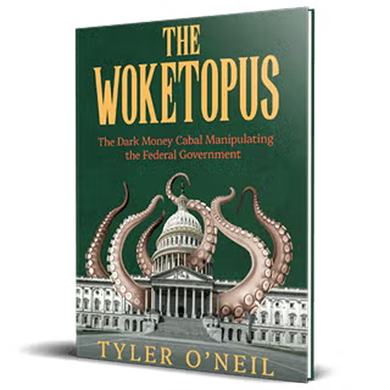
Read the first chapter of The Woketopus right now for FREE
Today, even with President Trump’s victory, leftist elites have their tentacles in every aspect of our government.
The Daily Signal’s own Tyler O’Neil exposes this leftist cabal in his new book, The Woketopus: The Dark Money Cabal Manipulating the Federal Government.
In this book, O’Neil reveals how the Left’s NGO apparatus pursues its woke agenda, maneuvering like an octopus by circumventing Congress and entrenching its interests in the federal government.
You can read the first chapter of this new book for FREE in this eBook, The Woketopus: Chapter One using the secure link below.


The Daily Signal depends on the support of readers like you.
RELATED ARTICLES





Don’t miss the

Don’t miss the signal