
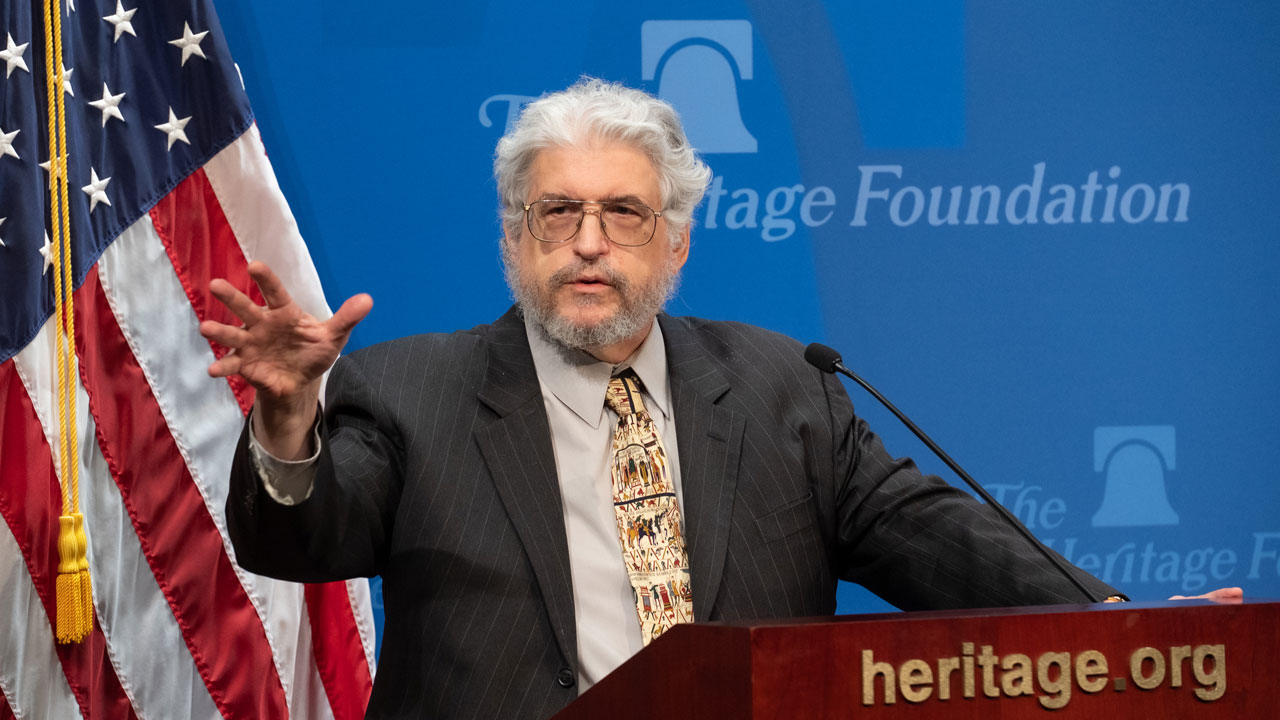
President Bill Clinton signed the Personal Responsibility and Work Opportunity Reconciliation Act, otherwise known as welfare reform, into law 30 years ago on Aug. 22, 1996. The following is an excerpt from Lee Edwards’ book “The Power of Ideas”. Edwards served as a distinguished fellow at The Heritage Foundation and died in 2024.
In the spring of 1994, President Clinton, having done almost nothing to redeem his campaign pledge on welfare, Heritage Foundation senior analyst Robert Rector proposed a comprehensive reform of the federal welfare system that would end government subsidization of “self-destructive behavior” and reinforce “moral and cultural renewal.”
It was not just another paper but the culmination of years of thought and study by the veteran expert on welfare and family issues. Rector’s seminal study, running 28 pages and 10,000 words, would serve as a model for future work in the area of cultural policy studies by Patrick Fagan and other Heritage analysts.
Rector pointed out that more than 10,000 days—dating back to the mid-1960s—had passed since President Lyndon B. Johnson told the nation that “the days of the dole are numbered.” Now, nearly 30 years later, the War on Poverty had cost American taxpayers more than $4.9 trillion (repeat, trillion) on antipoverty programs, about $305 billion in the last year alone.
But instead of eliminating poverty, the Heritage analyst reported, the welfare system had actually “bribe[d] individuals into behavior-such as not marrying and having children out of wed-lock— which is self-defeating to the individual, a tragic handicap for children, and … increasingly a threat to society.”
What was needed, Rector insisted, was “a complete reversal of existing policies.”
TRENDING ARTICLES



A true welfare reform strategy would be based on three principles: promoting individual responsibility by requiring welfare recipients to give something in return for benefits; controlling welfare costs; and dramatically reducing the illegitimate birth rate by increasing the marriage rate. These principles were embodied in pledge number three of the 1994 Contract with America—the Personal Responsibility Act.”
Specific reforms proposed by Rector included establishing “serious workfare,” denying additional payments to mothers who had more children while on welfare, and putting a 3.5% cap on welfare spending growth.
All these ideas were included in the welfare reform legislation of 1996, which won Rector’s praise as “historic … the largest change in welfare since the early days of the War on Poverty.”
The Heritage analyst, frequently consulted by members of Congress as they wrote the bill, pointed out that the growth of welfare spending would be slowed, albeit by a 4.5% growth limit rather than the 3.5% recommended by Heritage. Illegitimacy would be reduced by three provisions, including extra funding to states that lowered the number of illegitimate births without increasing abortions. And a specified percentage of AFDC recipients would be required to take private-sector jobs or to perform “community service work in exchange for benefits.

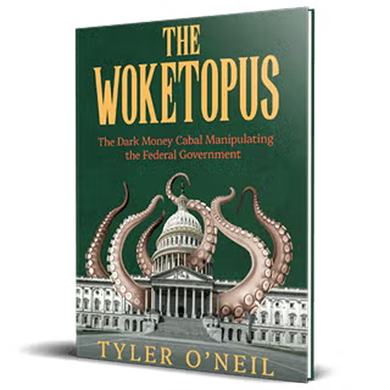
Read the first chapter of The Woketopus right now for FREE
Today, even with President Trump’s victory, leftist elites have their tentacles in every aspect of our government.
The Daily Signal’s own Tyler O’Neil exposes this leftist cabal in his new book, The Woketopus: The Dark Money Cabal Manipulating the Federal Government.
In this book, O’Neil reveals how the Left’s NGO apparatus pursues its woke agenda, maneuvering like an octopus by circumventing Congress and entrenching its interests in the federal government.
You can read the first chapter of this new book for FREE in this eBook, The Woketopus: Chapter One using the secure link below.
TRENDING ARTICLES


The Daily Signal depends on the support of readers like you.
RELATED ARTICLES



Don’t miss the

Don’t miss the signal