Arizona Schools Build Fields of Taxpayer Nightmares, but There Is a Solution
In the 1989 film “Field of Dreams,” an Iowa corn farmer named Ray heeds an unseen voice telling him, “If you build it, they will come,” and builds a baseball stadium. Ray lived happily ever after in this fantasy sports movie, but heeding this advice has not worked out for taxpayers financing dubious school projects.
American school districts have been spending record amounts of money building and rebuilding school buildings despite falling enrollment.
During the 2025-26 fiscal year, total K-12 school construction and renovation spending in the United States reached $89.2 billion—a record level. This figure includes new school construction ($34.8 billion), major renovation and modernization ($38.6 billion), and additions and expansions ($15.8 billion). The number was up from $76.3 billion nationwide in 2019.
Districts experiencing rapid student enrollment growth can certainly require more building space. School district enrollment, however, dropped by approximately 2 million students between 2019 and 2025. Many school districts continue to spend large sums on school buildings despite declining enrollment.
The best example of this folly comes not from the Midwest but rather from the desert southwest, where Scottsdale Unified School District in Arizona has decided to double down on already immense facility spending. Scottsdale Unified represents a prime example of a “Field of Dreams” approach to construction gone wrong.
The Arizona auditor general published a performance audit of the Scottsdale Unified School District in 2014, noting an excess of school building capacity:
TRENDING ARTICLES



“In fiscal year 2012, Scottsdale USD had total school building capacity of about 38,000 students but only had about 25,000 students enrolled, or in other terms, the District was using about 66 percent of its building capacity. Maintaining more building space is costly to the District because the majority of its funding is based on its number of students, not the amount of square footage it maintains.”
Despite an approximate 66% utilization rate in 2012, Scottsdale Unified passed a $229,000,000 bond issue to construct new space in 2016. Part of that bond issue involved tearing down and rebuilding Scottsdale Unified’s Pima Elementary School, among others.
After tearing the previous Pima Elementary to the ground, Scottsdale Unified spent $20,419,424 to build a new Pima Elementary with a design capacity of 700 students. Pima Elementary had only 452 students enrolled the year before reconstruction. The school reopened with 492 out of 700 spaces filled, but the number of students has continued to decline afterwards, down to 296 in the 2025-26 school year. In 2026, Scottsdale Unified announced that they were closing Pima Elementary.
Scottsdale Unified taxpayers will continue to pay off the debt for the new but closed Pima Elementary until 2036. Pima Elementary was the first reconstructed campus to close, but it may not be the last.
Not to be outdone by the folly of previous boards, the Scottsdale Unified School District will be seeking an additional $375,000,000 bond in 2026, despite having student enrollment fall to 19,472 students in 2025-26.
By 2025-26, Scottsdale Unified had dropped to almost 50% of its 2012 enrollment capacity, according to the Arizona auditor general. Nevertheless, district officials have decided to keep building up debt and construction projects at a pace that would make an Egyptian pharaoh blush.
Scottsdale Unified is far from alone in promoting facility folly. Unfortunately, powerful special interests lobby in favor of new construction and help finance campaigns. In addition, communities often oppose closing underenrolled district campuses. Over time, these two forces can accumulate a great deal of vacant and underutilized space.
In 2025, the Commonsense Institute of Arizona examined data from the Arizona School Facilities Board and estimated that the Arizona district system has physical capacity to serve almost 1.3 million students—despite only having 850,000 students enrolled. The extra 450,000 spaces could accommodate a group of students equal to the combined enrollment of the Vermont, Wyoming, the District of Columbia, and North Dakota public school systems.
Despite a statewide decline in district enrollment of 47,500 students after 2019, Arizona school districts spent $8.9 billion on capital spending. Six billion of that resulted in 499 new district buildings despite the statewide decline in enrollment.
Arizona lawmakers need to take action by passing a minimum enrollment capacity standard for school districts to saddle their taxpayers with further debt. As for the existing glut, taxpayers paid for these buildings to educate students, and there is a policy change that would allow them to do just that.
Lawmakers should pass a co-location statute. Co-location is practiced in states ranging from California and New York to Georgia and Florida. Under these practices, charter schools can make use of vacant and underutilized facilities. These policies allow charters to spend less on facilities and to pay their teachers more. Unlike previous co-location policies, the next generation of statutes should allow district magnet schools, private schools, and micro-schools to participate.
Pima Elementary could live again as the host to multiple high-demand small schools. Those schools could help retire the multi-million-dollar debt associated with the district’s inexplicable decision to tear the previous underenrolled school down.
If Scottsdale Unified cannot produce a school that Arizona parents demand, it should be required to make room for those who can.

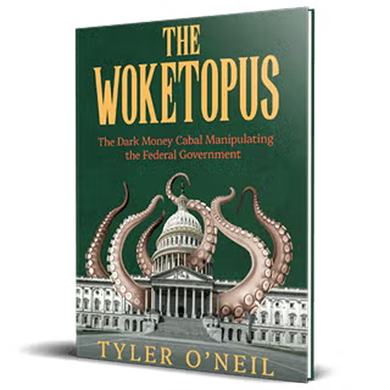
Read the first chapter of The Woketopus right now for FREE
Today, even with President Trump’s victory, leftist elites have their tentacles in every aspect of our government.
The Daily Signal’s own Tyler O’Neil exposes this leftist cabal in his new book, The Woketopus: The Dark Money Cabal Manipulating the Federal Government.
In this book, O’Neil reveals how the Left’s NGO apparatus pursues its woke agenda, maneuvering like an octopus by circumventing Congress and entrenching its interests in the federal government.
You can read the first chapter of this new book for FREE in this eBook, The Woketopus: Chapter One using the secure link below.
TRENDING ARTICLES


The Daily Signal depends on the support of readers like you.
RELATED ARTICLES





Don’t miss the

Don’t miss the signal