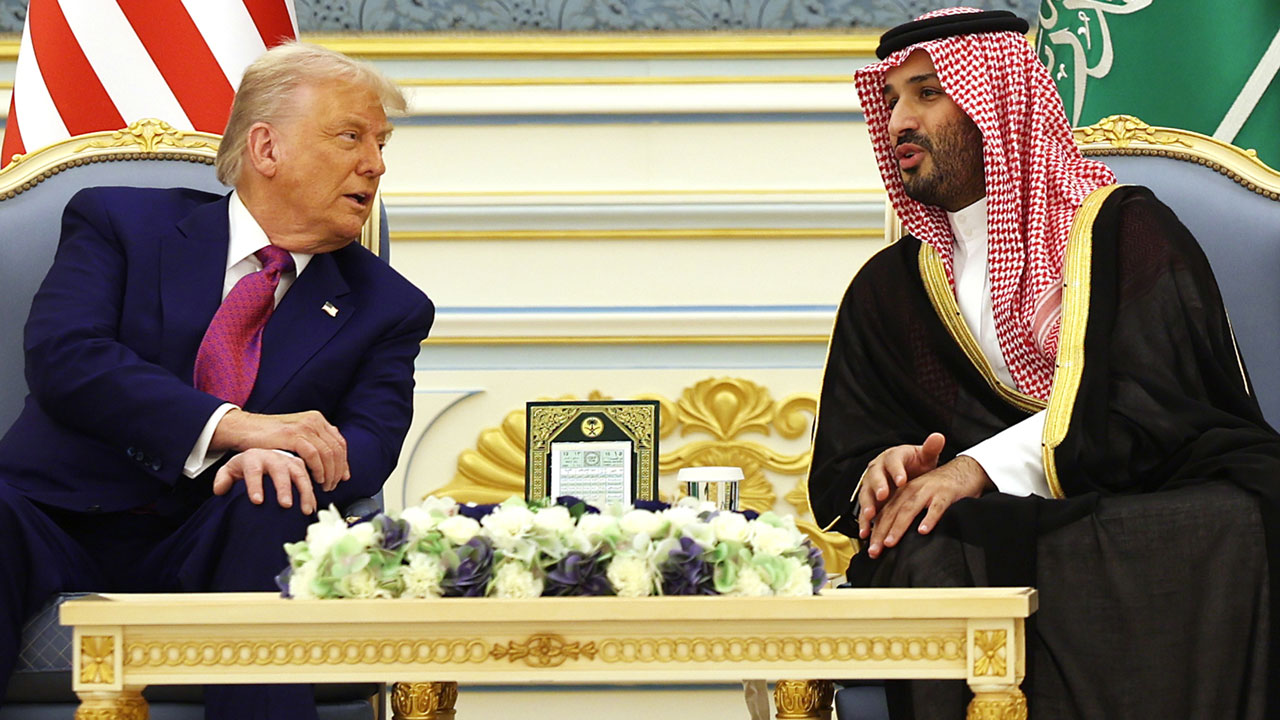
July 22 (Reuters)—The U.S. and Saudi Arabia reached an agreement on civil nuclear power, letting the kingdom enrich uranium and build nuclear reactors using U.S. technology, without requiring the snap U.N. inspections that Washington has previously demanded from Iran.
A civil nuclear deal with Saudi Arabia has been in the works for years during both President Donald Trump’s first administration and that of former President Joe Biden.
No deal has come together before now, however, in part because of warnings from nonproliferation groups that say that it could offer Saudi Arabia a path to develop a nuclear weapon.
Unlike the Biden plan, the Trump administration deal does not provide for Saudi Arabia to sign the so-called Additional Protocol that allows the U.N.’s International Atomic Energy Agency to carry out snap inspections at undeclared locations.
More than a year ago, Saudi Arabia switched from light-touch IAEA oversight designed for countries with very limited nuclear activities to regular safeguards with monitoring of declared nuclear facilities. The move was part of a planned nuclear expansion that it has long said will include enrichment.
The Additional Protocol is designed to guard against secret nuclear activities, a concern regarding Saudi Arabia since Crown Prince Mohammed bin Salman has repeatedly said Riyadh will develop nuclear weapons if its regional rival Iran does.
TRENDING ARTICLES

Iran implemented the Additional Protocol under a landmark 2015 nuclear deal with major powers, but that deal unraveled after Trump pulled the U.S. out of it in 2018. Iran stopped implementing the Additional Protocol in 2023.
The new agreement with Washington would let Saudi Arabia enrich uranium and reprocess nuclear waste, both of which are potential pathways to a nuclear weapon. The UAE agreed to forgo both when it signed a similar deal with the U.S. in 2009.
U.S. Secretary of Energy Chris Wright and his counterpart, Prince Abdulaziz bin Salman, signed the pact, known as a 123 Agreement, alongside a bilateral safeguards agreement, the U.S. Energy Department said on Wednesday.
Saudi Arabia, the world’s top oil exporter, said the agreement supports efforts to diversify energy sources, and includes the “highest international standards” of nuclear safety, security and nonproliferation. Saudi Arabia has long said if it does not partner with the U.S. it could do so with China or Russia, which have different proliferation standards.
The Trump administration said the deal abides by nonproliferation agreements in the U.S. Atomic Energy Act, which are among the world’s strongest.
The IAEA has not yet commented on the U.S. announcement.
The energy department said the deal now goes to Congress. Unless Congress raises votes to object to the deal within 90 session days, the deal will go into force. But it would need to have a two-thirds majority to override a presidential veto.
Some nuclear experts called on lawmakers to vote down the deal.
“We urge all members of Congress on both sides of the aisle to recognize the risks and to exercise their power to reject or modify Trump’s proposed nuclear deal with Saudi Arabia so as not to open the door for nuclear proliferation in the Middle East even wider,” said Kelsey Davenport, director for nonproliferation policy at the Arms Control Association.
The about 30-year deal for the construction of AP1000 reactors, which is worth tens of billions of dollars, would benefit Westinghouse, jointly owned by Canada-based Cameco and Brookfield Asset Management.
‘Makes Us All Less Safe’
An industry source said the deal requires a feasibility study on using U.S. technology in Saudi Arabia. The study and the slow pace of building nuclear power plants and uranium enrichment means it could take many years to build the infrastructure.
Several Democrat lawmakers have warned that the deal could start an arms race in the Middle East as the U.S.-Israeli war on Iran grinds on.
“They are allowing Saudi Arabia, a belligerent and authoritarian nation, to develop nuclear weapons technologies while starting a war with Iran under the guise of preventing an Iranian nuclear bomb,” said Sen. Edward Markey, a Democrat. “This deal would make us all less safe.”
Senator Jim Risch, a Republican, said he agrees with the kingdom’s crown prince that the deal stands to benefit both countries.
(Reporting by Timothy Gardner; additional reporting by Patricia Zengerle in Washington, Timour Azhari in Riyadh, Ismail Shakil, and Christian Martinez; Editing by David Gregorio, Don Durfee, and Chizu Nomiyama )
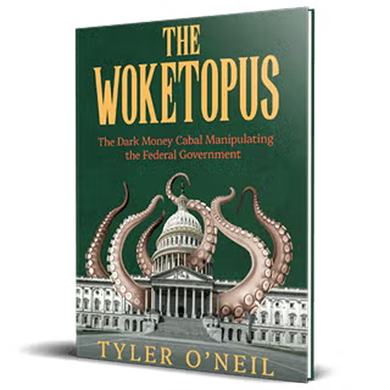
Read the first chapter of The Woketopus right now for FREE
Today, even with President Trump’s victory, leftist elites have their tentacles in every aspect of our government.
The Daily Signal’s own Tyler O’Neil exposes this leftist cabal in his new book, The Woketopus: The Dark Money Cabal Manipulating the Federal Government.
In this book, O’Neil reveals how the Left’s NGO apparatus pursues its woke agenda, maneuvering like an octopus by circumventing Congress and entrenching its interests in the federal government.
You can read the first chapter of this new book for FREE in this eBook, The Woketopus: Chapter One using the secure link below.



The Daily Signal depends on the support of readers like you.
RELATED ARTICLES

Don’t miss the

Don’t miss the signal