

As the Trump administration considers new rules governing in vitro fertilization, the pro-life movement is grappling with a new ethical challenge. For more than five decades, the pro-life movement has focused on abortion and consistently upheld the scientific principle that life begins at conception. But if that principle is true, it cannot stop at the doors of an IVF clinic.
We grieve the loss of roughly 1 million unborn children killed through abortion each year. We advocate, vote, donate, and pray for an end to abortion, just as we did to end Roe v. Wade.
Many people who are otherwise pro-life support IVF. Their logic is simple: Abortion destroys life, while IVF makes it. Thus, IVF is said to be “pro-life.”
Except nearly all forms of IVF involve the destruction of fertilized embryos. IVF is responsible for the destruction of millions of embryos each year.
Hundreds of thousands of patients undergo IVF annually in the U.S. The latest available data from the Centers for Disease Control and Prevention reveal that in 2022, more than 435,000 cycles of IVF were performed, resulting in 98,289 live births. This means that more than 75% of IVF cycles failed to produce a live birth.
Estimating that a single IVF cycle produces about seven embryos, that equates to more than 3 million embryos produced through IVF for that year. Other estimates place the annual number even higher.
TRENDING ARTICLES



After fertilization, these embryos are graded, screened, and selected. Usually, one embryo is transferred and implanted at a time. If a typical IVF cycle produces seven embryos and only one is transferred, then approximately 85% are not given the opportunity to survive. Since no reliable tracking systems exist, we can only presume that these remaining embryos are intentionally destroyed, discarded, frozen, or used for experimentation.
While some couples go on to have a second child, often using frozen embryos from an earlier cycle, the number of children born remains a fraction of the embryos created. Some researchers estimate that at least 1.2 million to 1.5 million embryos are currently frozen and stored in the U.S., which suggests that most “excess embryos” are simply discarded and not frozen.
In any case, the majority of these frozen embryos will never be thawed and implanted, and those that are unfrozen face tough odds of survival.
In its early years, IVF was largely presented as a last resort for married couples facing infertility. That remains part of the picture, but it is no longer the whole story.
Today, the IVF market is expanding. What was once a rare medical intervention is now a lucrative industry projected to exceed $15 billion annually in the U.S. within the next decade. With that growth has come a shift: IVF is not just being driven by medical necessity, but by manufactured consumer demand.
Some of that demand is coming from same-sex couples purchasing gametes and hiring surrogates to carry their IVF babies. Unlike adoption, which typically involves extensive screening and background checks, IVF (and surrogacy) operates under a very different framework. There is no national standard that determines who can commission IVF arrangements, how embryos are made, or how many are produced in the process. There are also very few state regulations on the IVF industry.
Unlike many areas of medicine that involve human life, the IVF industry operates with almost no oversight. Clinics are largely free to write their own rules. Those standards are heavily influenced by a financial structure that rewards volume. Each cycle can cost tens of thousands of dollars. Additional services like genetic testing, embryo selection, and long-term storage create additional revenue streams.
“Wild West” is most often the phrase used to describe the U.S. IVF industry. Whereas some countries limit IVF to married couples, the U.S. does not. Whereas many countries impose legal age limits on IVF usage, the U.S. does not. Whereas some countries highly regulate the storage and freezing of embryos, the U.S. does not. The result is a system where access is largely determined by the ability to pay, not by consistent guardrails designed to protect human life.
Higher success rates attract more clients. More clients mean more cycles. More cycles mean more embryos created—and more embryos destroyed, discarded, or frozen.
Being largely unregulated, the IVF industry frequently takes a casual approach to the “products” it produces. Between 2009 and 2019 alone, over 100 lawsuits were filed involving the negligent destruction or mishandling of embryos. In 2018, a single storage failure in Cleveland rendered more than 4,000 embryos “nonviable.”
To be clear, these are “conceived” embryos. These are fertilized eggs. And we pro-lifers have always argued that life begins with conception. Not at implantation, but at fertilization.
“It is a scientific certainty that life begins at fertilization,” says popular pro-life activist Lila Rose. “At the moment the sperm fuses with an egg … a new unique human being … comes into existence.” Her statement is corroborated by many other pro-life activists, legislators and scientists.
The modern pro-life position has always been clear: every fertilized egg should be protected—not discarded, destroyed or frozen. Life begins at conception, regardless of whether that conception occurs within the womb or within a test tube.
Being committed to a pro-life ethic requires defending life at every stage, in every place—whether in the womb or in the lab. Every embryo is a human life with inherent dignity, not raw material for selection or disposal. Anything less is an abandonment of the founding principles of the pro-life movement.
We publish a variety of perspectives. Nothing written here is to be construed as representing the views of the Daily Signal.
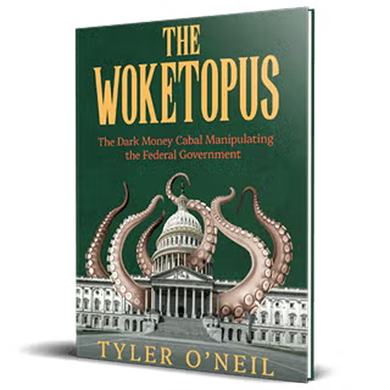
Read the first chapter of The Woketopus right now for FREE
Today, even with President Trump’s victory, leftist elites have their tentacles in every aspect of our government.
The Daily Signal’s own Tyler O’Neil exposes this leftist cabal in his new book, The Woketopus: The Dark Money Cabal Manipulating the Federal Government.
In this book, O’Neil reveals how the Left’s NGO apparatus pursues its woke agenda, maneuvering like an octopus by circumventing Congress and entrenching its interests in the federal government.
You can read the first chapter of this new book for FREE in this eBook, The Woketopus: Chapter One using the secure link below.


The Daily Signal depends on the support of readers like you.
RELATED ARTICLES





Don’t miss the

Don’t miss the signal