
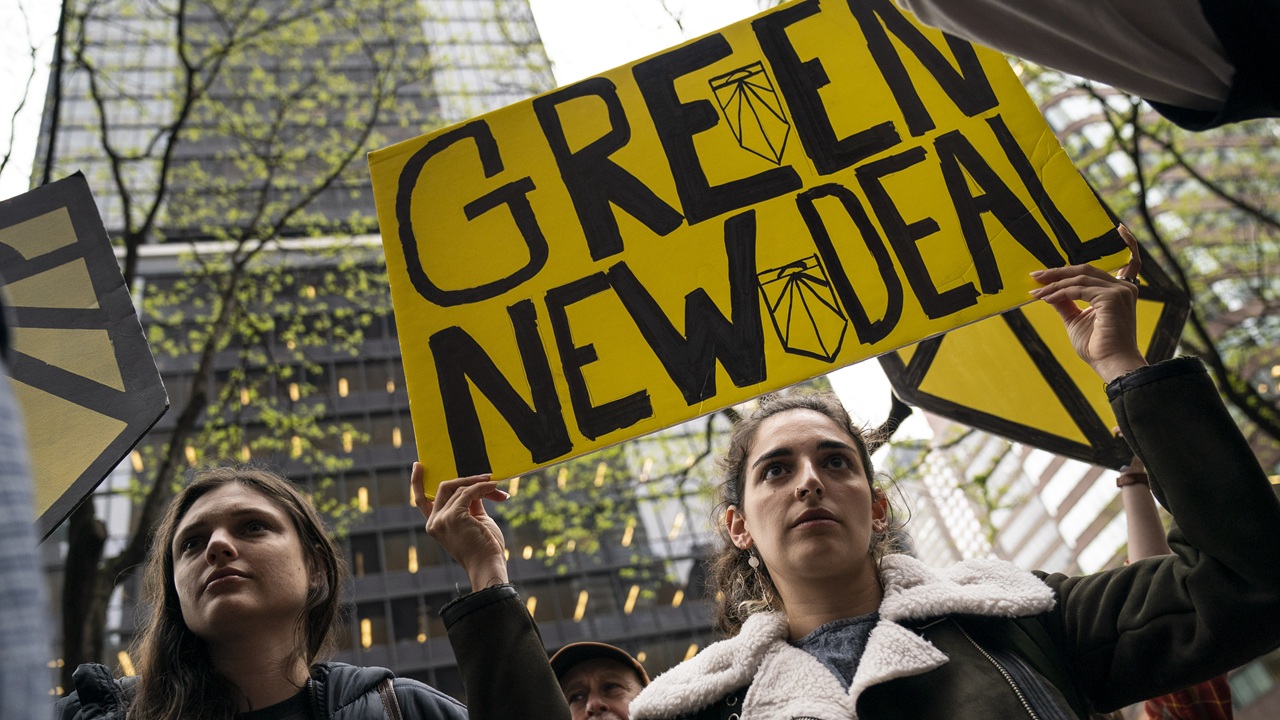
In recent years, left-wing activists have increasingly turned to America’s courts as the solution to their policy failures elsewhere. After countless failed attempts to enact progressive mandates through Congress and federal agencies—the Green New Deal, firearm bans, and other unpopular policies—activist groups have been aggressively teaming up with trial lawyers in an effort to force their policy preferences on the American populace through the courtrooms of America.
A clear example of this lawfare campaign is climate change litigation. More than three dozen left-wing states and municipalities have launched climate lawsuits against America’s energy producers. They argue that the industry’s purported role in climate change has created a “public nuisance” in their jurisdictions that warrants court orders unlocking billions in funding for left-wing groups and a change in corporate energy policy.
In truth, the climate plaintiffs, as at least one of their attorney-advisers has admitted, are weaponizing public nuisance to impose a backdoor carbon tax on American consumers and try to force energy companies into bankruptcy. The Supreme Court will hear one of these cases, Suncor Energy v. Boulder County, this fall.
Rightfully, many conservatives concerned about such abuses of our court system have pressured Congress and state legislatures to pass measures to address this lawfare problem. Many states, like Kansas and Utah, have approached this concern correctly by tackling head-on the weaponization of public nuisance law against American industries. And in Congress, Sen. Ted Cruz, R-Texas, recently introduced a bill, the Stop Climate Shakedowns Act, that seeks to directly address the proliferation of climate nuisance litigation.
Unfortunately, others have turned their focus to more ineffective solutions: federal and state efforts focusing on “third-party litigation finance.” Sens. Thom Tillis, R-N.C.; Chuck Grassley, R-Iowa; John Kennedy, R-La.; and Reps. Kevin Hern, R-Okla.; Darrell Issa, R-Calif.; and Ben Cline, R-Va., have introduced restrictive tax and disclosure bills on this front.
Many traditional tort-reform organizations and business groups, such as the U.S. Chamber of Commerce, have rallied behind these efforts to restrict litigation finance activity by non-attorneys. But these efforts, no matter how well-intentioned, fail on their own terms, even before considering how they threaten to undermine the conservative legal movement and dampen conservative efforts to stop corporate America’s leftward drift.
TRENDING ARTICLES



The case for focusing on litigation finance hinges on a single premise: Restricting the flow of capital from nonlawyer funders will curb frivolous litigation and the cases key to left-wing trial lawyers. That premise is sadly untrue.
In truth, these proposals will concentrate power among America’s largest plaintiffs’ firms because mega-firms like Morgan & Morgan and Motley Rice are exempted. These firms have amassed massive wealth after decades of public nuisance and mass tort litigation, allowing them to self-fund their cases. With a trial lawyer carveout, litigation finance reform emboldens billionaire trial-lawyer John Morgan and other flush trial lawyers to act as prime funding sources for less-capitalized law firms that lose access to third-party investors.
Moreover, the ideological public nuisance cases will barely be touched by these measures. Consider Sher Edling, the principal law firm behind more than two dozen climate suits. Sher Edling relies on tens of millions of dollars in funding from left-wing nonprofit vehicles and family foundations. Given that the litigation finance proposals target third-party firms that stand to receive a return on their investments, Sher Edling will be virtually untouched.
In the end, trial lawyers will barely be dented by these litigation finance efforts, while conservatives pay the price. Many conservative legal groups have turned to litigation finance to support costly litigation that aims to hold companies accountable for woke policies or to pursue groups like Planned Parenthood. Cases like America First Legal’s DEI suits against Target and CBS or Hacker Stephens’ fraud case against Planned Parenthood do not have a loophole to fall back on like the Left’s favored firms do.
That’s a real cost for a mere thimbleful of effect on trial lawyers. Perhaps that is why conservative groups, including Alliance Defending Freedom, America First Legal, Consumers’ Research, the Heartland Institute, and many others, have spoken out about these attacks on litigation finance.
There is a better way. Kansas’ recently-enacted SB 462 effectively ends the ability of trial lawyers and activists to weaponize public nuisance litigation. Utah’s HB 591 likewise bars public nuisance claims against lawful, licensed products and conduct authorized by a government entity. And there is more where that came from. These provisions should serve as the model for how to effectively attack woke lawfare at its root.
If Republican lawmakers actually want to impede left-wing lawfare, they should stop chasing misguided litigation finance efforts and follow the approach set by Kansas and Utah. Cut off the causes of action, and the lawfare problem starts to take care of itself.
We publish a variety of perspectives. Nothing written here is to be construed as representing the views of the Daily Signal.

Read the first chapter of The Woketopus right now for FREE
Today, even with President Trump’s victory, leftist elites have their tentacles in every aspect of our government.
The Daily Signal’s own Tyler O’Neil exposes this leftist cabal in his new book, The Woketopus: The Dark Money Cabal Manipulating the Federal Government.
In this book, O’Neil reveals how the Left’s NGO apparatus pursues its woke agenda, maneuvering like an octopus by circumventing Congress and entrenching its interests in the federal government.
You can read the first chapter of this new book for FREE in this eBook, The Woketopus: Chapter One using the secure link below.




The Daily Signal depends on the support of readers like you.
RELATED ARTICLES





Don’t miss the

Don’t miss the signal