
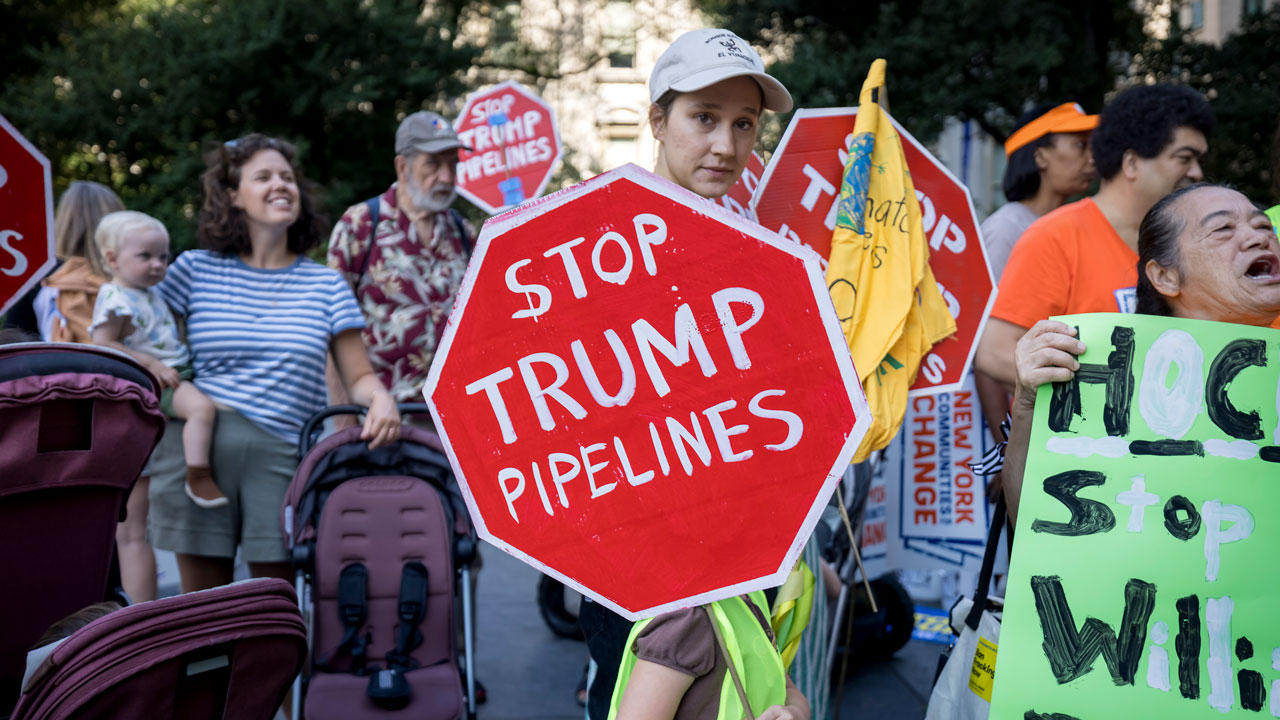
Climate litigation is having a difficult month.
As plaintiffs suing energy companies for global warming gear up for their upcoming Supreme Court hearing, the plans to extract billions under local tort laws suffered significant setbacks in recent weeks.
Last week, the modeling scenarios used to predict the most dire consequences from global warming were deemed “implausible” by the U.N.’s Intergovernmental Panel on Climate Change, which climate activists typically cite as the key source for global warming projections.
And on May 12, the government of New Zealand outlawed climate lawsuits in that country, echoing energy companies’ defense that regulating global greenhouse gas emissions belonged under the purview of national regulators and lawmakers rather than local courts.
“Even in a place that is far to the left of the United States on most policy issues, they can see the common sense that you don’t want your government policy and your national economy regulated by lawsuits,” O.H. Skinner, executive director of the Alliance for Consumers, told the Daily Signal.
Calling the lawsuits “a backdoor way to set policy through the courts instead of through elected lawmakers,” Jason Isaac, CEO of the American Energy Institute, said that the “legal and evidentiary landscape has shifted substantially” against climate litigators.
TRENDING ARTICLES



“Layer on the recent developments—the Federal Judicial Center pulling its climate science chapter from its judicial reference manual, the EPA reconsidering the 2009 Endangerment Finding, and the IPCC retiring [its most extreme modeling scenario]—and the entire scientific scaffolding underpinning these cases is being reassessed in real time,” Isaac told the Daily Signal.
On the New Zealand government’s website, Justice Minister Paul Goldsmith stated that climate lawsuits were increasing uncertainty and undermining energy investment.
“The courts are not the right place to resolve claims of harm from climate change, and tort law is not well-suited to respond to a problem like climate change, which involves a range of complex environmental, economic and social factors,” Goldsmith stated.
This action comes as climate lawsuits proliferate, not just in America, but around the world.
According to a 2025 report by London School of Economics research fellows Joana Setzer and Catherine Higham, there have been nearly 3,000 climate lawsuits filed in 60 countries since 1986. About 1,900 of them were filed in the U.S., 164 in Australia, 133 in the U.K., and 131 in Brazil.
“Climate litigation has evolved into a powerful global tool for advancing climate action and accountability,” Inger Andersen, executive director of the U.N. Environmental Program, stated.
This fall, the U.S. Supreme Court will hear arguments in Suncor Energy v. Boulder County, a Colorado lawsuit that will likely set a national precedent. In these suits, plaintiffs claim that burning oil, gas, and coal harmed local residents by creating a “public nuisance” and that energy companies “failed to warn” consumers that using their products can cause bad weather. Plaintiffs are seeking billions of dollars in damages, with one lawsuit in Multnomah County, Oregon, alone demanding $50 billion.
These claims are often based on climate models produced by organizations like the IPCC, but the IPCC’s recent statement that the most extreme modeling scenarios are unrealistic undermines many of the damage claims. The IPCC’s “Representative Concentration Pathways (RPC) 8.5” projection is based on assumptions, such as the dramatic expansion of coal burning, despite the recent rise of natural gas, nuclear, wind, and solar energy.
“Every study that comes out that says the world is ending is based on these extreme scenarios,” Kenny Stein, policy vice president at the Institute for Energy Research, told the Daily Signal. “If you use the scenario estimates that are actually closer to what’s really happening and you run those through a climate model, you don’t get significant impacts.”
Climate litigators have denied that they are attempting to regulate energy companies.
Attorney Victor Sher argued before state supreme court justices last fall that his lawsuit on behalf of Baltimore, Annapolis, and Anne Arundel County “does not involve capping, regulating or limiting emissions by the defendants or anybody … It doesn’t involve changing pollution control measures or installing equipment or anything like that.”
But attorney David Bookbinder, who represented Boulder in its suit, stated that the goal of the suits was indeed to impose “an indirect carbon tax.”
“You sue an oil company, an oil company is liable, the oil company then passes that liability on to the people who are buying its products. In some sense, it is the most efficient way—the people who buy those products are now going to be paying for the cost imposed by those products,” Bookbinder stated at an Oct. 10 Federalist Society webinar.
If the suits succeed, Isaac said, “they would raise prices sharply—through damages passed to consumers, higher liability insurance and capital costs, and reduced investment in domestic energy production.”
And this presents another hurdle for climate litigation. The recent spike in gasoline prices due to the Gulf war has given consumers around the world a taste of what would happen if climate lawsuits succeeded. European consumers have already been paying significantly higher electricity rates since the EU-mandated shift to wind and solar energy.
“In a democracy, that’s a political problem because people rightly ask their governments: why are our prices rising?” Stein said. “Climate change actions are absolutely on their back foot in general because of this problem of responsive democracy.”
We publish a variety of perspectives. Nothing written here is to be construed as representing the views of the Daily Signal.

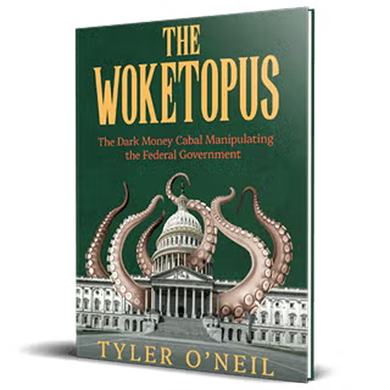
Read the first chapter of The Woketopus right now for FREE
Today, even with President Trump’s victory, leftist elites have their tentacles in every aspect of our government.
The Daily Signal’s own Tyler O’Neil exposes this leftist cabal in his new book, The Woketopus: The Dark Money Cabal Manipulating the Federal Government.
In this book, O’Neil reveals how the Left’s NGO apparatus pursues its woke agenda, maneuvering like an octopus by circumventing Congress and entrenching its interests in the federal government.
You can read the first chapter of this new book for FREE in this eBook, The Woketopus: Chapter One using the secure link below.



The Daily Signal depends on the support of readers like you.
RELATED ARTICLES





Don’t miss the

Don’t miss the signal