
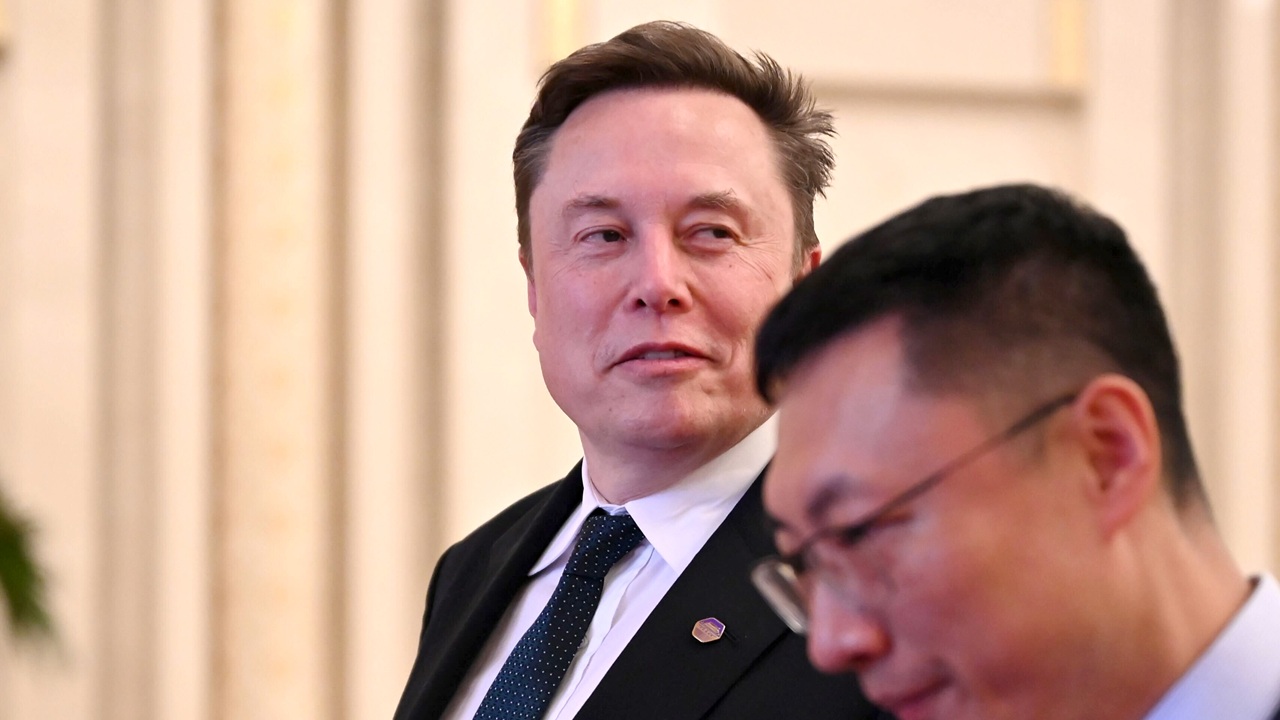
Elon Musk, the world’s richest man, recently became the first trillionaire in history when SpaceX—the rocket company he founded—debuted in a record-breaking IPO. Though market volatility has since pushed his net worth below the trillion-dollar mark in some trading sessions, the milestone endures, as does SpaceX’s groundbreaking innovation in reusable spaceflight and its expanding work in satellite communications and AI technologies.
Musk has long been known as an environmentalist. He in fact created the most successful electric vehicle company of all time. He also managed to do it right here in America. Both should receive serious commendation, as well as burnish his credentials in discussions of environmental conservation.
Which is partly why MSCI’s latest ESG rating for SpaceX is so blatantly farcical.
MSCI is still profiting from increasingly disreputable ESG ratings and related sustainability products, despite pushback from investors, state attorneys general, and federal regulators. Why? Because ESG ratings agencies enjoy support from certain institutional investors, asset managers, and European governments and businesses.
ESG strategies have often delivered weaker performance than comparable non-ESG funds, saddling savers with unnecessary costs to subsidize ideological experiments. Investments guided by ESG principles too often funnel capital into activist causes that prioritize political and social agendas over genuine financial returns.
These practices raise profound questions about fiduciary responsibility, even if state and local plans are not subject to ERISA. Rather than maximizing returns for retirees and workers, ESG engagement frequently reshapes investment decisions in ways that may conflict with beneficiaries’ best financial interests.
TRENDING ARTICLES



Far from a voluntary market phenomenon, ESG investing reflects a government-influenced push that undermines free enterprise and individual liberty. This movement drifts toward centralized control rather than decentralized decision-making. ESG imposes subjective values on pension beneficiaries and distorts capital allocation away from prudent, return-focused stewardship.
Yet even as evidence mounts that ESG-guided investments frequently deliver inferior returns, many investors and institutions continue to treat the underlying ratings as credible and authoritative. That confidence is increasingly misplaced.
Consider MSCI’s own ratings. A rocket company like SpaceX—which advances American innovation through reusable, self-landing launch vehicles and pursues the ambitious goal of making humanity multi-planetary—should not be ranked in the same tier as a hostile foreign adversary such as Russia. Yet that is precisely what MSCI’s system produced. Following Russia’s 2022 invasion of Ukraine, MSCI downgraded Russia to its lowest ESG tier, a move that, on its face, appears defensible given the environmental destruction, loss of life, and geopolitical instability caused by the conflict.
The absurdity lies in equating SpaceX with Russian President Vladimir Putin’s regime. SpaceX is an All-American enterprise at the forefront of U.S. space leadership. It prioritizes hiring American talent and has faced Biden-era DOJ lawsuits for allegedly discriminating against noncitizens.
According to MSCI’s framework, investors are expected to weigh these “societal” concerns on par with an illegal war that has devastated Eastern Europe. This category error exposes the shallowness of ESG’s value structure.
Even on purely environmental grounds, the comparison collapses. Elon Musk has long advocated colonizing other planets to safeguard humanity’s long-term resource future—a goal with profound environmental implications. Whatever carbon emissions SpaceX’s launches generate pale against that broader vision, especially when contrasted with the ecological toll of mechanized warfare.
While ESG ideology faces mounting resistance in the United States—including through the work of Heritage’s Free Enterprise Initiative—it retains influence in Europe and among certain global institutions. For the average investor, even those sympathetic to environmental goals, MSCI’s rating of SpaceX reveals ESG for what it is: less a tool for “socially conscious investing” than a mechanism for advancing ideological ends at the expense of financial prudence and American interests.
By placing one of America’s most innovative companies on the same plane as a strategic adversary, MSCI inadvertently disrobed the ESG emperor.


Read the first chapter of The Woketopus right now for FREE
Today, even with President Trump’s victory, leftist elites have their tentacles in every aspect of our government.
The Daily Signal’s own Tyler O’Neil exposes this leftist cabal in his new book, The Woketopus: The Dark Money Cabal Manipulating the Federal Government.
In this book, O’Neil reveals how the Left’s NGO apparatus pursues its woke agenda, maneuvering like an octopus by circumventing Congress and entrenching its interests in the federal government.
You can read the first chapter of this new book for FREE in this eBook, The Woketopus: Chapter One using the secure link below.




The Daily Signal depends on the support of readers like you.
RELATED ARTICLES



Don’t miss the

Don’t miss the signal
