
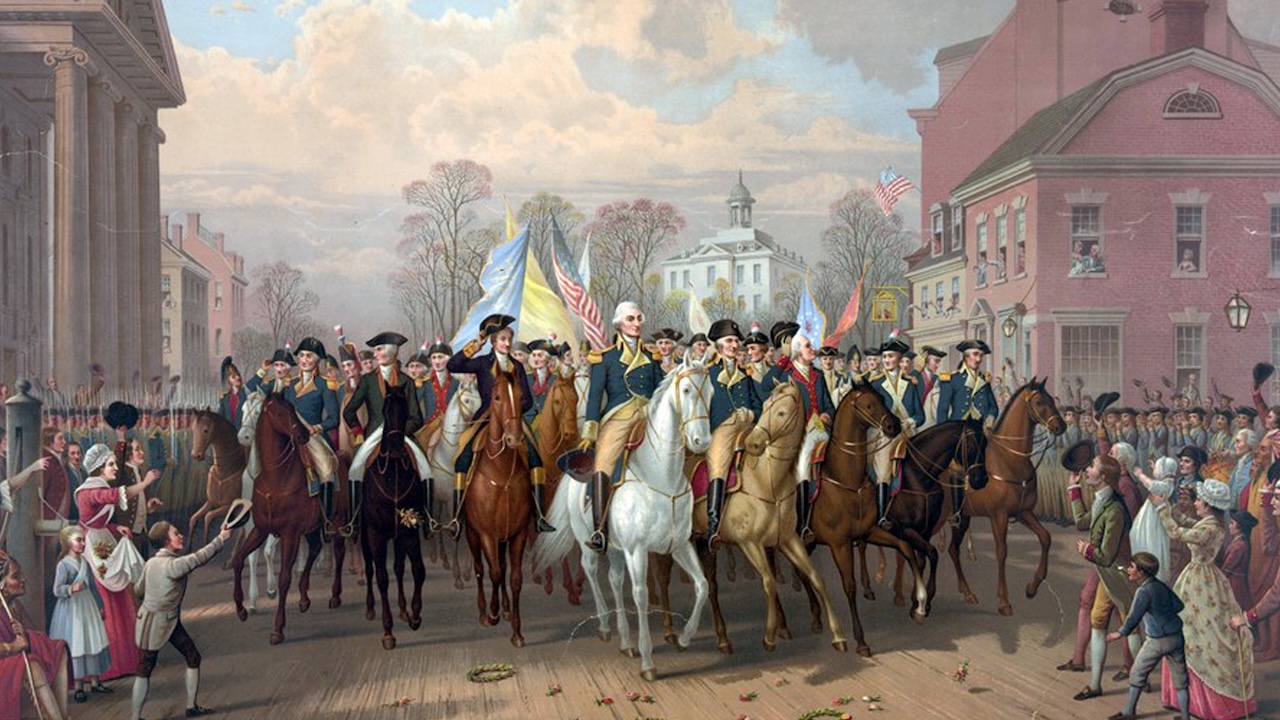
As the United States marks its semiquincentennial, a new biography reminds us why George Washington was eulogized by “Light Horse Harry” Lee in 1799 as having been “first in war, first in peace, and first in the hearts of his countrymen.”
In “American Patriarch: The Life of George Washington,” prolific historian H.W. Brands delivers an in-depth look at the man who was driving events years before there was a United States.
As far back as 1754, the young Washington, then a lieutenant colonel in the Virginia militia, helped trigger the French and Indian War on the western frontier. That war, like so many of Washington’s endeavors, worked out well for his countrymen. When it was over, France had lost its foothold in North America, and the colonists were able to dream of pushing westward to build an empire.
Before long, Washington was also taking the lead on independence from the British crown. “At a time when our lordly masters in Great Britain will be satisfied with nothing less than the deprivation of American freedom, it seems highly necessary that something should be done to avert the stroke and maintain the liberty which we have derived from our ancestors,” Washington wrote to fellow Virginian George Mason after Parliament imposed the Townshend Act in 1767. He was prepared to do something about it.
“Colonel Washington appears at Congress in his uniform,” John Adams wrote from Philadelphia in 1775. Washington attended the Second Continental Congress and was unanimously appointed commander in chief of the Continental Army on June 15. Through trials and travails, he would lead that army to victory more than six years later.
However, it was never easy, as Brands makes clear.
TRENDING ARTICLES

Washington took command in the Boston area, where the British controlled the city and the rebels the surrounding territory. He was eager to take the fight to the enemy but didn’t want to destroy the town in order to save it. He ordered an attack on Quebec as a way to distract and weaken the enemy, but it failed. Brands writes that poor weather was a factor, but not the only one. “Washington’s summons to a defense of American liberty stirred few of the French inhabitants of Canada and even fewer of the Indians there,” he writes. “Both groups were as suspicious of the Americans as the British.” Indeed, after the American Revolution, many loyalists from the United States would relocate north of the border.
Washington was so far ahead of many of his countrymen that he’d been fighting Brits for more than a year by the time Congress declared independence 250 years ago this weekend. He told his soldiers about the Declaration of Independence in a general order. “Everyone is seemingly highly pleased that we were separated from a king who was endeavouring to enslave his once loyal subjects,” one soldier wrote that day. “God grant us success in this our new character.”
Washington recognized that the British were far more powerful. Their navy could land troops anywhere and cut off supplies. They had much larger armies in the field. But while the British attempted to win the war by occupying territory (New York City, Philadelphia, Savannah, and Charleston), the Colonials realized they could prevail by surviving and refusing to surrender.
Still, he remained a man of action. Brands writes about how swiftly and effectively Washington moved when he had a chance to bottle-up Lord Cornwallis at Yorktown in 1781. The British surrender brought an end to the war and gave Americans the opportunity to prosper. “If their citizens should not be completely free and happy, the fault will be entirely their own,” he said as he prepared to surrender his command of the army. “It is in their choice and depends upon their conduct whether they will be respectable and prosperous or contemptable and miserable as a nation.” Washington’s retirement and return to civilian life led King George III to declare him “the greatest man in the world.”
Brands also details Washington’s successful post-military career. “Having conducted these states to independence and peace, he now appears to assist in framing a government to make the people happy,” William Pierce, of Georgia, wrote when Washington returned to Philadelphia to preside over the Constitutional Convention.
As was so often the case, he mostly remained quiet, allowing lesser men to argue approaches and strategies while he remained above the fray, keeping everyone in line. He was pleased with the document that the delegates delivered. “The power under the Constitution will always be in the people,” he wrote. “It is entrusted for certain defined purposes, and for a certain limited period, to representatives of their own choosing, and whenever it is executed contrary to their interest, or not agreeable to their wishes, their servants can and undoubtedly will be recalled.”
Washington was the only reasonable choice as the first president of the United States under the Constitution he’d helped shape. He allowed robust debate within his Cabinet, especially between Secretary of State Thomas Jefferson and Secretary of the Treasury Andrew Hamilton. But nobody doubted that Washington was a decision-maker with the country’s best interests in mind. His decisions shaped the presidency for generations, and his humility inspired scores of future presidents, even as the position grew into the most powerful in the world.
The man wasn’t perfect. Brands shows Washington wrestling with issues such as slavery and betrayal by those close to him. There were issues he would not be able to resolve, but he helped shape a country that would eventually grapple with them.
Brands, who teaches at the University of Texas and has written 17 other books, doesn’t limit himself to Washington. Throughout the book, he tells the story of other crucial characters and how they contributed to American history. “American Patriarch” is a book that can be devoured all at once—or dipped in and out of as a refresher course on American history.
In his will, Wahington identified himself as “a citizen of the United States and lately President of the same.” He ended his ending an amazing life with the same humility he’d shown throughout it. As America turns 250, we owe him a debt we could never repay.

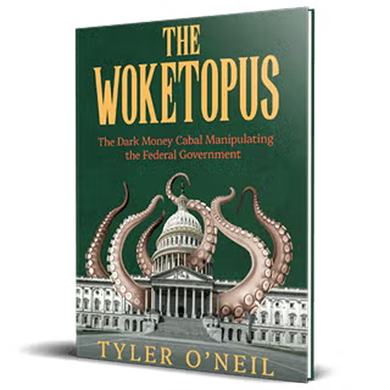
Read the first chapter of The Woketopus right now for FREE
Today, even with President Trump’s victory, leftist elites have their tentacles in every aspect of our government.
The Daily Signal’s own Tyler O’Neil exposes this leftist cabal in his new book, The Woketopus: The Dark Money Cabal Manipulating the Federal Government.
In this book, O’Neil reveals how the Left’s NGO apparatus pursues its woke agenda, maneuvering like an octopus by circumventing Congress and entrenching its interests in the federal government.
You can read the first chapter of this new book for FREE in this eBook, The Woketopus: Chapter One using the secure link below.




The Daily Signal depends on the support of readers like you.
RELATED ARTICLES


Don’t miss the

Don’t miss the signal