
The Supreme Court, in a 6-3 ruling, further removed restrictions on campaign fundraising.
Justices heard arguments in December in National Republican Senatorial Committee v. Federal Election Commission, and a majority seemed inclined to further roll back campaign finance limits.
The majority on Tuesday held that the Federal Election Campaign Act’s limits on political party coordinated expenditures violate the First Amendment, potentially allowing candidates to accept funding directly from a political party and also discuss with party officials how to use the funds.
Justice Brett Kavanaugh wrote the majority opinion. Justice Elena Kagan wrote the dissent, joined by Justices Sonia Sotomayor and Ketanji Brown Jackson.
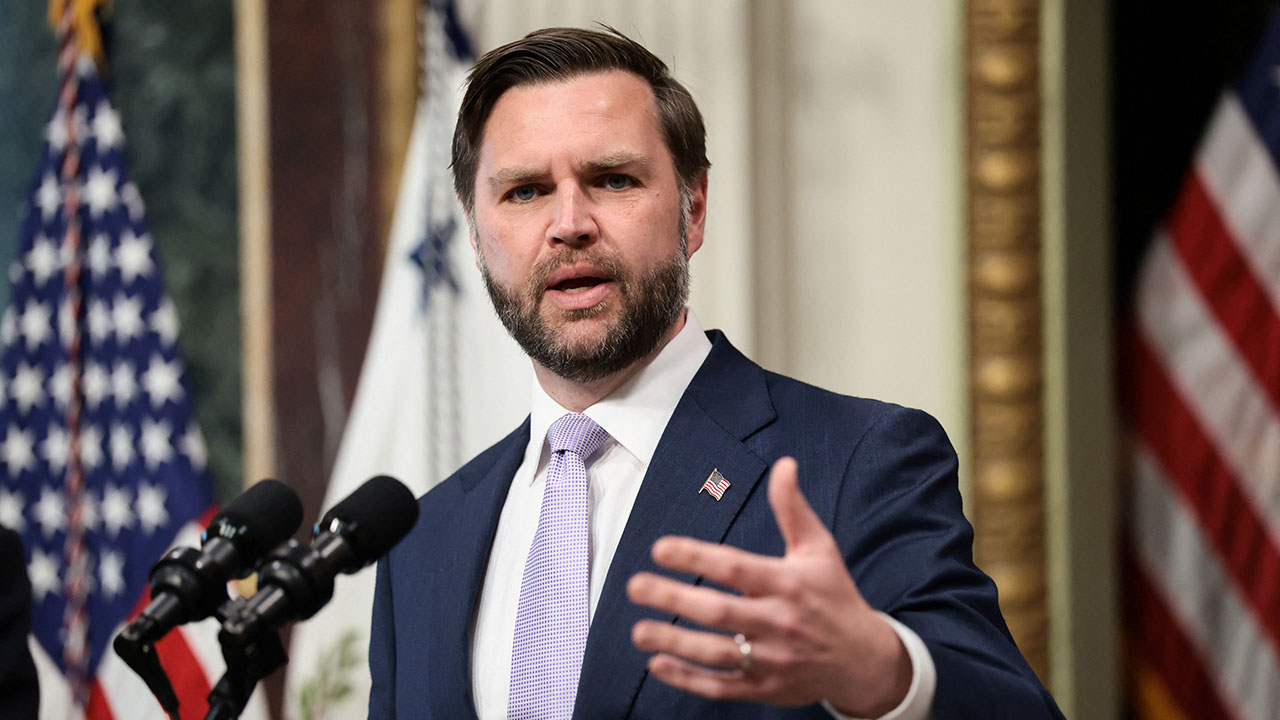
The case emerged in 2022, when plaintiffs, including then-Senate candidate JD Vance, now vice president, as well as then-Rep. Steve Chabot, R-Ohio, sued the Federal Election Commission, arguing that coordinated expenditure limits violate the First Amendment.
“Ratified in 1791, the First Amendment provides that ‘Congress shall make no law … abridging the freedom of speech.’ As relevant here, the Federal Election Campaign Act, known as FECA, limits a political party’s campaign spending,” Kavanaugh began in the majority opinion.
TRENDING ARTICLES



Kavanaugh later added that the Republican National Committee and the Democratic National Committee, and other parties, can “compete equally under the same rules regarding coordinated expenditures.”
“Importantly, by holding FECA’s political-party coordinated-expenditure restrictions unconstitutional, the court’s decision today treats all political parties equally,” Kavanaugh wrote. “It will allow all political parties—including the DNC and RNC and the respective Senate and House campaign committees, as well as other parties and party committees—to participate more freely and compete more fully in the political process, and to coordinate more closely with their candidates.”
In her dissent, Kagan asserted this opens the door to the corrupting influence of money in politics.
“When a party makes such a coordinated expenditure, it essentially pays the candidate’s bills—stepping up to fund something the candidate would otherwise have to,” Kagan wrote. “Without limits on those expenditures, a candidate could ask a donor to make a substantial contribution to the party so as to finance his own campaign expenses. It would then be as though the candidate contribution limits did not exist: The donor could give far more to the party than to the candidate directly, understanding that the money would be passed through to the candidate.”
“The majority invalidates Congress’s restriction of coordinated expenditures, thus enabling a party to serve as an alternative checking account for a campaign,” Kagan continued. “As a result, a donor will be able to give a party as much as half a million dollars (as compared to the $7,000 he can give directly to the candidate) to cover the candidate’s bills. And the candidate can seek just such a donation.”
When passing the law, members of Congress defended the restriction as necessary to prevent the potential laundering of bribes through a political party. Noel Francisco, the lawyer representing the Republican committee, said this would not be possible and pointed out that contributions to parties are limited to $44,000, while contributions to political action committees are unlimited.
The Trump administration did not defend the existing law in the case.
In lieu of the government’s defense, the Democratic National Committee intervened to argue in favor of upholding the restriction, enlisting the lawyer Marc Elias.
Elias said the Democratic National Committee, the National Republican Senatorial Committee, and other political committees “are given a special privilege, to make millions of dollars of in-kind contributions to candidates.”

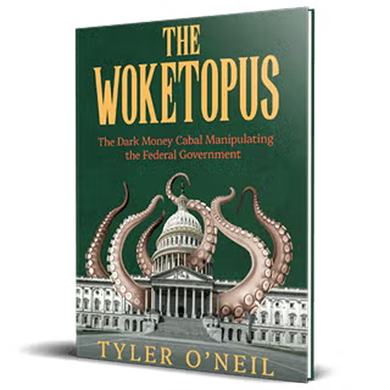
Read the first chapter of The Woketopus right now for FREE
Today, even with President Trump’s victory, leftist elites have their tentacles in every aspect of our government.
The Daily Signal’s own Tyler O’Neil exposes this leftist cabal in his new book, The Woketopus: The Dark Money Cabal Manipulating the Federal Government.
In this book, O’Neil reveals how the Left’s NGO apparatus pursues its woke agenda, maneuvering like an octopus by circumventing Congress and entrenching its interests in the federal government.
You can read the first chapter of this new book for FREE in this eBook, The Woketopus: Chapter One using the secure link below.
TRENDING ARTICLES


The Daily Signal depends on the support of readers like you.
RELATED ARTICLES





Don’t miss the

Don’t miss the signal