
The Supreme Court on Thursday sided with the Trump administration in its removal of Temporary Protected Status for Syrian and Haitian immigrants, denying immigrants’ claims that they are entitled to court orders postponing the removal of protections during litigation. The ruling likely opens them up to deportation proceedings.
The case concerned a Department of Homeland Security policy terminating Temporary Protected Status for Syrian and Haitian immigrants. The court specifically considered whether aliens admitted under the TPS program are entitled to orders postponing the removal of protected status during the course of litigation. The court ruled that they are not entitled to such orders.
The court ruled, 6-3, that the Temporary Protected Status statute bars judicial review of the claims in question.
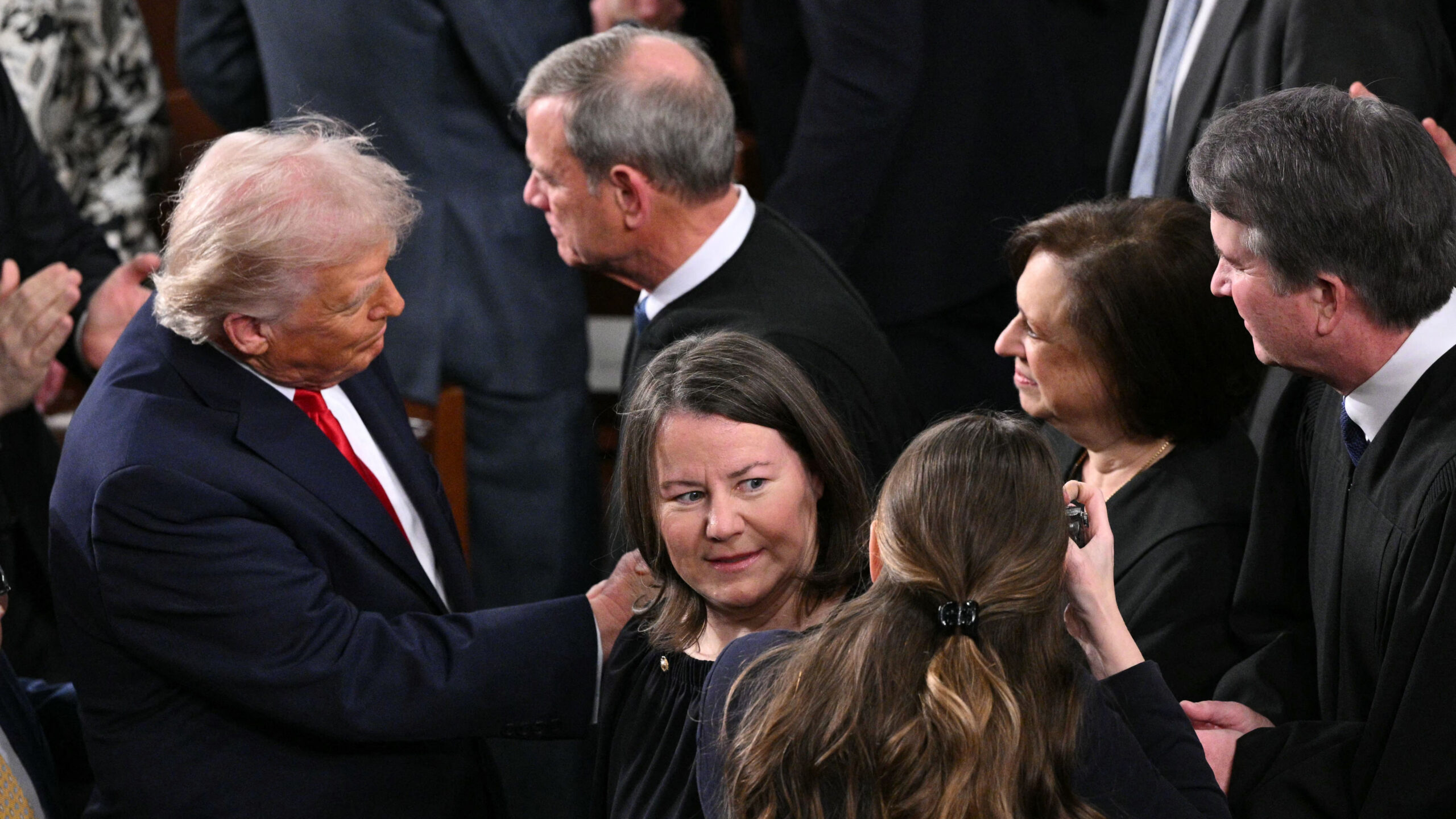
The court’s majority split on one aspect of the ruling. Justice Samuel Alito, an appointee of President George H. W. Bush, delivered the majority opinion, except for Part III-A. Chief Justice John Roberts and Justices Clarence Thomas and Brett Kavanaugh joined the opinion in full, while Justices Neil Gorsuch and Amy Coney Barrett joined the opinion except for Part III-A. Justice Elena Kagan wrote a dissent, in which Justices Sonia Sotomayor and Ketanji Brown Jackson joined.
The court consolidated two cases, Homeland Security Secretary Markwayne Mullin v. Dahlia Doe and President Donald Trump v. Fritz Emmanuel Lesly Miot.
The foreigners, who were admitted into the country under President Joe Biden’s controversial TPS expansion, sought a court order to block their deportation after Trump revoked TPS for Haitians and Syrians. The foreigners claimed that Trump acted on racial animus, thereby violating their rights.
TRENDING ARTICLES



“Citing statements made by President Trump and former Secretary of Homeland Security Kristi Noem, one set of respondents advances an equal protection claim that Haiti’s TPS designation was terminated because of the racial makeup of that country’s population,” Alito wrote. “But, ironically, one of respondents’ other arguments undermines the equal protection claim by offering a strong, race-neutral explanation for Haiti’s termination: namely, that the current administration, which has terminated every TPS designation that has come up for renewal, simply opposes the TPS program, at least as it has been implemented in the past.”
In part for that reason, Alito ruled that the district courts erred in granting the orders blocking the removal of temporary protected status.
The law establishing the TPS program directs the government to terminate a country’s TPS designation if the secretary of homeland security determines that the country “no longer continues to meet the conditions for designation.”
Alito wrote that none of the statements from Trump or Noem “was overtly racial, and in substance all expressed policy views that could rest on race-neutral justifications.”
Trump has referred to Haiti in colorful terms, and he has condemned Haitian immigrants in Springfield, Ohio.
“For example, one may oppose TPS and favor tighter restrictions on immigration for economic or other reasons that have nothing to do with race,” he noted. “And a person without racial bias can provide a harshly unfavorable description of living conditions in some of the countries with TPS designations. The criteria for TPS designations guarantee that many, if not most, designated countries have such characteristics.”
A majority of justices seemed favorable to the Trump administration during oral arguments.
After Trump’s second term began, the Department of Homeland Security ended the status for 13 countries. The high court weighed whether Trump can legally end the temporary protections, opening recipients up to deportation proceedings.
Advocates for the Syrian and Haitian immigrants say they were fleeing war, rampant crime, and natural disasters and could face those problems if they return.
The law requires consultation between the two departments, which occurred in this case. But plaintiffs contend it was not specific enough.


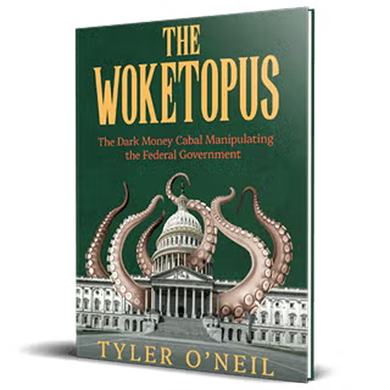
Read the first chapter of The Woketopus right now for FREE
Today, even with President Trump’s victory, leftist elites have their tentacles in every aspect of our government.
The Daily Signal’s own Tyler O’Neil exposes this leftist cabal in his new book, The Woketopus: The Dark Money Cabal Manipulating the Federal Government.
In this book, O’Neil reveals how the Left’s NGO apparatus pursues its woke agenda, maneuvering like an octopus by circumventing Congress and entrenching its interests in the federal government.
You can read the first chapter of this new book for FREE in this eBook, The Woketopus: Chapter One using the secure link below.
TRENDING ARTICLES


The Daily Signal depends on the support of readers like you.
RELATED ARTICLES




Don’t miss the

Don’t miss the signal