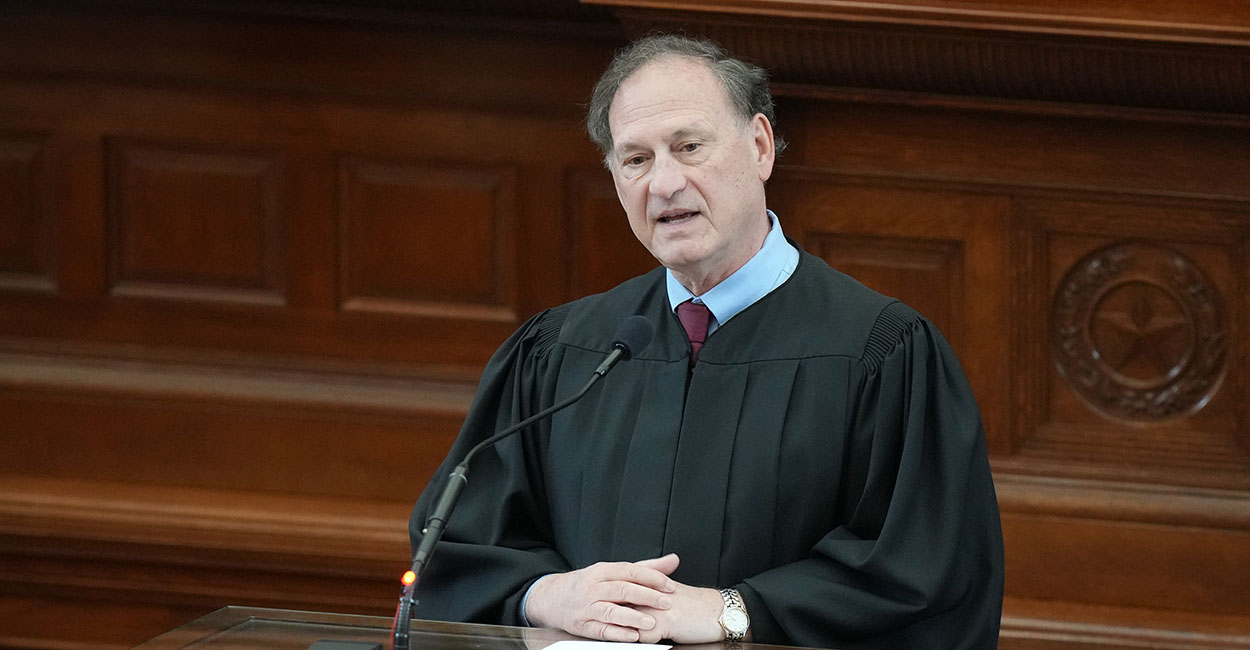
The Supreme Court declined to take up a pro-life student’s lawsuit Monday after her school refused to let her post flyers with photos of signs reading “Defund Planned Parenthood,” but Justice Samuel Alito dissented.
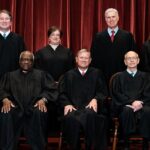
Alito, an appointee of President George W. Bush, argued that the case represented an important opportunity to clarify the rules on free speech.
E.D., a high school freshman, founded Noblesville Students for Life at her Indiana school and sought approval to hang flyers advertising club meetings in 2021. Administrators refused to approve the flyers, however, because the flyers included pictures of students at the March for Life with “Defund Planned Parenthood” signs. Administrators asked her to submit flyers that only included the name of her club, the meeting time, and the location.
The U.S. Court of Appeals for the 7th Circuit ruled against the student. As Alito noted, the three-judge panel began by asking “whether Tinker v. Des Moines Independent Community School District (1969) or Hazelwood School District v. Kuhlmeier (1988) supplies the governing standard.”
“That question is pivotal because Tinker and Hazelwood set forth vastly different standards of review for school censorship,” Alito wrote.
In Tinker, the Supreme Court defended the speech rights of students wearing armbands protesting the Vietnam War. “Because students do not ‘shed their constitutional rights to freedom of speech or expression at the schoolhouse gate,’ the court held that a school could not censor students’ individual expression unless the school met the high bar of showing that the censored speech ‘would materially and substantially disrupt the work and discipline of the school,” the justice noted.
TRENDING ARTICLES


In Hazelwood, however, the Supreme Court allowed a school to regulate “school-sponsored publications, theatrical productions, and other expressive activities that students, parents, and members of the public might reasonably perceive to bear the imprimatur of the school.” The court held that a “school need only meet the low bar of showing that the censorship is ‘reasonably related to pedagogical concerns.’”
U.S. District Judge Sarah Evans Barker wrote that “it would be reasonable for parents and other members of the public entering NHS for sporting events, student concerts, theater performances, parent-teacher conferences, or any other reason who observed such flyers displayed on school walls to erroneously attribute any political messaging they contained to the school district or the school itself.”
Are student flyers an expression of a student’s free speech or an implicit school endorsement of some ideas at the expense of others?
“I would grant the petition to clarify the relationship between Hazelwood and our subsequent government-speech decisions,” Alito wrote. “In an appropriate case, we should do so.”

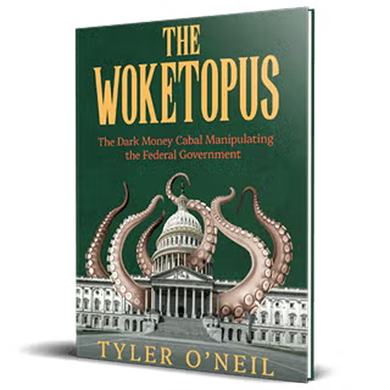
Read the first chapter of The Woketopus right now for FREE
Today, even with President Trump’s victory, leftist elites have their tentacles in every aspect of our government.
The Daily Signal’s own Tyler O’Neil exposes this leftist cabal in his new book, The Woketopus: The Dark Money Cabal Manipulating the Federal Government.
In this book, O’Neil reveals how the Left’s NGO apparatus pursues its woke agenda, maneuvering like an octopus by circumventing Congress and entrenching its interests in the federal government.
You can read the first chapter of this new book for FREE in this eBook, The Woketopus: Chapter One using the secure link below.




The Daily Signal depends on the support of readers like you.
RELATED ARTICLES



Don’t miss the

Don’t miss the signal