
Tariffs can be a powerful and effective tool of statecraft. The evidence could be seen last year when resistant trading partners were dragged to the negotiating table. The progress with the United Kingdom, India, Japan, and others is real, as is the leverage that produced it.
However, as I’ve argued before, tariffs without significant domestic reforms won’t solve our manufacturing malaise but will make it worse.
Like any tool, tariffs can be right for one job but wrong for another. They’ve proven well-suited to changing another government’s behavior in certain instances, opening the door to more favorable terms for American exporters or reducing fentanyl pouring into the country.
Anyone who dismisses tariffs as categorically destructive isn’t paying attention.
They are far less suited to the distinct goal of rebuilding domestic steel and aluminum production—with the current 50% rate, imposed as it has been, inflicting avoidable harm on the much larger economy that uses those metals. Instead, domestic reforms would be a better tool for the job.
Consider a distinction that often gets lost: a penalty tells a company what not to do; a reward tells it what to do.
TRENDING ARTICLES



A tariff is a penalty—it discourages imports but builds not a single mill or smelter. A production incentive does the opposite: it tells firms precisely what we want—build here—and helps them bear the enormous capital cost.
If the objective is reshoring critical industry, rewards are better aimed, and they get there without burdening every downstream factory and consumer.
To be clear, this means targeted, time-limited incentives—like tax credits that phase out as capacity comes online—not the open-ended industrial policy that lets subsidies harden into permanent entitlements. It’s also strictly limited to national security purposes, not Capitol Hill cronies looking for a handout.
The effects on the downstream economy are a serious consideration. For every American in steel production, roughly 80 work for a manufacturer that uses steel; in aluminum, the ratio is about 177 to one. A penalty on metal raises costs for these far larger workforces immediately, while any gain to producers arrives slowly.
The 2018 steel tariffs added perhaps a thousand mill jobs while raising input costs across a sector that employs vastly more, and several analyses found the net effect on manufacturing employment was negative.
Then, as now, there was also no phase-in, which compounds the damage.
You cannot conjure a mill or smelter on the timeline of a customs notice—permitting, financing, construction, and the reliable electricity aluminum demands all take years. A 50% wall erected overnight cannot summon capacity that physically doesn’t exist yet; in the interim, it only raises prices.
Domestic steel has run at roughly twice the price paid elsewhere, with mill products up more than 20% year over year. Buying American is no escape: walled off from imports, domestic mills raise their own prices to match. A schedule that rose as new capacity came online would let the market adjust instead of absorbing a shock.
The strain is already visible: layoffs tied to higher metal costs at firms like John Deere, Molson Coors, and Caterpillar. Costs have also increased for many consumer staples, like canned goods.
None of this contradicts the view that tariffs have a place. But as I warned last spring, the on-again, off-again tariffs and their seemingly arbitrary rates have made planning generally, and capital expenditures specifically, extraordinarily difficult, and which—left without offsetting deals—increases costs, reduces employment, and stalls growth.
And we should be honest, as I also argued last spring, that the Rust Belt was created far more by domestic policy—a punishing tax code, regulatory compliance costs estimated at more than $50,000 per worker—than by foreign competition.
Tariffs alone can’t cure that; at best, they buy a temporary reprieve while the condition worsens, like enduring chemotherapy for lung cancer while continuing to smoke.
Tariffs have and can continue to work as leverage, opening foreign markets and winning genuinely reciprocal terms.
But to reshore steel and aluminum, permanent reforms and temporary rewards are better tools for the job than penalties. Reforms and rewards achieve the same goal the tariffs are meant to serve, while sparing the millions of Americans in the metal-using economy from collateral damage.

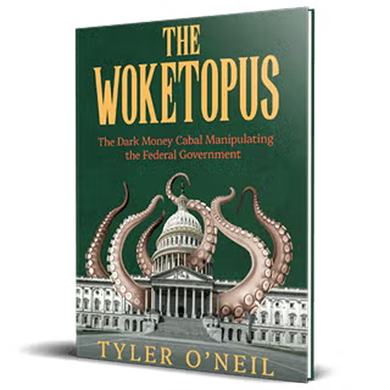
Read the first chapter of The Woketopus right now for FREE
Today, even with President Trump’s victory, leftist elites have their tentacles in every aspect of our government.
The Daily Signal’s own Tyler O’Neil exposes this leftist cabal in his new book, The Woketopus: The Dark Money Cabal Manipulating the Federal Government.
In this book, O’Neil reveals how the Left’s NGO apparatus pursues its woke agenda, maneuvering like an octopus by circumventing Congress and entrenching its interests in the federal government.
You can read the first chapter of this new book for FREE in this eBook, The Woketopus: Chapter One using the secure link below.
TRENDING ARTICLES


The Daily Signal depends on the support of readers like you.
RELATED ARTICLES





Don’t miss the

Don’t miss the signal