Congress must use budget reconciliation to begin adopting an American Opportunity Agenda by the fourth of July. Americans cannot wait for action by their elected officials to address affordability, accountability, and opportunity for the American people.
Enactment of a follow-up to the “One Big, Beautiful Bill” (Public Law 119-21, OBBB) on its one-year anniversary would again bring into focus the wins that were delivered in OBBB—items like no tax on tips, overtime, and Social Security.
Legislation addressing affordability is both good policy and good politics because it shows responsiveness to Americans’ needs, conservatives’ capacity to accomplish those goals, and liberals’ opposition to solving the problem.
The AOA’s principles of low taxes, light regulation, and abundant American energy should be supported by every member of Congress, but in this election year, liberals have not shown any willingness to adopt legislation that will help Americans. One need look no further than the obstruction in the appropriations process on funding for U.S. Customs and Border Protection and Immigration and Customs Enforcement for evidence that liberals are unwilling to find common ground.
Budget reconciliation provides a way for the Republican majorities to move forward despite opposition. It is a Senate procedure that allows policies that affect the budget deficit to be passed in that chamber with 51 votes, removing the threat of a filibuster that takes 60 votes to break. It is how conservatives in Congress overcame intransigence to President Donald Trump’s immigration enforcement policies.
Conservatives in Congress should now use budget reconciliation to adopt meaningful spending reforms. This would allow voters to see that conservatives are doing something to address their concerns. The One Big, Beautiful Bill’s tax refunds have come and gone, and significant new legislation is needed to get voters excited about this election season. Budget reconciliation is the only way such legislation will be enacted.
TRENDING ARTICLES



It is worth noting that reconciliation has not been used in a bipartisan manner since 1997. In the current hyper-partisan environment, it is malpractice not to employ budget reconciliation when voters provide the opportunity.
Since every provision in budget reconciliation must have a direct effect on spending or revenues, not all the policies necessary to adopt the AOA can be enacted now. To make the process manageable on a tight timeframe, The Heritage Foundation’s recent AOA report—of which I am a co-author—illustrates policies that could achieve substantial savings yet only require providing reconciliation instructions to four committees. In addition, our policy proposals generally reflect new items, not a rehashing of debates on policies rejected in OBBB negotiations.
In the House, our policies would be reconciled to Agriculture, Energy and Commerce, Financial Services, and Ways and Means. In the Senate, the Agriculture; Banking; Health, Education, Labor and Pensions; and Finance committees would receive reconciliation instructions. These committees know how to move bills and should be able to produce legislation promptly once instructed.
Several of the options in our AOA report build on the OBBB, like the NEST accounts to encourage future family formation by today’s children, which complements the OBBB’s Trump Accounts. We propose further anti-fraud provisions to SNAP (requiring data matching and ending categorical eligibility) that will make last year’s changes to SNAP administration more effective. We also continue to defund Planned Parenthood and similar abortion providers, which was achieved for one year in OBBB.
New proposals include changing the requirement that the Federal Reserve pay interest to banks, which tends to discourage lending and has allowed the Fed’s balance sheet to grow. This complements Fed Chairman Kevin Warsh’s goal of reducing the Fed’s balance sheet.
We also reduce the burden on states to provide health care for single adults and encourage health plans to reward participants who choose higher-value providers with deposits to Health Savings Accounts.
Together, these policies have the potential to reduce deficits by a net of $1.5 trillion, easing the pressure of growing deficits on interest rates and eliminating the higher prices that result from too many government dollars chasing too few goods.
The best gift to America on her 250th birthday is to rein in Washington’s out-of-control spending and put more money back into the pockets of Americans.
We must lower costs for working Americans, reduce federal spending, promote economic growth, and restructure government programs through budget reconciliation, which will allow for consideration of a consequential bill without the threat of a 60-vote threshold filibuster.
Should conservatives have the will, liberals cannot stop them from advancing an American opportunity agenda for our next 250 years.

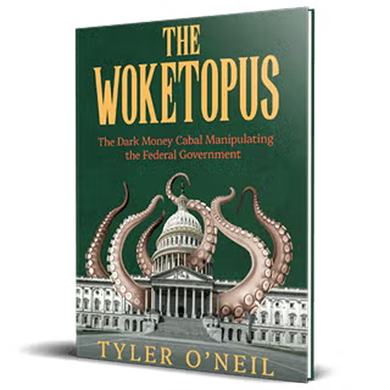
Read the first chapter of The Woketopus right now for FREE
Today, even with President Trump’s victory, leftist elites have their tentacles in every aspect of our government.
The Daily Signal’s own Tyler O’Neil exposes this leftist cabal in his new book, The Woketopus: The Dark Money Cabal Manipulating the Federal Government.
In this book, O’Neil reveals how the Left’s NGO apparatus pursues its woke agenda, maneuvering like an octopus by circumventing Congress and entrenching its interests in the federal government.
You can read the first chapter of this new book for FREE in this eBook, The Woketopus: Chapter One using the secure link below.


The Daily Signal depends on the support of readers like you.
RELATED ARTICLES




Don’t miss the

Don’t miss the signal