

THE DAILY CALLER NEWS FOUNDATION—Chinese President Xi Jinping may not need to launch a full-scale invasion of Taiwan to put the island, the U.S. and the global tech economy in crisis, according to national security experts.
Some advisers to President Donald Trump reportedly fear Xi could move against Taiwan within the next five years following Trump’s recent summit with the Chinese leader, Axios reported. One Trump adviser told the outlet the summit signaled a “much higher likelihood” that Taiwan could be “on the table” during that window, warning that the highly vulnerable U.S. semiconductor supply chain would not be ready for such a crisis.
National security experts told the Daily Caller News Foundation that this is simply not the reality on the ground.
“This is not accurate,” national security expert Brandon Weichert told the DCNF. “There is a wing of our intelligence community, and also weirdly in Israel, that really wants to gin up hostilities between us and China. There’s a litany of reasons for this, some of them are legitimate, some of them are ridiculous, but the bottom line is … simply no, this is not a real thing.”
“I believe it’s unlikely that China will invade Taiwan in the next five years,” Adam Savit, director of the China Policy Initiative at the America First Policy Institute, told the DCNF. “An amphibious invasion of that scale is incredibly difficult, and the political risks to the CCP regime are incredibly high.”
Trump had several goals for the U.S.-China summit, including assistance from China in opening the Strait of Hormuz, the export of critical minerals from China to the United States, the export of soybeans from the United States to China and Chinese purchases of U.S. aircraft from companies such as Boeing, Weichert told the DCNF. He said that all of those goals fell through.
TRENDING ARTICLES
Despite the unlikely nature of an armed conflict with China, Savit told the DCNF that it is better to be safe than sorry.
“Taiwan is the keystone of the First Island Chain which prevents unimpeded PLA access to the Pacific,” Savit told the DCNF. “Japan and the Philippines anchor the island chain on the north and south, and Washington should deepen their integration into theater defense. It is critical that our allies continue to increase military spending and strategic deployments. Japan has been a model ally in independently increasing its defense spending to 2% and soon 3%.”
‘This Is Not Serious’
The Pentagon told the DCNF that it is committed to defending against Chinese aggression in the region.
“The Department [of War] remains focused on preserving peace and stability in the Indo-Pacific,” a War Department official told the Daily Caller News Foundation. “We are building, posturing, and sustaining a strong denial defense along the First Island Chain to deter aggression and defend vital U.S. interests in the region. At the same time, we support maintaining open lines of communication with China to reduce risk, manage crises, and prevent miscalculation. We don’t comment on hypothetical scenarios.”
“This is not serious intelligence work,” Weichert told the DCNF. “This is a political assessment that’s being put in Axios to shape opinion in the United States, because in my opinion, the United States was humiliated by the President’s recent trip to Beijing; it was not a diplomatic victory for America.”
China is building its military capability to seize Taiwan and deter U.S. intervention, according to the 2026 Annual Threat Assessment from the Office of the Director of National Intelligence. Beijing has ramped up its show of naval force around Taiwan in recent weeks, with Taiwanese officials spotting over 100 Chinese navy and coast guard vessels shortly after the Trump-Xi summit’s conclusion, according to multiple reports.
Trump recently revealed plans to speak with Taiwanese President Lai Ching-te, a leader-to-leader dialogue that has not occurred since 1979.
“The IC assesses that Chinese leaders do not currently plan to execute an invasion of Taiwan in 2027, nor do they have a fixed timeline for achieving unification,” the assessment states. “However, China publicly insists that unification with Taiwan is required to achieve its goal of ‘national rejuvenation’ by 2049—the 100th year anniversary of the founding of the People’s Republic of China (PRC). ”
Some experts warned that Taiwan and the United States should also prepare for a digital war, rather than just a physical one.
“My concern is our … semiconductor supply chain and other supply chains of critical materials,” Christopher Lay, a former Reagan-era Pentagon policy aide, told the DCNF. “I would suspect that China would use cyber attacks against us as well as Taiwan as part of any conflict or major confrontation.”
Though Taiwan has been significant recipient over U.S. military aid over for decades, that arrangement has recently hit a major stumbling block as a key $14 billion arms sale sits in limbo. China has used the sale to hold up high-level talks with the Pentagon, and its fate remains unclear as Trump weighs whether to give the greenlight and provide Taiwan the arms.
“As President Trump said, he will make a determination in a fairly short time regarding a new Taiwan arms package,” a White House official previously told the Daily Caller News Foundation.
China could take a page out of the U.S.’ book and blockade Taiwan, but such a move wouldn’t come with out risks, experts said.
“It’s important to note that a blockade would require the deployment of the PLA Navy and would increase the chances of kinetic conflict as operations would edge closer to Japanese territorial waters and the potential for accidents involving U.S. and allied navies also deployed in the region would increase,” Savit told the DCNF.
Weichert explained that an invasion of Taiwan was unlikely because a blockade could accomplish the goals of an invasion with fewer casualties and fewer burned resources.
“A blockade would be preferable for China rather than a full-blown invasion for a variety of reasons,” Weichert told the DCNF. “The Strait of Hormuz blockade, both the Iranian blockade and now our counter blockade, as well as what we’ve been doing in the Panama Canal, as well as our quasi-blockade of Cuba, have all sort of created the pretext that Beijing would need to pull the trigger on imposing a blockade, and they certainly have the navy size and the strength to conduct such a blockade and sustain it.”
However, Weichert said that even if this is unlikely, China could probably achieve its goals with Taiwan in a decade through diplomatic means.
“China would like maximum strategic capability,” Savit told the DCNF. “The ability to credibly threaten an invasion of Taiwan is a primary purpose of PRC military readiness, but it does not mean an invasion is imminent.”
Originally published by The Daily Caller News Foundation.
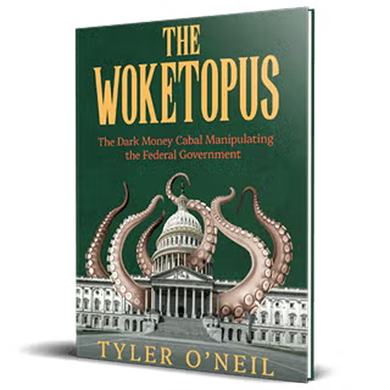
Read the first chapter of The Woketopus right now for FREE
Today, even with President Trump’s victory, leftist elites have their tentacles in every aspect of our government.
The Daily Signal’s own Tyler O’Neil exposes this leftist cabal in his new book, The Woketopus: The Dark Money Cabal Manipulating the Federal Government.
In this book, O’Neil reveals how the Left’s NGO apparatus pursues its woke agenda, maneuvering like an octopus by circumventing Congress and entrenching its interests in the federal government.
You can read the first chapter of this new book for FREE in this eBook, The Woketopus: Chapter One using the secure link below.




The Daily Signal depends on the support of readers like you.
RELATED ARTICLES



Don’t miss the

Don’t miss the signal