
Squabbles between Capitol Hill and the White House over war powers are nothing new, but recent Democrat-backed efforts to restrict President Donald Trump’s military authority have been gaining traction, as Congress challenges Trump’s actions in the Middle East, Latin America, and Europe.
Now, Democrats in the Senate are preparing a vote on whether or not the administration can use force against Cuba.
Since the Department of Justice unveiled charges against 94-year-old former Cuban president Raúl Castro, multiple Cabinet-level officials have been ramping up pressure on the island nation.
“This isn’t a show indictment,” acting Attorney General Todd Blanche said Wednesday of Castro, who is facing murder charges for the fatal downing of two planes carrying American citizens in 1996. “There was a warrant issued for his arrest, so we expect that he will show up here [in America] by his own will or by another way.”
The prosecution of Castro is reminiscent of the prosecution of former Venezuelan President Nicolas Maduro on drug trafficking charges, which the administration used as justification for the arrest of the head of state in a military operation.
Secretary of State Marco Rubio has also indicated the administration is dead serious about Cuba.
TRENDING ARTICLES


Asked about the possibility of striking Cuba to induce regime change, Rubio told reporters Thursday the United States prefers a “negotiated diplomatic settlement” in Cuba, but that “the president always has the option to do whatever it takes to support and protect the national security of the United States.”
In the same conversation, Rubio argued Cuba is “a national security threat to the United States” due to Russian and Chinese weapons and “intelligence presence” in the country.
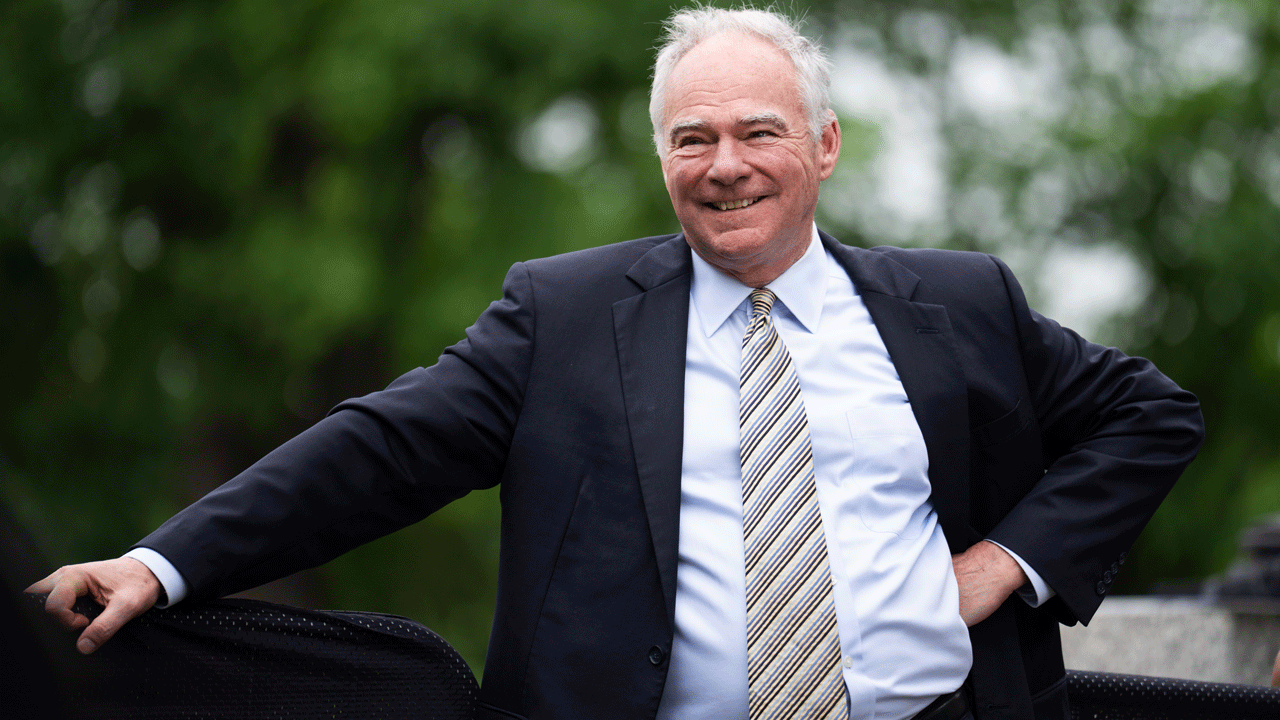
On Thursday, Democrat Sens. Tim Kaine of Virginia, Adam Schiff of California, and Ruben Gallego of Arizona introduced a resolution that would block hostilities against Cuba.
War Powers Resolution Momentum
While the Cuba war powers legislation is unlikely to gather a veto-proof level of support, recent war powers resolutions have been gaining traction in Congress.
Expedited procedures in the House and Senate allow the minority to bypass leadership and force votes on war powers resolutions.
On Tuesday, the Senate advanced a resolution to deprive the president of his power to use force against Iran.
The resolution advanced by a 50-47 vote, with four Republican senators voting in favor: Bill Cassidy of Louisiana, Rand Paul of Kentucky, Lisa Murkowski of Alaska, and Susan Collins of Maine.
In the House, where an Iran war powers resolution failed in a tie last month, leadership sent the chamber into recess a day early on Thursday, canceling a planned war powers vote.
If the House’s concurrent resolution disapproving of the Iran war had come to the floor and succeeded, it would likely not be binding on the president due to a Supreme Court precedent blocking unilateral legislative vetoes on presidential action.
However, it would be a public defeat for the Republican administration’s military agenda in Congress.
Rep. Gregory Meeks of New York, the top Democrat on the House Foreign Affairs Committee, argued leadership punted on the vote because it would have succeeded.
“We had the votes to pass it today. Every Democrat was on board, [and] we had the sufficient number of Republicans on board,” Meeks told reporters.
The administration is also facing some Capitol Hill pushback on its troop movements in Europe, as Senate Armed Services Committee Chairman Roger Wicker, R-Miss., and House Armed Services Chairman Mike Rogers, R-Ala., have both publicly criticized troop withdrawals from Germany.
Rogers told Punchbowl News in a recent interview that he is seeking legislative “guardrails” to prevent European troop withdrawals going forward.
The 2026 National Defense Authorization Act—an annual defense policy bill—included provisions intended to block the executive branch from withdrawing forces from Europe without congressional approval.

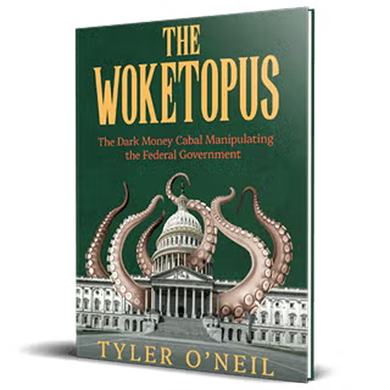
Read the first chapter of The Woketopus right now for FREE
Today, even with President Trump’s victory, leftist elites have their tentacles in every aspect of our government.
The Daily Signal’s own Tyler O’Neil exposes this leftist cabal in his new book, The Woketopus: The Dark Money Cabal Manipulating the Federal Government.
In this book, O’Neil reveals how the Left’s NGO apparatus pursues its woke agenda, maneuvering like an octopus by circumventing Congress and entrenching its interests in the federal government.
You can read the first chapter of this new book for FREE in this eBook, The Woketopus: Chapter One using the secure link below.



The Daily Signal depends on the support of readers like you.
RELATED ARTICLES





Don’t miss the

Don’t miss the signal