
Does the First Amendment Protect Progressive Bakers From Serving Republicans?
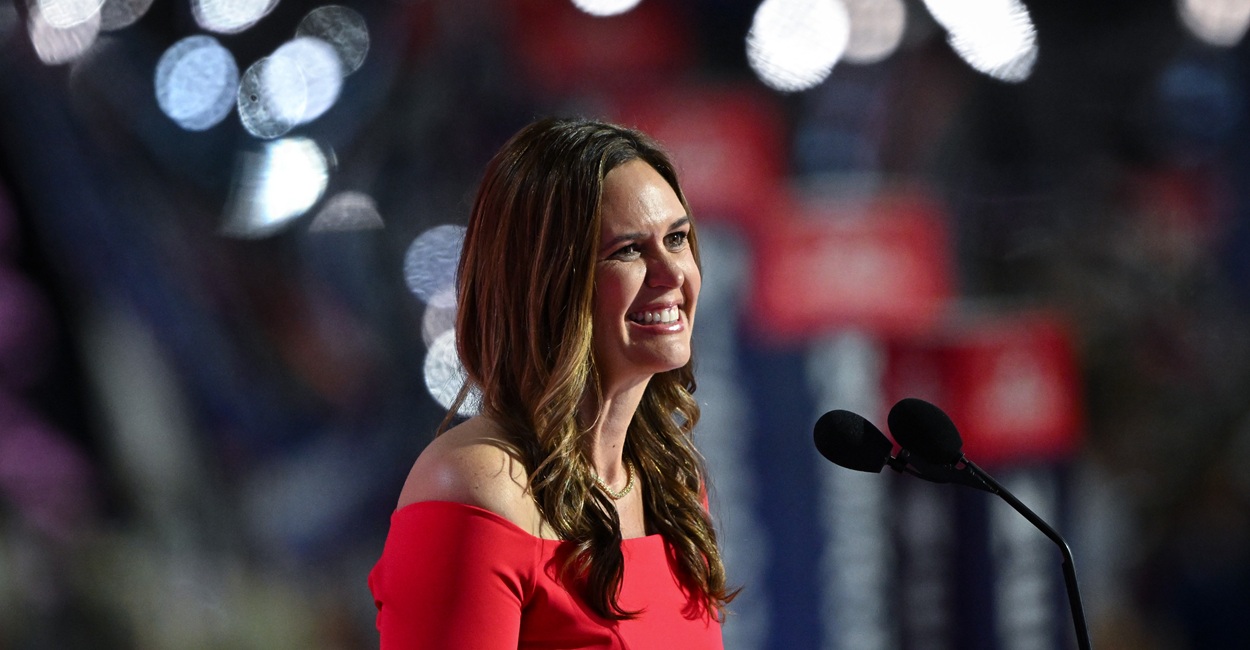
A progressive baker asks Arkansas Governor Sarah Huckabee Sanders to leave her croissant shop because her presence makes her staff feel uncomfortable. Across the nation in Oregon, Melissa Klein and her husband await a state appellate court decision whether their right to free exercise of religion includes the right to decline designing a cake celebrating a same-sex wedding.
The juxtaposition of these two situations shows the difference between a business owner improperly discriminating against her customers and a business owner conducting her business according to her deeply-held beliefs, which the First Amendment protects. Let’s sort out which is which.
In March 2026, Gov. Sanders ate lunch with two friends at the Croissanterie in Little Rock. The governor’s police detail accompanied them. The restaurant staff told the owners that the governor’s presence made them feel “uncomfortable.” Their unease did not stem from anything the governor did at the restaurant but seemingly from her policies on LGBT issues.
The owners explained that “allowing [the governor] to stay risked being perceived as a lack of support for the community that makes up a majority of our team … Conversely, asking her to leave could be viewed as denying service based on differing beliefs.”
The owners decided “to support our employees and guests,” and then asked Gov. Sanders and her friends to leave, which they did.
Contrast that with Melissa and Aaron Klein, owners of Sweet Cakes by Melissa in Oregon. In 2013, Melissa declined a request to design a unique cake celebrating a couple’s same-sex wedding. Melissa did this based on her Christian beliefs defining marriage as one man and one woman.
TRENDING ARTICLES



The Kleins made it clear that they were not refusing to serve the customers, but were only refusing to design a specific cake. The Kleins said that they would design other kinds of custom cake for them, such as birthday cakes.
The Kleins serve all customers, but they don’t create all messages.
The state of Oregon sued the Kleins for discrimination. They were found guilty and fined $135,000. The Kleins appealed, arguing that the First Amendment protects them from the government compelling them to create messages they don’t agree with or that violate their deeply held religious beliefs.
Although the U.S. Supreme Court has twice ordered Oregon courts to reconsider their rulings against the Kleins, the case has been pending before the Oregon Court of Appeals for over two years, still unresolved 13 years after the original incident.
The difference in Arkansas is that the owners bake croissants that anyone can walk in and buy. They don’t create custom messages. The owners asked Gov. Sanders to leave their restaurant because they don’t appreciate people with certain political beliefs frequenting their establishment. That sounds like the old racially segregated lunch counters of the South during the 1960s.
The Kleins, on the other hand, create custom cakes for everyone and anyone; they just don’t create designs featuring messages that contradict their deeply-held religious beliefs. Some businesses make their money creating custom messages: advertising agencies, social media consultants, speechwriters, ghostwriters, photographers, website designers, political campaign consultants, even tattoo artists, to name a few. They don’t serve customers off-the-shelf products (like croissants).
The Arkansas croissant shop serves baked goods to hungry people. Feeding Gov. Sanders and her two friends does not “send a message” that the owners support her political agenda. Excluding them is little more than spiteful discrimination.
Business owners do not have a First Amendment right to say, “we don’t serve your kind here” and kick out customers. They do have a First Amendment right protecting them from the government punishment for declining to create a customer’s message they don’t support. The Supreme Court has ruled that way twice. The Oregon state courts should do the same for the Kleins.
And Arkansas bakers need to be more tolerant of people they disagree with. We publish a variety of perspectives. Nothing written here is to be construed as representing the views of The Daily Signal.


Read the first chapter of The Woketopus right now for FREE
Today, even with President Trump’s victory, leftist elites have their tentacles in every aspect of our government.
The Daily Signal’s own Tyler O’Neil exposes this leftist cabal in his new book, The Woketopus: The Dark Money Cabal Manipulating the Federal Government.
In this book, O’Neil reveals how the Left’s NGO apparatus pursues its woke agenda, maneuvering like an octopus by circumventing Congress and entrenching its interests in the federal government.
You can read the first chapter of this new book for FREE in this eBook, The Woketopus: Chapter One using the secure link below.




The Daily Signal depends on the support of readers like you.
RELATED ARTICLES





Don’t miss the

Don’t miss the signal
