
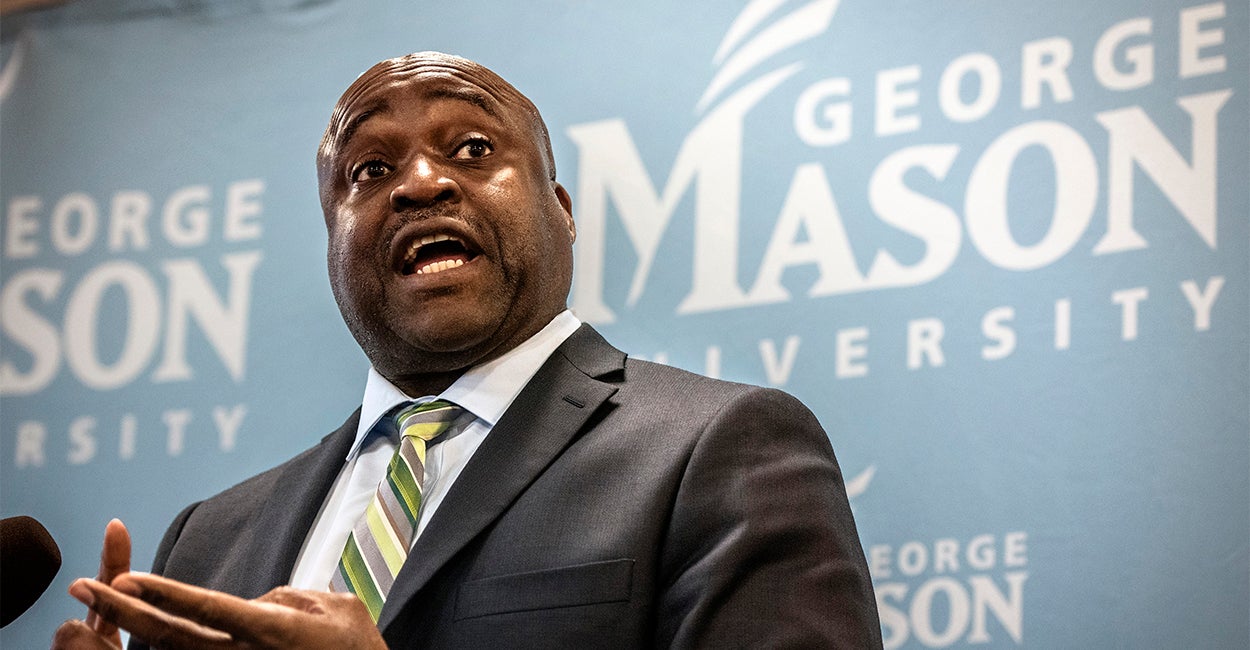
Students are proving that they learned their social justice lessons well, as shout-downs of conservative campus speakers at universities like Stanford demonstrate. But when students demanded that state-funded George Mason University cancel Virginia Gov. Glenn Youngkin as this year’s commencement speaker, the university refused. The university president defended the decision to host Youngkin because, in his view, universities should expose students to different ideas. His response got it right—mostly.
Youngkin’s policies to protect parental rights in public education triggered backlash from several student groups when they learned that he would give this year’s commencement address at George Mason. His selection as speaker, they say, is harmful and will promote hate.
This rhetoric is unsurprising. As early as elementary school, students are being taught to react rather than reason and cancel rather than converse. And as incidents at Stanford and other universities have shown, administrators and diversity, equity, and inclusion offices are empowering and encouraging students to apply these lessons to shut down and silence opposing views.
But George Mason has chosen a different path. In response to students’ demands, university President Gregory Washington issued a public statement defending the university’s decision to host the popular governor.
Washington emphasized that encountering opposing views will make students better advocates for themselves beyond the university. After all, he explained, the university is a place to discuss precisely those topics on which people disagree. If George Mason shielded its students from ideas they didn’t like, the university would fail to fulfill its purpose.
Washington got this much right: George Mason would be doing its students a disservice by denying them exposure to ideas with which they disagree. Universities exist to equip students to engage with a multiplicity of views and claims, to ask hard questions, and to think for themselves. The university is more than a marketplace of ideas; it is (or should be) a place to be fully alive in the pursuit of objective, knowable truth.
TRENDING ARTICLES



This is why intellectual diversity on campus is so important. As Washington rightly acknowledged, diversity is not about skin pigment. It is about something deeper: the unique experiences, views, ideas, talents, and personalities each of us bring to the table. It is about recognizing that each person has inherent dignity as a human being that makes each person’s views worth hearing and discussing, even if those views are wrong.
And far from being an assault on dignity, encouraging students to consider different perspectives on difficult topics respects everyone’s dignity by inviting them to pursue the truth for themselves. We thrive when we keep the public square open for multiple perspectives and dialog on the topics that trouble us the most.
But Washington missed an important point: Discourse about difficult topics is not just an opportunity to become a better advocate for yourself. It’s also an opportunity to reflect on your own beliefs and to consider whether they might be wrong.
Although Washington didn’t mention this in his letter, we suspect the protesting students know it. In fact, we suspect their opposition to Youngkin’s speech is motivated chiefly by the fear of having to wrestle with facts and arguments that challenge their own beliefs.
With administrator-backed student protests becoming a fad across the country, it is refreshing to see a university stand up to cancel culture. Other universities could learn a lot from George Mason’s example. But while we applaud the school’s commitment to free speech, including for commencement speakers, the president’s statement is only the beginning.
Now the real test begins: Will George Mason lead the way in cultivating real discourse, or will the governor receive a Stanford-style welcome?
We hope that students will heed Washington’s advice, put aside the disruption and hate, and embrace discourse. Even better, they should hold out the possibility that their beliefs and opinions might be wrong.
Have an opinion about this article? To sound off, please email [email protected], and we’ll consider publishing your edited remarks in our regular “We Hear You” feature. Remember to include the URL or headline of the article plus your name and town and/or state.

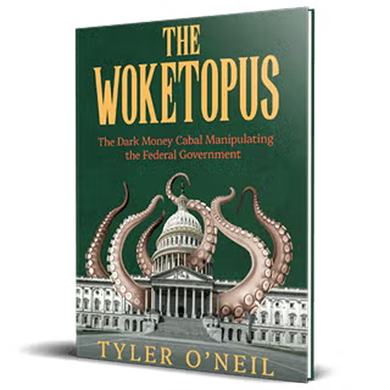
Read the first chapter of The Woketopus right now for FREE
Today, even with President Trump’s victory, leftist elites have their tentacles in every aspect of our government.
The Daily Signal’s own Tyler O’Neil exposes this leftist cabal in his new book, The Woketopus: The Dark Money Cabal Manipulating the Federal Government.
In this book, O’Neil reveals how the Left’s NGO apparatus pursues its woke agenda, maneuvering like an octopus by circumventing Congress and entrenching its interests in the federal government.
You can read the first chapter of this new book for FREE in this eBook, The Woketopus: Chapter One using the secure link below.




The Daily Signal depends on the support of readers like you.
RELATED ARTICLES





Don’t miss the

Don’t miss the signal