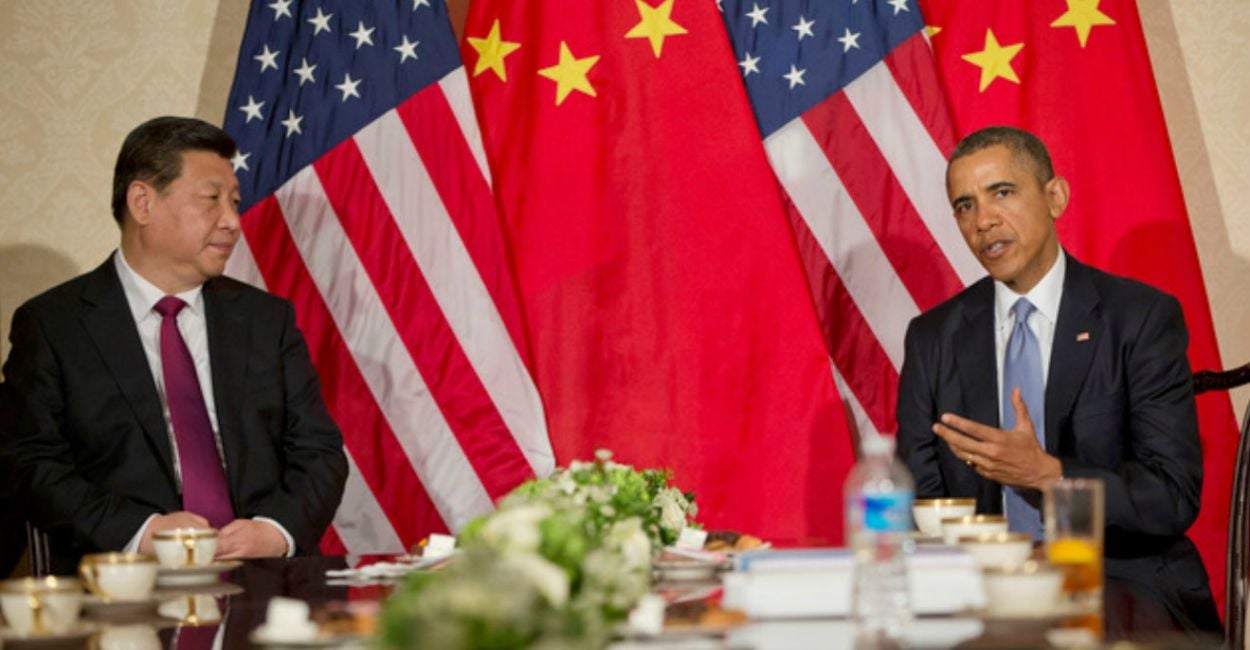
To give perspective, China is the world’s second largest economy, as well as the second largest importer. It is the largest trading nation for 75 countries and is by far the largest importer of commodities in the world.
Over the past seven years, China has accounted for an incredible one-third of global growth.
But its stock market is currently collapsing despite enormous efforts by Beijing to support equity prices. The sell-off has spread globally, including steep declines in the United States.
So what’s happening?
For the first time in 35 years the world has finally come to the conclusion that state-led capitalism in China is no longer a valid model.
Growing at almost 10 percent just four years ago, Chinese growth has collapsed to approximately 5 percent (lower than manipulated official figures) and the prospects are for even slower growth.
TRENDING ARTICLES



Like Russia, which floated on elevated hydrocarbon prices for most of the past decade, Beijing’s gigantic debt binge of the past seven years has left China little room to stimulate growth.
Structural reforms like privatizing state-owned enterprises would be a great start toward reversing this downward spiral, but Beijing does not seem ready to release the reins.
In short, it looks bleak for the Middle Kingdom right now.
What does this all mean for the U.S. economy?
First of all, the stock market is not the economy, and short-term swings tell us very little about what is going on in terms of jobs and growth.
There is no need for a U.S. policy response to short-term fluctuations in the stock market.
U.S. corporate balance sheets are in pristine condition and American consumers have deleveraged much of the debt accumulation from the past decade. Job growth remains strong and there are finally signs of acceleration in wage gains.
After one of the great bull runs in U.S. history during the past six years, U.S. equities were looking for an excuse for a correction.
In the U.S., there have been 29 occasions since 1980 when the U.S. stock market dropped more than 5 percent in a week. In 60 percent of the cases, the market rebounded the following week.
The market has suffered sustained (12 week) losses of more than 10 percent 4 times since 1980, but had equally dramatic 12 week gains on 8 occasions.
This is a perfect time for the U.S to reclaim the title of global economic leader through our own structural reforms.
Reigning in long-term entitlement spending, simplifying the corporate and individual tax codes, and removing much of the burdensome regulation that hampers business and venture capital would easily accomplish that task.
Despite the global turmoil, the time to move is now.

Read the first chapter of The Woketopus right now for FREE
Today, even with President Trump’s victory, leftist elites have their tentacles in every aspect of our government.
The Daily Signal’s own Tyler O’Neil exposes this leftist cabal in his new book, The Woketopus: The Dark Money Cabal Manipulating the Federal Government.
In this book, O’Neil reveals how the Left’s NGO apparatus pursues its woke agenda, maneuvering like an octopus by circumventing Congress and entrenching its interests in the federal government.
You can read the first chapter of this new book for FREE in this eBook, The Woketopus: Chapter One using the secure link below.




The Daily Signal depends on the support of readers like you.
RELATED ARTICLES



Don’t miss the

Don’t miss the signal