At least 15 social and political activists were arrested in Cambodia in yet another attempt by the Hun Sen government to silence dissent. The incident is as a reminder that, without consistent international attention, Hun Sen and the Cambodian People’s Party (CPP) will continue to violate the rights and freedoms of Cambodians.
Land rights activists, Buddhist monks, and at least two members of the opposition Cambodian National Rescue Party (CNRP) were among 15 Cambodians arrested. After a single day of proceedings, 11 of the protesters were sentenced to one year in prison and a fine of approximately $500.
Political Deadlock
The CPP and the CNRP have been politically deadlocked since the June 2013 elections. The opposition CNRP boycotted parliament, organized more than 30,000 protesters, and spoke out about what they allege was a rigged election. In July 2014, the CPP and CNRP reached an agreement, reconvened parliament, and agreed to reform the National Election Committee, an important election accountability mechanism. Yet the deal left much to be desired because it neither set an election date nor established a commission to investigate election fraud.
This latest string of arrests symbolizes the state of freedom in Cambodia. Female protesters were merely drawing attention to land rights after recent evictions, while CNRP activists were preparing to protest the closure of “Freedom Park”—the only park where Cambodians can legally protest. In spite of the peaceful nature of protests, protesters were charged with obstructing traffic or violence against security forces for resisting arrest. This was a clear violation of both freedom of speech and freedom of assembly.
The International Community’s Responsibility
TRENDING ARTICLES


The international community needs to hold Cambodia accountable. Walter Lohman, Director of the Asian Studies Center at The Heritage Foundation, has noted:
The U.S. should press for the establishment of a Cambodia contact group comprised of parties to the 1991 Paris Peace Agreement, including the United States, Japan, Indonesia, Australia, the U.K., and France, to monitor and press for democratic reform. Among the purposes of the Paris agreement was to ensure “the right to self-determination of the Cambodian people through free and fair elections” and “assuring protection of human rights.”The signatories have a continuing moral obligation in this regard. The contact group should be used to coordinate human rights policies and assistance programs toward Cambodia, including participation in the annual donor group meeting, the Cambodia Development Cooperation Forum.
The international community should use the tools at its disposal through the Paris Peace Agreement and elsewhere, including U.S. assistance programs, to hold Cambodia accountable to respect the basic freedoms of its people. Liberty for the Cambodian people has only been possible through the concerted attention of Washington and freedom-loving nations outside Southeast Asia.

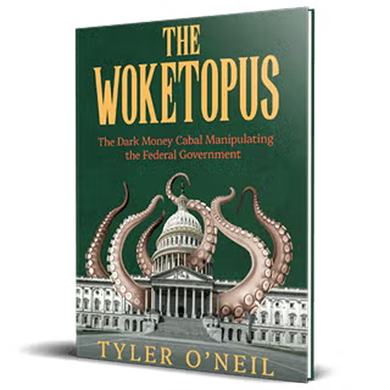
Read the first chapter of The Woketopus right now for FREE
Today, even with President Trump’s victory, leftist elites have their tentacles in every aspect of our government.
The Daily Signal’s own Tyler O’Neil exposes this leftist cabal in his new book, The Woketopus: The Dark Money Cabal Manipulating the Federal Government.
In this book, O’Neil reveals how the Left’s NGO apparatus pursues its woke agenda, maneuvering like an octopus by circumventing Congress and entrenching its interests in the federal government.
You can read the first chapter of this new book for FREE in this eBook, The Woketopus: Chapter One using the secure link below.
TRENDING ARTICLES

The Daily Signal depends on the support of readers like you.
RELATED ARTICLES


Don’t miss the

Don’t miss the signal