
The Nuclear Regulatory Commission (NRC) voted to finalize its “continued storage” rule, establishing a general recognition that onsite storage of spent nuclear fuel is safe for the short, long, and indefinite terms.
In the short term, the NRC’s decision recognizes that spent fuel at reactors can be safely stored on site until a geologic repository is available. This allows the nuclear industry to move forward with licensing activities, which had been postponed due to a 2012 court decision requiring the NRC to perform a more thorough environmental assessment of nuclear waste storage beyond the licensed lifespan of the reactors. Thirteen existing power plants and two fuel storage facilities will now be able to renew licenses to operate, and another 15 new reactors can move forward to obtain final licensing approvals.
But in the long term, the NRC’s decision is little more than a temporary patch for a broken system and removes any incentive to fix the real problem. The nation ultimately needs a viable nuclear waste management system, and any solution begins with geologic storage.
Over 35 years ago, the courts required the NRC to provide “reasonable assurances”—or a Waste Confidence Determination—that offsite storage would be available for reactors when their licenses expired or that nuclear waste could be safely stored on site until that point. Not long after, Congress charged the Department of Energy with the responsibility to manage nuclear waste from commercial nuclear power plants. And that is where the problem started.
The resulting government monopoly over nuclear waste management has turned scientific and commercial questions about nuclear waste disposal into a political circus. It is no wonder that the nation has yet to see any high-level commercial nuclear waste collected or the permanent repository promised to be ready in 1998. While progress is slowly being made to determine the viability of a permanent site at Yucca Mountain, it’s high time Congress got to work mending the broken system of government ownership of nuclear waste.
Industry has developed ways to store spent fuel safely on reactor sites while waiting for the federal government to make good on its promise to collect waste—ways the NRC confirmed yesterday were safe in the near, long, and indefinite terms. If anything, this indicates that the private sector is capable of innovating and creating solutions to waste management. Congress should take the hint.
TRENDING ARTICLES



America needs a nuclear waste management system that works. This should begin with giving utilities and other waste producers the primary responsibility for waste management and a system for financing nuclear waste disposal that allows waste producers to directly pay for nuclear-waste-related services. So long as the federal government proves to be a barrier for nuclear waste management, the nation will be fiddling with symptoms rather than solving the main problem, and growth and innovation in the nuclear industry will be stunted.
Congress should not take the NRC’s continued storage rule as reason to believe a permanent geologic repository, such as the one proposed at Yucca Mountain, is no longer needed.


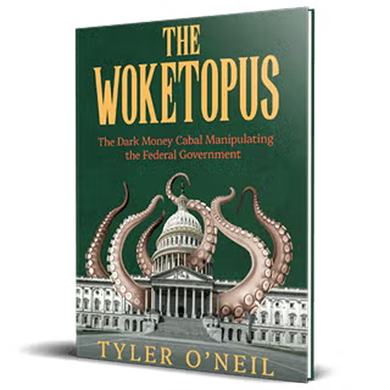
Read the first chapter of The Woketopus right now for FREE
Today, even with President Trump’s victory, leftist elites have their tentacles in every aspect of our government.
The Daily Signal’s own Tyler O’Neil exposes this leftist cabal in his new book, The Woketopus: The Dark Money Cabal Manipulating the Federal Government.
In this book, O’Neil reveals how the Left’s NGO apparatus pursues its woke agenda, maneuvering like an octopus by circumventing Congress and entrenching its interests in the federal government.
You can read the first chapter of this new book for FREE in this eBook, The Woketopus: Chapter One using the secure link below.
TRENDING ARTICLES




The Daily Signal depends on the support of readers like you.
RELATED ARTICLES


Don’t miss the

Don’t miss the signal