Thursday marked 102nd birthday of the late, great Nobel prize-winning economist Milton Friedman. It is both fitting and proper we remember his legacy of freedom crossed many disciplines—including education.
Milton Friedman once remarked that there are “two alternative ways of organizing an economy: top-down verses bottom-up; central planning and control versus private markets; more colloquially, socialism versus capitalism.” This is no less true with education.
Yet America has seen a half-century of growing centralization of education, without meaningful results.
Friedman knew school choice—applying market forces via parents to one of society’s most essential functions—offered the alternative. Indeed, he is widely acknowledged as the father of the school choice movement.
“A stable and democratic society is impossible without widespread acceptance of some common set of values and without a minimum degree of literacy and knowledge on the part of most citizens,” Friedman once said. “Education contributes to both.”
Friedman understood that a well-educated citizenry is essential for a free society. He also knew that an educational marketplace was better equipped to educate a free people than centralized schooling. This is why Friedman developed the idea of school vouchers, which give parents the freedom to send their child to a private school using all or part of the per-pupil public funding.
TRENDING ARTICLES


Freidman’s educational philosophy promoted an environment where parents are free to choosethe best educational option to meet their child’s individual needs, whether public, private, charter, virtual or home school.
Educational choice raises all boats. It empowers families to determine the school environment that best suits the needs of their children. It puts competitive pressure on schools that fail to meet the needs of the student body, improving outcomes for both students who exercise school choice and students who remain in underperforming schools.
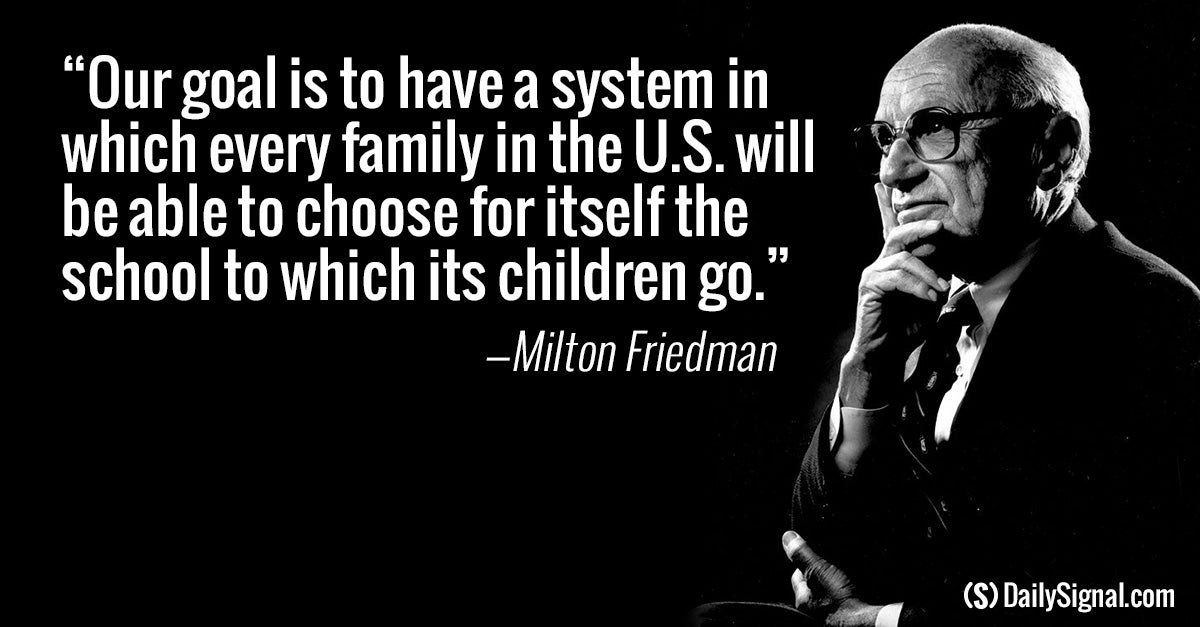
His goal, he said once on CNBC, was to “have a system in which every family in the U.S. will be able to choose for itself the school to which its children go.”
If Friedman were alive today, he would see America moving aggressively toward that goal.
Friedman’s legacy of school choice has grown more expansive—and more innovative.
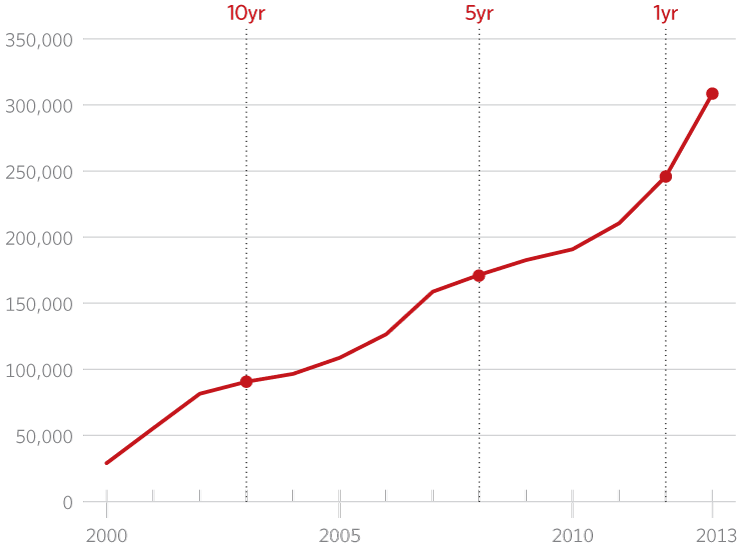
As of 2014, there are 41 private school choice programs in 24 states and the District of Columbia. More than 300,000 students are currently participate in a private school choice option
Heritage fellow Virginia Walden Ford says when all school choice policy options are considered—for example, deductions for homeschooling expenses—more than 1 million children now benefit from choice in education.
And, in 2011, Arizona enacted the nation’s first education savings account option, which could be considered a refinement of Friedman’s original voucher idea.
ESAs allow parents of eligible students to fully customize their child’s education with 90 percent of the per-pupil state funding that would have followed their child to a public school. With an ESA, parents can purchase a variety of education-related services, such as tuition, curricula, tutoring, therapies, and can even roll over unused funds into a college savings account.
Last month, Florida passed the nation’s second education savings account program.
Public support also continues to grow for universal school choice. According to the Friedman Foundation for Educational Choice’s annual Schooling in America Survey, the public supports universal access over means-tested school choice programs by 65 percent.
Milton Friedman understood school choice as 21st century education reform that would open the door for every child to receive the best education possible. As school choice proliferates around the country, Friedman’s labor is bearing fruit— breaking down monopolies and promoting freedom in education.
In honor of Friedman’s birthday, we must rededicate ourselves to that unfinished task which remains before us, the true end of his philosophy of educational choice: educational freedom in America.
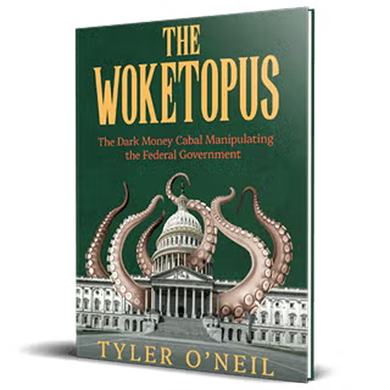
Read the first chapter of The Woketopus right now for FREE
Today, even with President Trump’s victory, leftist elites have their tentacles in every aspect of our government.
The Daily Signal’s own Tyler O’Neil exposes this leftist cabal in his new book, The Woketopus: The Dark Money Cabal Manipulating the Federal Government.
In this book, O’Neil reveals how the Left’s NGO apparatus pursues its woke agenda, maneuvering like an octopus by circumventing Congress and entrenching its interests in the federal government.
You can read the first chapter of this new book for FREE in this eBook, The Woketopus: Chapter One using the secure link below.


The Daily Signal depends on the support of readers like you.
RELATED ARTICLES

Don’t miss the
Don’t miss the signal