
President Donald Trump released his budget proposal on Tuesday, which includes some dramatic changes to higher education funding.
While there is still room for improvement, the president’s proposals would be a significant first step in reducing the federal government’s role in higher education and giving much-needed relief to the U.S. taxpayer.
Elimination of Public Service Loan Forgiveness
The president’s budget proposal eliminates the costly Public Service Loan Forgiveness Program, which offers special student loan forgiveness to graduates for performing certain public service jobs.
This will be welcome news to taxpayers, who have been picking up the tab for federal employees who, under this policy, have their loans forgiven after just 10 years of payments.
Loan forgiveness in general is bad policy—it encourages students to take on large amounts of debt, often without a plan to pay it back. In particular, loan forgiveness for public service elevates public sector work over the private sector.
TRENDING ARTICLES



The administration is correct to move away from this misguided policy.
Unfortunately, though, the president’s budget would allow all students to take advantage of loan forgiveness after 15 years, only reducing it from 20.
Loan repayment policies that are based on income already protect students from burdensome loan payments. These generous loan forgiveness policies leave taxpayers on the hook for much of the cost of a college student’s education.
Year-Round Pell Grants
The president’s budget also allows students to use their Pell Grant dollars year-round, which may offer needed flexibility to students who want to finish their degree faster.
However, any changes to the Pell Grant system should focus those funds on truly low-income students, and should not increase overall Pell spending.
Consolidation of Federal Loans
This budget consolidates the current five loan programs into a single loan option. This will streamline federal lending, and has the potential to infuse fiscal responsibility to the system if terms are aligned with the current terms of the Graduate Stafford Loan Program.
Additionally, all loans should be issued with both an annual and lifetime borrowing cap. These reforms could both help put downward pressure on college tuition prices and insulate taxpayers from high rates of default.
As my colleague Jamie Hall and I recently outlined:
Issuing all future direct loans under a single set of terms would simplify the program and eliminate some perverse incentives in current law … Issuing all new loans under the current terms of Graduate Stafford Loans would generate savings relative to the [Congressional Budget Office] baseline of $9.4 billion under [Federal Credit Reform Act accounting], or a cost of $2.5 billion under [Fair Value] accounting, closer to revenue neutrality than any other loan type.
Additionally, this budget proposes the elimination of loan interest subsidies.
Many economists have pointed to the heavy subsidization of federal student loans as one of the primary drivers of rising tuition. The elimination of subsidized loans will be a smart first step in deflating the student loan bubble and making college more affordable based on market principles.
Consolidating federal student loans into a single option and eliminating loan interest subsidies may help achieve the added benefit of revitalizing the private lending market.
The president’s proposal overall reduces the federal government’s role in higher education and will encourage more students to turn to the private market to finance their loans. That will protect U.S. taxpayers while curtailing runaway tuition prices.

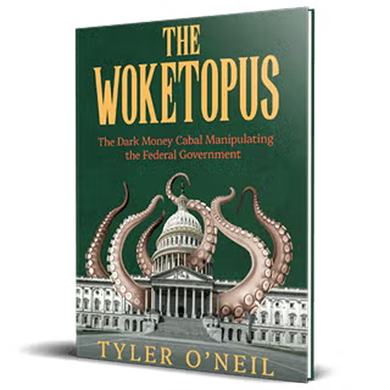
Read the first chapter of The Woketopus right now for FREE
Today, even with President Trump’s victory, leftist elites have their tentacles in every aspect of our government.
The Daily Signal’s own Tyler O’Neil exposes this leftist cabal in his new book, The Woketopus: The Dark Money Cabal Manipulating the Federal Government.
In this book, O’Neil reveals how the Left’s NGO apparatus pursues its woke agenda, maneuvering like an octopus by circumventing Congress and entrenching its interests in the federal government.
You can read the first chapter of this new book for FREE in this eBook, The Woketopus: Chapter One using the secure link below.
TRENDING ARTICLES


The Daily Signal depends on the support of readers like you.
RELATED ARTICLES


Don’t miss the
Don’t miss the signal