
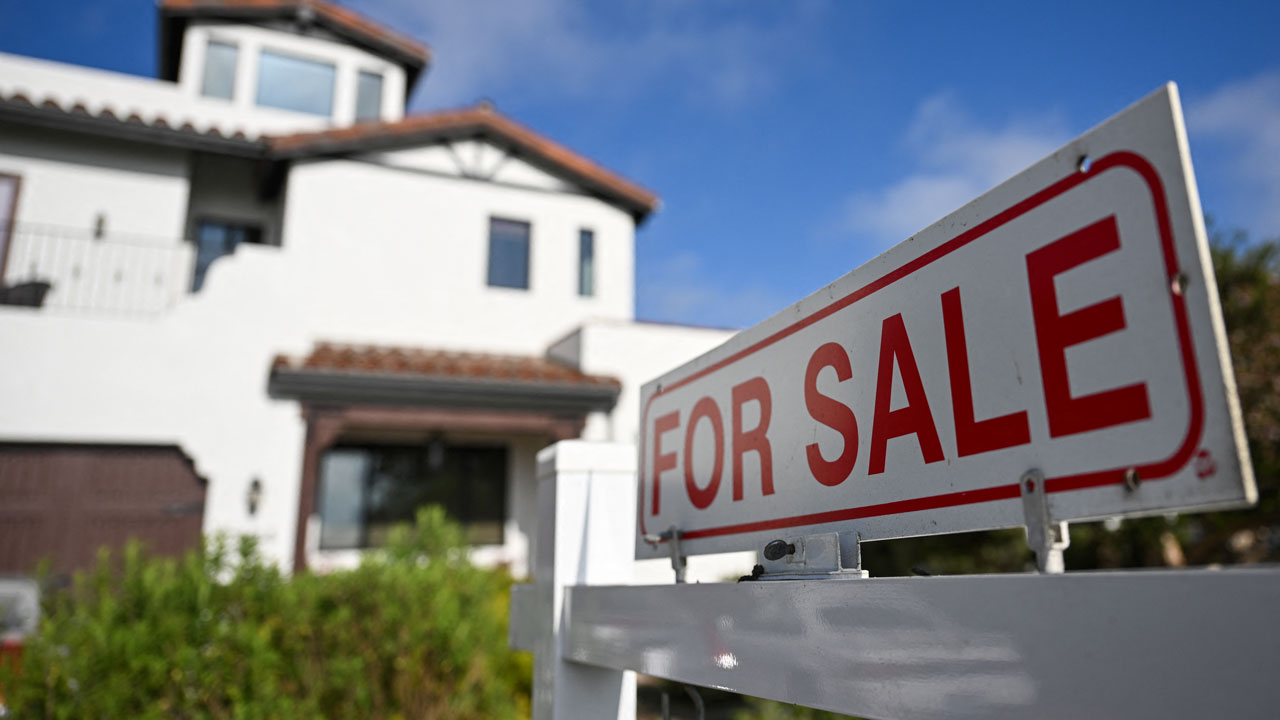
President Donald Trump is considering a simple way to help America’s brutal housing market: Stop punishing people for selling their homes.
Trump administration officials recently floated cutting the capital gains tax on home sales, potentially removing one obstacle that keeps longtime homeowners from selling and younger families from buying.
It’s an idea worth pursuing. But it also points toward a broader principle that Washington should apply to the housing crisis: America doesn’t just need to build more homes. We need to make it easier for the homes we already have to reach buyers.
Right now, we’re making that harder than it needs to be.
In the current federal tax code, homeowners can generally exclude $250,000 in gains when selling their primary residence, or $500,000 for married couples filing jointly. Those thresholds were set nearly three decades ago but home prices have quadrupled since then, especially in communities where young families are struggling most to buy.
Imagine a couple who bought a modest home decades ago for $150,000. Their kids are grown, the house is now worth $900,000, and they’d be perfectly happy to downsize. Selling would free up a family-sized home for the next generation.
TRENDING ARTICLES



But selling could also leave them with a sizable capital gains tax bill. So why move? Multiply that decision across millions of homeowners, and you get fewer homes for sale in a market already starved for inventory.
Congress can help. The bipartisan More Homes on the Market Act would double the existing exclusion to $500,000 for individuals and $1 million for married couples, then index those amounts to future inflation.
This is exactly the kind of housing policy conservatives should embrace. It doesn’t create another subsidy or hand buyers government checks to bid even more for the same limited supply. It simply removes a government-created barrier to selling, then lets willing buyers and sellers find each other.
But taxes aren’t the only thing making it harder for America’s existing housing supply to reach buyers. Increasingly, some homes that are for sale aren’t shown to everyone who might want to buy them—and Congress is finally noticing.
In July, Rep. Scott Fitzgerald, R-Wis., sent letters to Compass—the country’s largest real estate brokerage—and Midwest Real Estate Data. Midwest Real Estate Data controls nearly all Chicago-area home listings and the feeds that send them to public sites.
Fitzgerald wanted answers about their plans to take a private home-listing network nationwide, which could create a “closed information system” for homes, affecting both consumers and housing affordability.
The concern is what happens when private listings become a parallel market that ordinary buyers may never fully see.
As the nation’s largest brokerage, Compass is working with Midwest Real Estate Data to take private listings nationwide. If the biggest player can pull homes away from the public market, competitors will copy the playbook, making private listings the industry’s new normal.
One study found that Compass already controls more than one-fifth of the national brokerage market and has an even larger footprint in Manhattan, where critics say the spread of private listings is already making it harder for buyers to see the full market.
At a moment when America desperately needs more homes available to families, why would we want the homes that are already for sale to become harder to find?
An outdated tax rule can keep a homeowner locked in rather than putting their house up for sale. But a private listing network can make it impossible for ordinary buyers to even find the house. Combined, this keeps supply out of the market while hiding the supply that is in the market.
A young couple searching for their first family home doesn’t care why the three-bedroom house down the street isn’t available to them. Maybe the empty nesters living there decided not to sell because Washington would tax too much of their appreciation. Maybe another suitable house is technically for sale but hidden in a private network they can’t see. Maybe the third house was never built because local rules made construction too difficult.
Those are different problems with different solutions. But they produce the same result: fewer affordable homes for American families.
Trump has the right instinct: Don’t throw more taxpayer money at the housing shortage and hope for the best. Instead, Washington should remove the barriers keeping supply from reaching buyers to let the housing market work again.

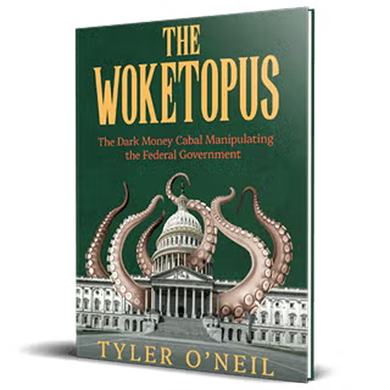
Read the first chapter of The Woketopus right now for FREE
Today, even with President Trump’s victory, leftist elites have their tentacles in every aspect of our government.
The Daily Signal’s own Tyler O’Neil exposes this leftist cabal in his new book, The Woketopus: The Dark Money Cabal Manipulating the Federal Government.
In this book, O’Neil reveals how the Left’s NGO apparatus pursues its woke agenda, maneuvering like an octopus by circumventing Congress and entrenching its interests in the federal government.
You can read the first chapter of this new book for FREE in this eBook, The Woketopus: Chapter One using the secure link below.


The Daily Signal depends on the support of readers like you.
RELATED ARTICLES





Don’t miss the

Don’t miss the signal