When the lights stay on, most Americans assume the electricity system is working. It is not.
Beneath the surface, the markets that produce and price your power are manufacturing a reliability crisis. The organizations running those markets have already admitted they cannot solve it under the current rules.
The result? A market that over-rewards weather-dependent generation while starving the firm capacity needed during peak demand or extreme weather. This is making American energy less reliable and more expensive.
The CEO of PJM, the nation’s largest grid operator, put it plainly: “What worked for two decades no longer works.”
PJM manages power for roughly 65 million people across 13 states. When its own chief executive says the model is broken, we need to listen.
So, what broke? And why can’t the people running the system fix it?
TRENDING ARTICLES



A Market Built for Yesterday
In the late 1990s and early 2000s, Regional Transmission Organizations took over wholesale electricity markets from vertically integrated utilities. The theory was sound: Introduce competition, and prices will fall as reliability improves. It partly worked, but this design no longer fits.
The original model assumed stable demand growing 1%-2% annually, fully dispatchable generators, and real-time balance through price signals. None of those assumptions holds today.
Demand is now surging from data centers, artificial intelligence, electric vehicles, and reshoring, with some regions experiencing growth rates not seen since the period following World War II.
Meanwhile, the fleet has shifted heavily toward wind and solar, which cannot be dispatched on command. You cannot call a wind farm at 6 p.m. on a cold Tuesday or rely on solar after dark.
Yet market rules still treat all generators as interchangeable. A wind farm that produces only when weather permits collects the same capacity payments and often the same prices as a gas plant that ramps up in minutes. The market does not differentiate firm capacity from intermittent generation because the rules were never written to do so.
This is a structural failure. It delivers a less reliable grid at higher prices, benefiting subsidized wind and solar at the expense of electricity users.
The Subsidy Problem
The same rules blur the firm-intermittent distinction and prevent price signals from reflecting real scarcity. Under uniform clearing prices, all generators receive the highest accepted bid. Subsidized resources with tax credits, mandates, and capacity payments can bid below their true costs, drowning out the signals needed to attract reliable capacity.
Fixing this requires confronting what the RTO structure was never designed to handle: The market must distinguish between a megawatt you can count on and one that shows up only when the wind blows or the sun shines.
Capacity payments should reflect actual contribution to reliability, bids should reflect true net costs after all subsidies, scarcity prices should reach generators without gaming, and grids should pay the actual bid price rather than the highest accepted price.
These are nothing more than the basic conditions for a functioning market.
Reform That Actually Works
The Free Enterprise Electricity reform package will require exactly this: net true-cost bidding that strips subsidies from market bids, pay-as-bid pricing that ends the uniform clearing-price windfalls, and capacity valuation tied to actual firm availability.
Utilities and generators profiting under current rules will call reform too complicated, disruptive, and risky. The same arguments made against airline, trucking, and natural gas deregulation ultimately proved wrong, as each ended up delivering lower prices and better service for consumers.
The PJM CEO is right: what worked for two decades no longer works. The question is this: Will states and legislators demand a market structure that actually does, or will we keep paying for one that does not?
We publish a variety of perspectives. Nothing written here is to be construed as representing the views of the Daily Signal.
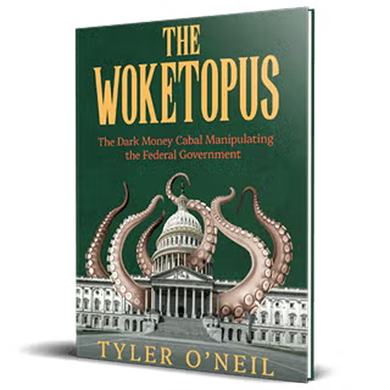
Read the first chapter of The Woketopus right now for FREE
Today, even with President Trump’s victory, leftist elites have their tentacles in every aspect of our government.
The Daily Signal’s own Tyler O’Neil exposes this leftist cabal in his new book, The Woketopus: The Dark Money Cabal Manipulating the Federal Government.
In this book, O’Neil reveals how the Left’s NGO apparatus pursues its woke agenda, maneuvering like an octopus by circumventing Congress and entrenching its interests in the federal government.
You can read the first chapter of this new book for FREE in this eBook, The Woketopus: Chapter One using the secure link below.
TRENDING ARTICLES


The Daily Signal depends on the support of readers like you.
RELATED ARTICLES





Don’t miss the

Don’t miss the signal