

The June G7 Summit in Évian-les-Bains, France, marked a major pivot. Driven by severe energy and commodity shocks stemming from the conflict in the Middle East—specifically transit disruptions in the Strait of Hormuz—G7 leaders overwhelmingly prioritized energy security, affordability, price insulation, and survival of the fossil fuel supply chain over aggressive timelines for reducing greenhouse gas emissions.
Who could have predicted that, rather than condemning oil and gas, the powerful torchbearers of hostility toward hydrocarbons would seek to improve the flow of abundant and affordable energy.
G7 Reality Check
The G7’s decision does not end climate politics, but it does mark a return to the better instincts of energy policy: Test claims against evidence, weigh costs against benefits, and value the importance of energy to human progress.
The summit highlighted Canada’s potential to deliver additional capacity to energy markets over the coming years. Until recently, Canada’s leadership was hellbent on the net-zero agenda, refusing to fully utilize domestic reserves. Now, it is looking to expand oil and gas supplies in cooperation with other G7 members—the U.S., the U.K., France, Germany, Italy, and Japan.
The present U.S. administration is a model for other countries, openly rejecting climate dogma that dominated energy policy for decades. In that sense, the G7 shift is part of a broader correction.
At the forefront of climate politics has been the claim that Earth’s climate is at risk of irreparable harm by modern industry and the proposition that the appropriate response is central control of all human activity. To question this approach was long considered heretical.
This arrogance perhaps is best answered by the simple facts of carbon dioxide, the alarmists’ main bogeyman. CO2 is necessary for life as a constituent of plant photosynthesis. Modern increases in atmospheric concentrations from the burning of fossil fuels have not caused dangerous warming but have contributed to significant greening of Earth and boosted crop harvests.
TRENDING ARTICLES



The work of William Happer and others show that doomsday predictions are based on exaggerations of CO2’s warming potential and manipulation of computer models that have little to do with real-world natural phenomena.
Sane Policy Requires Accurate Science
Public policy should not be drafted as if every heat wave, storm, or drought proves a political agenda. Otherwise, as we have seen, governments end up seeking to eliminate energy sources that have brought the world unprecedented prosperity and are required for further advancement.
Fossil fuels still support transportation, food production, and industrial expansion across the world. In poorer countries, reliable power is especially needed ahead of environmental virtue signaling.
Synthetic fibers used in everyday clothing are derived from petrochemicals. Fertilizers that allow modern agriculture to feed 8 billion people are produced from natural gas. By deliberately attacking the fossil fuel industry, the climate movement inflates the cost of everything, creating artificial scarcity in a world of energy abundance.
The G7 is not a minor forum. It shapes the language of power, finance, and development among some of the world’s most influential economies. Having set aside the climate agenda, G7 leaders are confronting energy reality.
Contributing to this return to sanity has been research like that captured in “Challenging Net Zero with Science,” a CO2 Coalition publication that provides a basis for supporting rational energy policy and rejecting the climate industrial complex’s dangerous fantasies.
Public debate often rewards loud catastrophizing over careful analysis. The coalition’s message has been straightforward and disruptive: A net-zero policy that undermines affordable energy will destroy prosperity and civil society..
True environmental stewardship is adapting to nature while maximizing human prosperity. It requires building energy infrastructure, expanding access to cheap energy, and rejecting efforts to lower the standard of living.
Let us hope that 2026 G7 forum paves the way for pragmatic policies that advance the human condition and protect individual liberties.
We publish a variety of perspectives. Nothing written here is to be construed as representing the views of the Daily Signal.
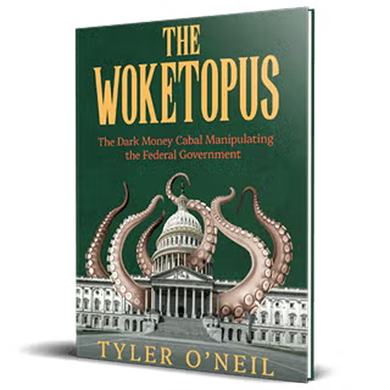
Read the first chapter of The Woketopus right now for FREE
Today, even with President Trump’s victory, leftist elites have their tentacles in every aspect of our government.
The Daily Signal’s own Tyler O’Neil exposes this leftist cabal in his new book, The Woketopus: The Dark Money Cabal Manipulating the Federal Government.
In this book, O’Neil reveals how the Left’s NGO apparatus pursues its woke agenda, maneuvering like an octopus by circumventing Congress and entrenching its interests in the federal government.
You can read the first chapter of this new book for FREE in this eBook, The Woketopus: Chapter One using the secure link below.
TRENDING ARTICLES


The Daily Signal depends on the support of readers like you.
RELATED ARTICLES




Don’t miss the

Don’t miss the signal